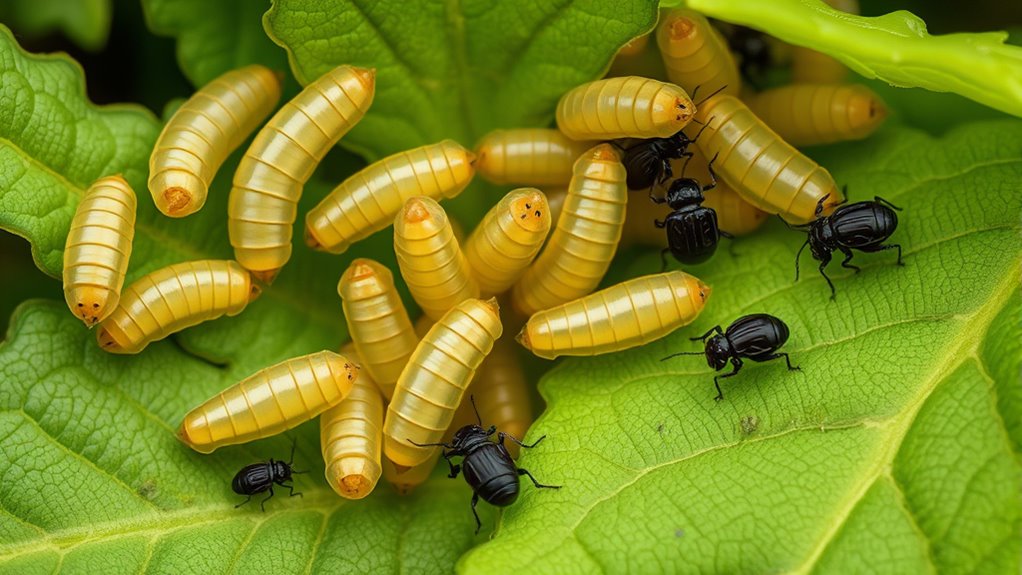

To recognize beneficial larvae versus pests, look at their development stages, habitat, and physical traits. Beneficial larvae often develop in organic-rich environments like soil or plant roots and may have distinctive markings or smaller sizes. They tend to be less destructive and are associated with plants or pests they help control. Pests usually damage plant tissues and thrive in disturbed areas. Spotting these differences helps you protect helpful insects—stay with us to discover more tips for accurate identification.
Key Takeaways
- Identify beneficial larvae by their specific developmental stages and distinctive markings, which differ from pest larvae.
- Observe habitat preferences; beneficial larvae often reside in organic-rich soil or inside pest insects.
- Recognize their role in pest control or pollination, unlike pests that damage plants or tissues.
- Note feeding behavior; beneficial larvae typically feed on pests or organic matter, while pests damage crops.
- Differentiate based on movement and size; beneficial larvae may be soft-bodied and less destructive than pest larvae.
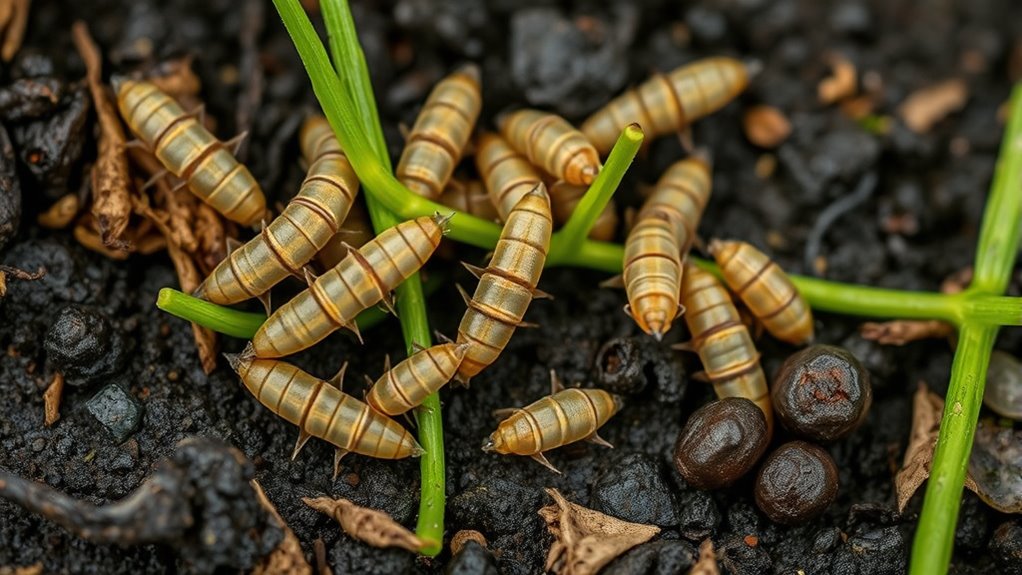
Beneficial larvae play a crucial role in maintaining healthy ecosystems and supporting sustainable agriculture. Understanding their life cycle and habitat preferences helps you distinguish them from harmful pests. These larvae often have specific stages and environments that set them apart, making it easier to recognize their advantageous nature. The life cycle of beneficial larvae typically includes several stages: egg, larva, pupa, and adult. During the larval stage, they actively feed and grow, but their behavior and appearance vary widely depending on the species. For example, some beneficial larvae are small and soft-bodied, while others are more robust with distinctive markings. Knowing these developmental stages allows you to identify beneficial larvae at various points, reducing the chances of mistakenly removing them.
Habitat preferences are equally important in identification. Beneficial larvae tend to inhabit specific environments that support their role in pest control or pollination. Many prefer areas rich in organic matter, such as soil with decaying plant material, compost piles, or the undersides of leaves. For instance, certain predatory larvae, like ladybug larvae, are often found on plants where aphids are abundant, as they hunt these pests. Others, like tachinid fly larvae, develop inside host insects and are usually located near or on the infested pest. Recognizing these habitat preferences enables you to observe and monitor larvae without unnecessary disturbance, increasing the likelihood of finding beneficial ones.
In contrast, pest larvae often have different life cycles and habitat preferences. They may thrive in disturbed or overgrown areas, or within the plant tissue they damage. Pest larvae tend to be more destructive, feeding on roots, leaves, or fruits in ways that visibly harm plants. They might also be more generalized in habitat choice, occupying a broader range of environments, but usually without the specific associations seen in beneficial species. By paying close attention to where you find larvae and their developmental stages, you can make an informed judgment about their role. If larvae are found in environments rich in natural predators, or in areas where they prey on pests, they are more likely to be advantageous.
Frequently Asked Questions
How Can I Differentiate Larvae Based on Their Habitats?
You can differentiate larvae based on their habitats by observing their preferred locations. Beneficial larvae often stay in specific habitats like soil or decaying plant matter, while pest larvae might be found in actively growing plants, roots, or stored food. Pay attention to larval location—if they’re in compost piles or underground, they’re likely beneficial. Pest larvae tend to populate areas with abundant food sources, making habitat preference a key identification tool.
Are There Seasonal Indicators for Beneficial Larvae Presence?
Ever wondered if seasonal cycles influence beneficial larvae activity? They do! During warmer months, you’ll notice increased larvae activity patterns, often signaling a healthy ecosystem. Conversely, colder seasons tend to reduce their presence, making it easier to identify pests. Keep an eye on these seasonal indicators to support beneficial larvae, as their activity is vital for natural pest control. Recognizing these patterns helps you maintain a balanced garden year-round.
Can Beneficial Larvae Harm My Plants if Accidentally Introduced?
Beneficial larvae generally won’t harm your plants if accidentally introduced. Their larvae habitat and beneficial larvae behavior are designed to target pests, not your plants. They tend to stay in the soil or on specific pests, avoiding healthy plant tissue. If you notice larvae on your plants, check their behavior and habitat; beneficial ones usually move toward pests or stay in the soil, so accidental introduction is unlikely to cause damage.
What Are Common Mistaken Identifications of Pests as Beneficial Larvae?
You might mistake pest larvae for beneficial ones during larvae identification, leading to pest confusion. Common errors include confusing caterpillars or beetle larvae with beneficial predatory larvae, like ladybug or lacewing larvae. These pests may look similar but can harm your plants. To avoid this, closely examine their size, color, and movement. Proper identification helps you protect beneficial insects while effectively managing actual pests.
How Do Environmental Conditions Affect Beneficial Larvae Development?
Imagine nurturing your beneficial larvae, but environmental factors play a subtle game. You’ll notice that soil moisture levels need to stay balanced; too dry or too wet can hinder their growth. Temperature fluctuations also influence development, as sudden changes can slow or disrupt their lifecycle. By maintaining stable conditions, you help these helpful creatures thrive, ensuring they continue their valuable role in your garden’s health and pest control efforts.
Conclusion
By learning to distinguish beneficial larvae from pests, you can make smarter decisions for your garden or farm. Think of beneficial larvae as helpful workers—like tiny farmers tending your plants—while pests are like unwelcome invaders damaging your crops. Once you recognize their differences, you’ll naturally protect your garden’s health. Don’t worry if it seems tricky at first; with a little practice, you’ll see the signs clearly and keep your plants thriving.