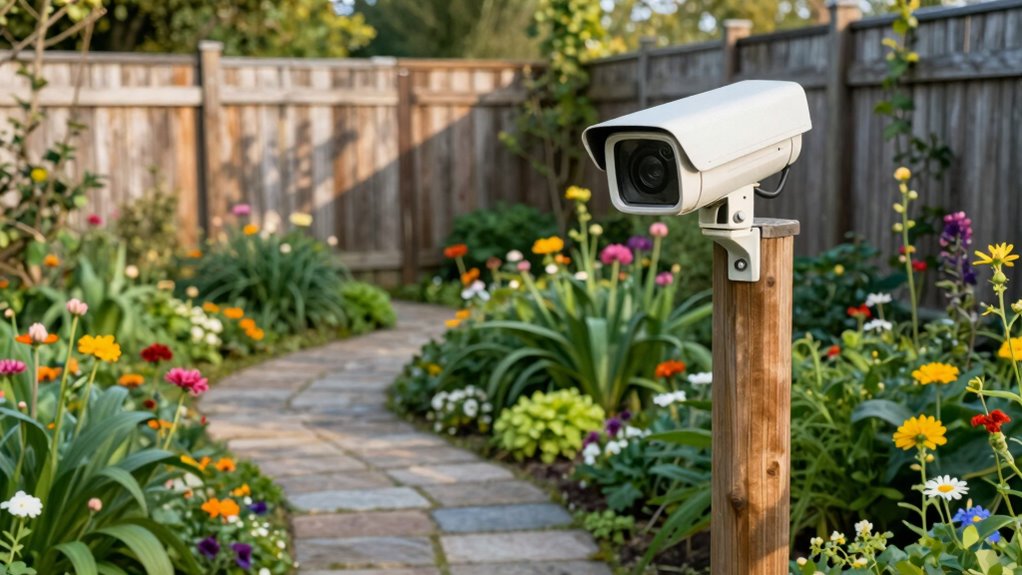

To catch the culprit, place your garden camera along animal trails, entry points, or high-traffic areas where activity is frequent. Position the camera at a slight downward angle and at a height suitable for the animals you’re targeting. Use natural cover to hide it, ensuring it’s stable and secure. Regularly check and adjust the placement based on footage to improve coverage. Keep exploring to learn more about optimizing your camera setup effectively.

Get garden gear delivered free with Prime
- Fast, free delivery on millions of items
- Prime Video, Amazon Music and more included
- Member-only deals all year
Key Takeaways
- Position cameras along animal trails and high-traffic areas using natural cover for concealment.
- Focus on entry points, fence gaps, and feeding spots where pests are most active.
- Place cameras at 3-4 ft height for larger animals and lower for smaller critters to capture clear footage.
- Ensure stable, slightly downward angles to maximize ground coverage and reduce visibility.
- Regularly adjust camera angles based on footage insights to cover blind spots and improve detection.
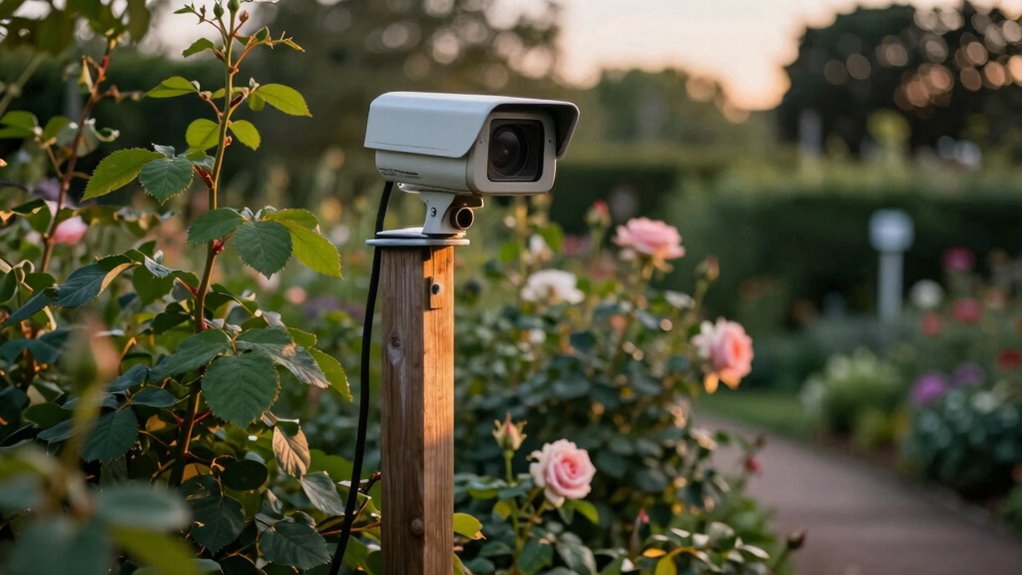
A garden camera can be a valuable tool for monitoring your outdoor space, whether you’re keeping an eye on wildlife intrusion, protecting your property, or simply capturing beautiful moments in nature. To maximize its effectiveness, you need to think carefully about where you place the camera. Proper placement is essential for catching the culprit—whether it’s a curious raccoon, a sneaky fox, or unwanted human visitors. Your goal is to cover the most likely entry points and high-traffic areas where wildlife intrusion is most probable.
Start by observing the natural movement patterns around your garden. Look for trails, paths, or gaps in fences that animals tend to use. Position your camera along these routes, ideally at a height that captures their faces or distinctive features. For larger animals like deer or bears, placing the camera at around three to four feet high usually works best, while smaller critters like raccoons or squirrels may require a lower position. Remember, the camera’s angle should be slightly downward to cover more ground and prevent it from missing quick movements.
Position your camera along animal trails at a slight downward angle for clear, comprehensive footage.
Camera placement strategies should also consider concealment. You don’t want your camera to stand out or scare off wildlife before it gets recorded. Use natural cover like bushes, trees, or shrubs to hide the device. Not only does this make it less obvious, but it also ensures animals behave naturally, giving you more accurate footage. Make sure the camera is stable and secure; a loose or tilted camera might miss critical moments or produce unusable footage. Additionally, choosing optimal locations based on animal activity can significantly improve your chances of capturing footage. Incorporating animal behavior insights can help you anticipate their movement patterns and improve placement. Observing these habits can also help you identify high-traffic areas, which are prime spots for camera installation. Consistently monitoring the footage can reveal patterns of activity, guiding future adjustments.
Lighting conditions are another factor. Position your camera where it won’t be directly exposed to strong sunlight, which can cause glare or overexposure. Conversely, avoid placing it in completely shaded areas where low light could hinder night-time recordings. If your camera has night vision, test different spots to see where it provides clear footage without reflection or distortion. Additionally, understanding animal activity patterns can help you time your recordings more effectively.
Finally, think about the direction your camera faces. For wildlife intrusion, pointing it towards the most common access points or feeding areas increases your chances of capturing activity. Keep in mind that animals are often most active during dawn and dusk, so adjust your camera settings accordingly. Regularly check and adjust your camera placement based on the footage, ensuring you’re covering the right spots and minimizing blind spots. With thoughtful camera placement strategies, you’ll increase your chances of catching the real culprit and gain valuable insights into what’s happening in your garden.
As an affiliate, we earn on qualifying purchases.
Frequently Asked Questions
How Do I Choose the Best Camera for My Garden?
To choose the best camera for your garden, focus on wildlife monitoring needs and privacy concerns. Opt for cameras with motion detection and night vision to catch activity day or night. Select models with good weather resistance and high resolution for clear images. Consider wireless options for easy placement, but make certain they don’t invade neighbors’ privacy. Balancing these factors helps you find a camera that’s effective, respectful, and suited to your garden’s unique environment.
What Is the Ideal Camera Placement Height?
Think of your camera as a watchful eye—placing it at about 3 to 5 feet high offers the best vantage point. This height captures clear images, reduces blind spots, and adapts to various lighting conditions. Like a guardian overseeing the garden, a well-placed camera at the right angle guarantees you catch every movement, even in low light, providing peace of mind and a clear record of the culprit.
How Do I Prevent False Alarms From Animals?
To prevent false alarms caused by wildlife activity, you can adjust your camera’s sensitivity settings and use motion detection zones to focus on specific areas. Placing cameras in sheltered spots reduces animal interference, and adding noise deterrents or visual barriers can help. Regularly checking and maintaining your camera guarantees it only triggers for relevant activity, effectively minimizing false alarms and improving your overall security.
Are Wireless Cameras Easier to Install Than Wired?
Wireless cameras are generally easier to install than wired ones because they don’t require running cables or complex setup. With wireless connectivity, you can place them almost anywhere with a clear signal. Plus, they offer flexible power source options, like batteries or solar power, making installation even simpler. You just need to guarantee a strong Wi-Fi signal, and you’re good to go. No need for professional help or extensive wiring.
What Features Should I Look for in a Garden Camera?
When choosing a garden camera, look for features like night vision and weather resistance. Night vision guarantees you can monitor your garden even in low light or darkness, while weather resistance protects the camera from rain, snow, and other elements. You should also consider motion detection, easy installation, and a clear, high-resolution image to catch every detail. These features help you keep your garden secure, day or night.
outdoor motion-activated security camera
As an affiliate, we earn on qualifying purchases.
As an affiliate, we earn on qualifying purchases.
Conclusion
By placing your garden cameras thoughtfully, you can deter intruders, catch culprits, and protect your property. Position them high enough to avoid tampering, angle them to cover all potential entry points, and make certain they’re visible to act as a deterrent. Regularly check and update your camera placements to adapt to new threats. With strategic placement, vigilant monitoring, and consistent maintenance, you’ll create a secure environment—one where safety, surveillance, and peace of mind work hand in hand.
hidden trail camera for wildlife
As an affiliate, we earn on qualifying purchases.
As an affiliate, we earn on qualifying purchases.
As an affiliate, we earn on qualifying purchases.
Halloween Picks
halloween
As an affiliate, we earn on qualifying purchases.