When you see honeydew on your orchard trees, it indicates pests like aphids or scale are feeding on your plants’ sap, which raises the risk of sooty mold developing. This sugary residue creates the perfect environment for the mold to grow, blocking sunlight and hindering photosynthesis. As a result, your trees may weaken and produce less, lower-quality fruit. Keep an eye out for signs of these issues to learn how to protect your orchard effectively.

Get garden gear delivered free — and shop member deals
- Fast, free delivery on millions of items
- Access to Prime Big Deal Days deals on October 6–7
- Prime Video, Amazon Music and more included
Key Takeaways
- Honeydew secretion indicates pest activity, increasing the risk of sooty mold development on orchard plants.
- Persistent honeydew creates a conducive environment for black, velvety sooty mold fungi to grow.
- The presence of honeydew suggests ongoing pest infestations that can weaken tree health and promote mold spread.
- Honeydew-covered surfaces are more prone to sooty mold, which hampers photosynthesis and reduces fruit quality.
- Managing honeydew-producing pests promptly can significantly lower the risk of sooty mold formation in orchards.
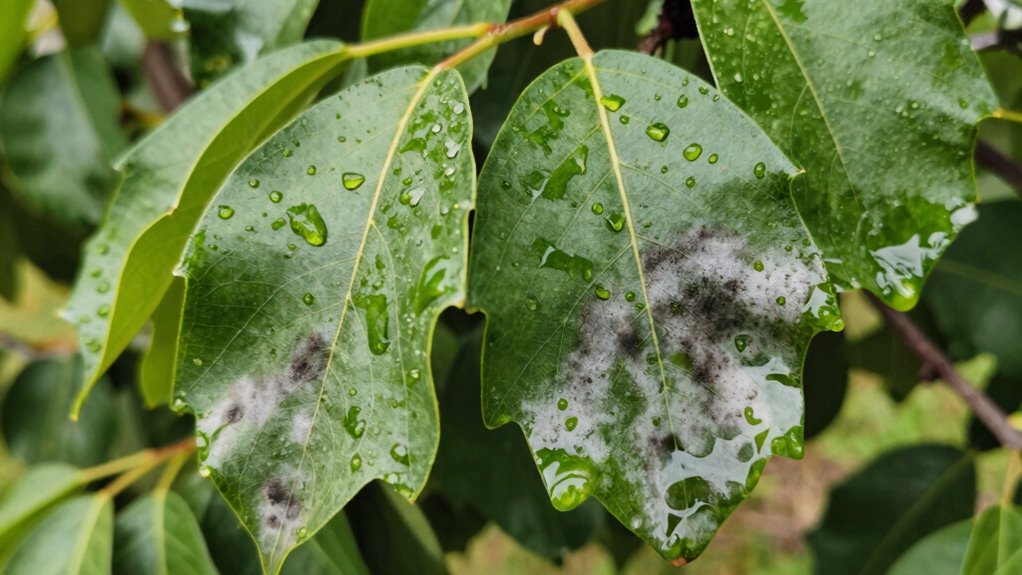
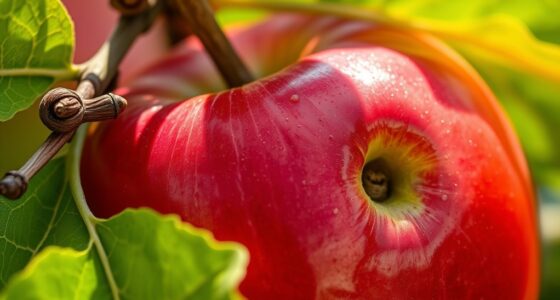
If you notice a sticky, shiny coating on the leaves and branches of your orchard, it’s likely due to honeydew secreted by insects like aphids or scale. This sugary residue is a clear sign of a pest infestation, which can seriously impact your fruit trees. While honeydew itself isn’t harmful, it creates the perfect environment for sooty mold to develop, which can obscure leaves and fruit. The presence of honeydew indicates that pests are feeding on your trees, and if left unchecked, they can weaken the plants, reduce photosynthesis, and ultimately diminish fruit quality.
Honeydew signals pest trouble, harming trees and reducing fruit quality through mold and blocked sunlight.
The key concern with honeydew isn’t just the sticky mess but the risk it poses to your harvest. As pests feed on sap, they drain vital nutrients from your trees, weakening their overall health. This stress can lead to lower fruit yields and compromised fruit quality, affecting both appearance and taste. When honeydew covers the leaves and fruit, it blocks sunlight, hampering photosynthesis and causing leaves to blacken and die prematurely. This reduces the tree’s ability to produce healthy fruit and can lead to uneven ripening or smaller, less flavorful produce.
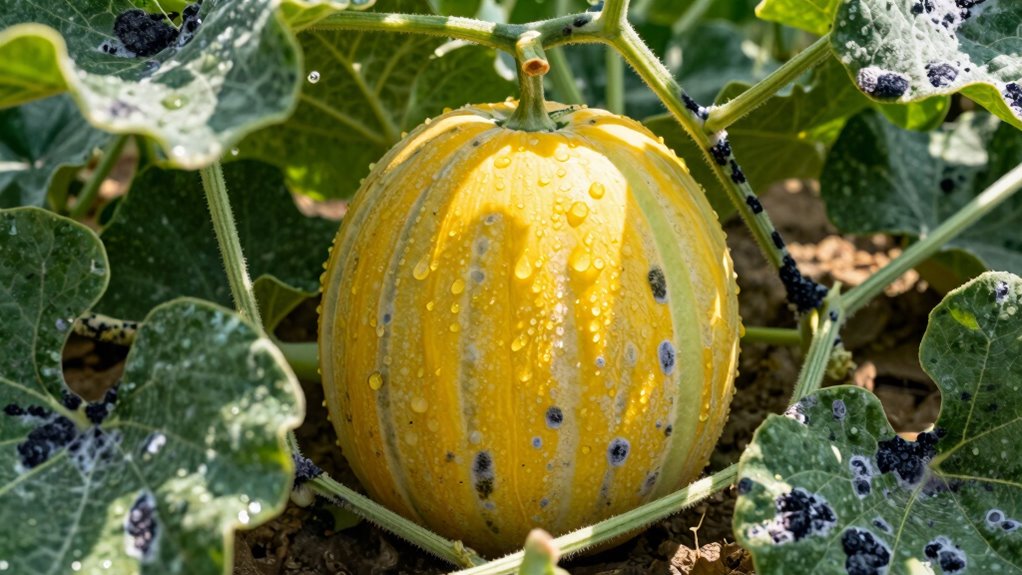
Sooty mold, which develops on the honeydew, exacerbates the problem further. It’s a black, velvety fungus that coats leaves, branches, and fruit, and while it doesn’t infect the plant tissue directly, it hampers photosynthesis by blocking sunlight. This, in turn, weakens the tree’s ability to produce energy, making it more vulnerable to disease and further pest attacks. The mold’s presence also makes the fruit less appealing, lowering market value and consumer appeal. If you notice blackened, sooty patches on your fruit, it’s a clear sign that honeydew and mold are taking hold. Maintaining a healthy orchard ecosystem can help naturally suppress pest populations and reduce honeydew production.
Managing pest infestation early is essential to protecting your orchard’s health and ensuring high-quality fruit. Regular inspections, targeted insect control, and natural predators can help reduce pest populations before they produce excessive honeydew. Removing heavily infested leaves and applying appropriate treatments can prevent the development of sooty mold. Remember, the longer pests and mold go unchecked, the more difficult it becomes to restore your trees to optimal health. Additionally, understanding the role of biodiversity in natural pest control can help promote a healthier orchard ecosystem and reduce reliance on chemical treatments. Incorporating integrated pest management strategies can further enhance your efforts to maintain a balanced and resilient orchard environment. Recognizing the importance of natural pest control methods can help sustain a healthy orchard without over-reliance on pesticides. Properly managing these factors can also help enhance orchard sustainability and long-term productivity.
As an affiliate, we earn on qualifying purchases.
Frequently Asked Questions
How Can I Differentiate Honeydew From Other Sticky Substances?
You can differentiate honeydew from other sticky substances by comparing its appearance and source. Honeydew is a clear, sticky residue that often comes from insects like aphids or scale insects feeding on plants. Unlike other residues, it has a sweet, nectar-like smell and feels smooth or slightly greasy. So, if you notice a sticky residue with a nectar comparison and it’s produced by insects, it’s likely honeydew.
What Are the Signs of Sooty Mold Developing on Honeydew?
When you notice a dark, powdery coating on leaves or fruit, it’s a gentle hint that sooty mold may be forming from honeydew impact. Early signs include a dull, blackish film that can hinder photosynthesis. To prevent mold, regularly clean affected areas and manage pests producing honeydew. Prompt action is key to mold prevention, ensuring your orchard stays healthy and fruitful without the interference of unsightly growths.
Does Honeydew Attract Other Pests Besides Sooty Mold?
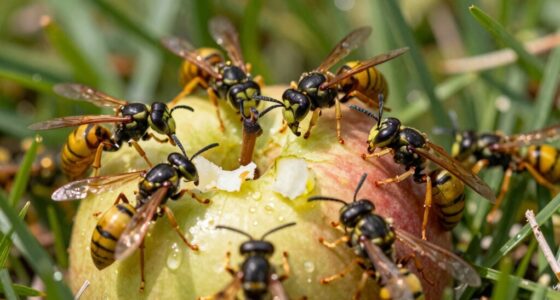
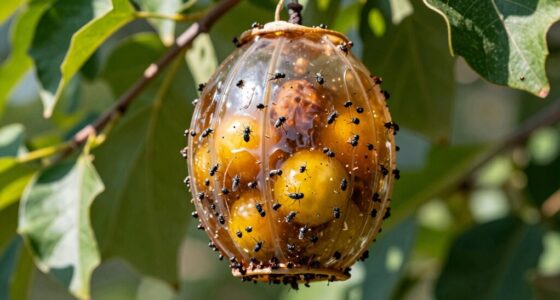
Yes, honeydew attracts other pests besides sooty mold. You might notice pests like ants, wasps, and aphids drawn to the sticky substance. This pest attraction can lead to further issues, such as fruit contamination and increased pest populations. The presence of honeydew creates a favorable environment for these pests, making it important to monitor and manage honeydew buildup promptly to protect your orchard’s health and fruit quality.
How Often Should I Check for Honeydew in My Orchard?
Like a vigilant sheriff in the Old West, you should check your orchard for honeydew composition at least once a week. Regular inspections help you spot honeydew early, majorly reducing sooty mold risk. Pay attention to orchard pest interactions, as they often produce honeydew. By staying vigilant, you prevent pests from multiplying and damaging your trees, ensuring a healthier, more productive orchard.
Are There Natural Ways to Control Honeydew Production?
You can control honeydew production naturally through biological control methods, such as introducing or encouraging beneficial insects like ladybugs and lacewings that prey on sap-sucking pests. Additionally, using organic sprays like neem oil or insecticidal soaps helps reduce pest populations responsible for honeydew. Regular monitoring and maintaining orchard health also minimize pest activity, lowering honeydew buildup and the risk of sooty mold development.
As an affiliate, we earn on qualifying purchases.
Conclusion
So, next time you see that sticky honeydew coating your trees, remember it’s a double-edged sword. While it’s a sweet sign of pest activity, it also invites sooty mold to take hold, turning your orchard into a blackened landscape. Ironically, what looks like a tasty treat for pests becomes a sneaky invitation for mold to thrive. Keep a close eye—your orchard’s health depends on catching that sticky mess early before it turns into a blackened nightmare.
As an affiliate, we earn on qualifying purchases.
aphid and scale insect treatment
As an affiliate, we earn on qualifying purchases.
As an affiliate, we earn on qualifying purchases.
Fall yard work Picks
leaf blowers
As an affiliate, we earn on qualifying purchases.