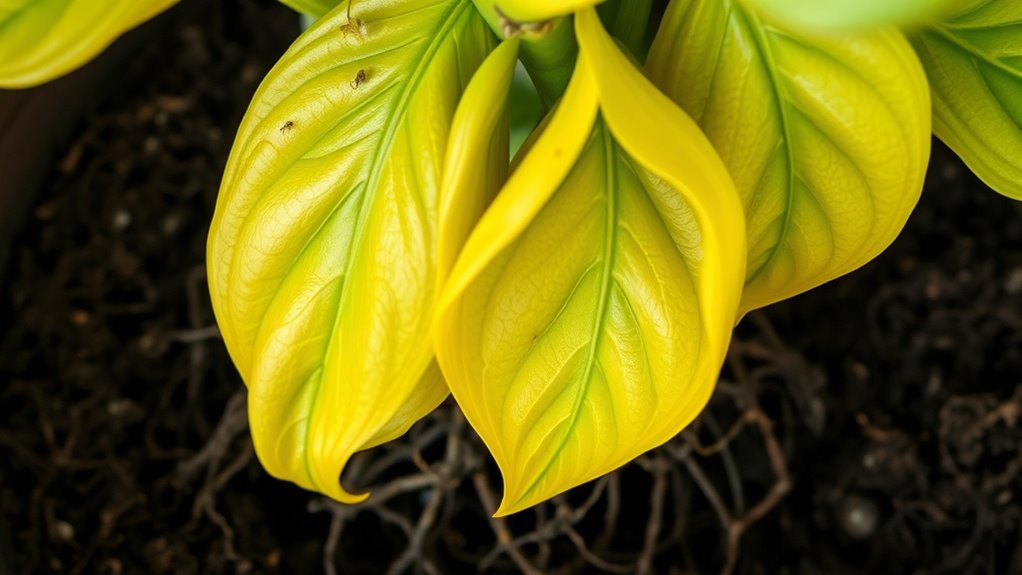

Wilting in plants usually happens due to water stress, root problems, or pests damaging the roots. If your plant lacks water or the roots are blocked or damaged, it can’t take up moisture, causing drooping. Pests like nematodes also attack roots, weakening the plant. To keep your plants healthy, it’s important to understand these causes and how they interact. Keep exploring to learn more about preventing and fixing wilting issues effectively.
Key Takeaways
- Wilting can result from water imbalance, including drought, overwatering, or poor soil drainage affecting water availability.
- Root damage or stress from pests or compacted soil impairs water uptake, causing plants to wilt.
- Pest infestations like nematodes or root maggots damage roots, leading to reduced water absorption and wilting.
- Soil deficiencies or poor composition weaken plant health, making them more susceptible to wilting under stress.
- Monitoring for pests, soil conditions, and water levels helps determine if wilting is caused by water issues, root problems, or pests.

Have you ever noticed your plants drooping unexpectedly and wondered what causes them to wilt? Wilting can stem from a variety of issues, but understanding the role of soil composition and pest prevention can help you diagnose and fix the problem. First, consider the soil where your plants are rooted. Healthy soil provides the right balance of nutrients, proper drainage, and aeration, which are all essential for strong roots and vibrant growth. If the soil is too compacted or poorly drained, roots can’t access water efficiently, leading to stress and drooping. Conversely, overly sandy or loose soil might drain too quickly, leaving plants without enough moisture. By evaluating and improving your soil composition—adding organic matter, adjusting pH, or guaranteeing proper drainage—you can create a more stable environment that keeps your plants hydrated and resilient. Additionally, soil testing can offer precise insights into nutrient levels and pH balance, helping you make targeted improvements.
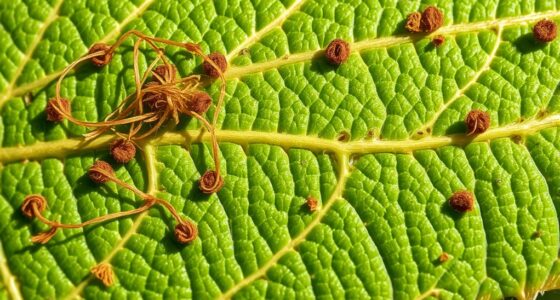
Pests also play a significant role in plant wilting. Many insects and diseases target roots, stems, and leaves, disrupting the plant’s ability to absorb water and nutrients. For instance, root maggots or nematodes can damage roots directly, leading to poor water uptake and causing the plant to wilt despite adequate watering. To prevent this, pest prevention is vital. Regularly inspecting your plants for signs of pests, such as holes in leaves, sticky residues, or unusual spots, allows for early intervention. Using natural predators, organic pesticides, or companion planting can help keep pests at bay without harming your plants or the environment. Additionally, maintaining healthy soil through crop rotation and avoiding over-fertilization reduces the likelihood of pest infestations, since many pests are attracted to stressed or weakened plants.
Understanding the connection between soil composition and pest prevention is key to maintaining healthy, flourishing plants. Proper soil management ensures your plants can access water and nutrients efficiently, while proactive pest prevention keeps potential threats from damaging roots or foliage. If your plants wilt suddenly, start by checking the soil’s moisture level and drainage. If the soil seems healthy but the plants still droop, examine them closely for signs of pests or disease. Sometimes, wilting is a symptom of multiple issues working together—poor soil conditions combined with pest attacks. Addressing both aspects holistically will give your plants the best chance to recover and thrive. Remember, consistent care and regular monitoring make a significant difference in keeping your garden vibrant and resilient against wilting threats.
Watering Can for Indoor and Outdoor Plants – Long Spout Water Can for Garden, Flower, House Plants – 1.8L/1/2 Gallon (Green)
Customizable Water Flow: Watering can with a detachable shower nozzle, easily switch between a steady stream or gentle…
As an affiliate, we earn on qualifying purchases.
As an affiliate, we earn on qualifying purchases.
Frequently Asked Questions
Can Overwatering Cause Plant Wilting?
Yes, overwatering can cause plant wilting. When you water too much, it leads to watering issues that harm root health, creating oxygen deprivation in the soil. This weakens roots, preventing them from absorbing necessary nutrients and water, which makes your plant wilt despite excess moisture. To fix this, guarantee proper drainage, avoid overwatering, and let the soil dry out slightly between waterings to maintain healthy roots.
How Do Pests Contribute to Plant Wilting?
Pests contribute to plant wilting by causing pest infestation and damage to roots, stems, or leaves. When pests feed on your plant, they weaken its structure and disrupt water uptake, leading to wilting. You might notice holes, sticky residue, or discolored spots, indicating pest activity. Addressing pest infestation promptly helps prevent further damage and restores your plant’s health, ensuring it can absorb water and nutrients effectively.
Is Wilting Reversible Without Replanting?
Your plant’s wilting isn’t a lost cause; it’s often fixable without replanting. Improved soil drainage and reducing transplant shock can revive it. You can carefully water, prune, and provide shade to help it recover. Think of it as a minor meltdown—not a total breakdown. With patience and proper care, you can bring your plant back from the brink, making it flourish again like a phoenix rising from the ashes.
Do Different Plant Species Wilt Differently?
Yes, different plant species wilt differently due to species variation and their unique wilt mechanisms. You’ll notice some plants, like succulents, resist wilting longer because they store water, while others, such as leafy greens, wilt quickly from water loss. Factors like root structure, water needs, and pest susceptibility influence these differences. By understanding these variations, you can better care for each plant’s specific needs and prevent unnecessary wilting.
What Environmental Factors Worsen Wilting Symptoms?
Environmental factors like soil compaction and poor air circulation can worsen wilting symptoms. When soil becomes compacted, roots struggle to access water and nutrients, making plants more vulnerable to drought stress. Limited air circulation traps humidity and heat around the plant, increasing dehydration risk. To prevent worsening wilting, loosen compacted soil and guarantee proper spacing for airflow, helping roots function efficiently and reducing stress on your plants.

SONKIR Soil pH Meter, MS02 3-in-1 Soil Moisture/Light/pH Tester Gardening Tool Kits for Plant Care, Great for Garden, Lawn, Farm, Indoor & Outdoor Use (Green)
Kindly NOTE: This soil tester can not be applied to test pH value of any other liquid. If…
As an affiliate, we earn on qualifying purchases.
As an affiliate, we earn on qualifying purchases.
Conclusion
Now that you see how water, roots, and pests dance together behind the scenes, you hold the power to rescue your plants. Think of wilting as a cry for help—a whisper from your garden asking for attention. By tuning in to these signs, you become the gardener who whispers back with care. With a little knowledge and quick action, you can turn the tide and let your plants flourish like a lush, green symphony.

Mighty Mint Peppermint Oil Plant Protection Spray – Insect & Pest Control for Gnats, Spider Mites & Aphids – Plant-Based, Easy-to-Use – 16 oz
Plant-Based Pest Protection: Helps protect plants from common pests including gnats, spider mites, aphids, fungus issues, and other…
As an affiliate, we earn on qualifying purchases.
As an affiliate, we earn on qualifying purchases.

Root Rot Repair for Houseplants – Root Supplement & Recovery Drops for Overwatering or Shock | Heals Roots, Prevents Yellowing, Brown Spots & Dropping Leaves (8 oz)
🛠️ RESCUE ROOTS FROM ROT, SHOCK & OVERWATERING Brown, mushy roots? Yellowing leaves? Soggy soil that never seems…
As an affiliate, we earn on qualifying purchases.
As an affiliate, we earn on qualifying purchases.