PPFD, or Photosynthetic Photon Flux Density, measures how much usable light your grow lights deliver to your plants, impacting their growth and yields. It differs from PAR by focusing on the light intensity in a specific area, helping you target the right amount for each growth stage. To keep things simple, verify your PPFD is appropriate, measure it accurately, and adjust your lights accordingly. Stick around to discover easy ways to optimize your grow setup effortlessly.
Key Takeaways
- PPFD measures the light intensity (photons per square meter per second) at plant canopy level, crucial for optimizing growth.
- Proper PPFD levels vary by growth stage: 50-150 for seedlings, 200-400 for vegetative, 600-900 for flowering.
- Use a quantum light meter to accurately measure PPFD across different areas, ensuring uniform light distribution.
- Adjust light distance and reflectors to maintain ideal PPFD levels without causing plant stress or damage.
- Combining PPFD with spectrum knowledge ensures plants receive the right light for healthy development and high yields.

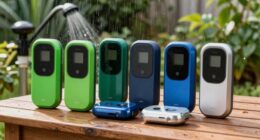
AH-Quantuv PAR Meter for Grow Lights, PPFD Meter 400-750nm with UVA Measurement 320-400nm, Shows PAR Breakdown of Blue Green Red, Records PAR & UVA for Light Distribution Mapping
Measure PAR and UVA Light Accurately. Measure PAR (400–750nm) and UVA (320–400nm) irradiance intensity to understand how your…
As an affiliate, we earn on qualifying purchases.
As an affiliate, we earn on qualifying purchases.
What Is PPFD and Why Is It Important for Your Plants?
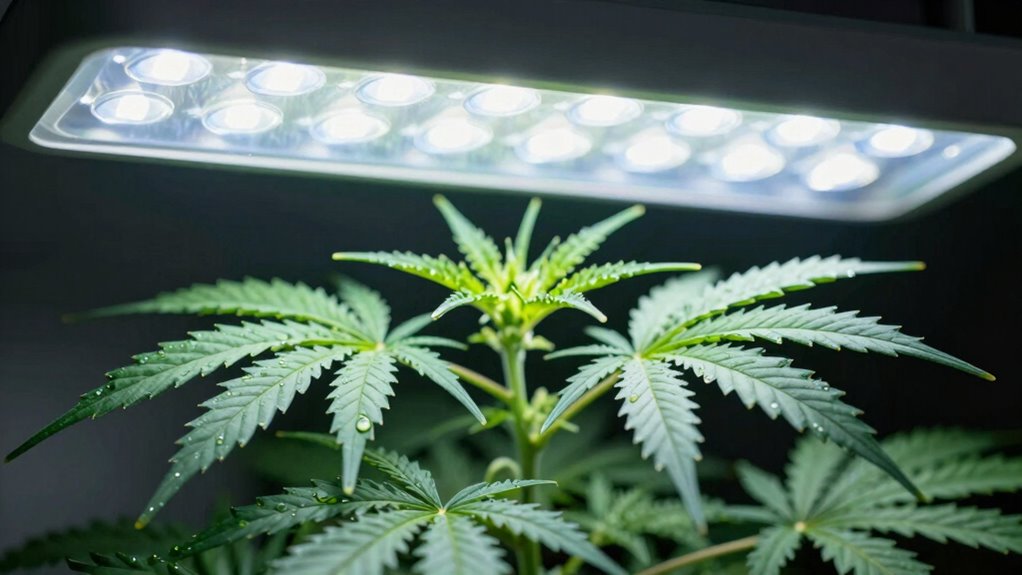
PPFD, or Photosynthetic Photon Flux Density, measures the amount of light your plants receive in a specific area over a given time. It reflects the intensity of light that’s vital for photosynthesis, directly affecting plant growth. Your grow light’s efficiency depends on how well it delivers the right plant light spectrum at ideal PPFD levels. A balanced spectrum ensures your plants get the full range of wavelengths they need, from blue to red, for healthy development. Too low PPFD can stunt growth, while too high may cause stress or damage. By understanding PPFD, you can select and position your grow lights effectively, maximizing efficiency and guaranteeing your plants receive adequate light for robust growth. Proper PPFD management leads to healthier plants and better yields. Additionally, using energy-efficient lighting technologies can enhance overall system performance while reducing energy consumption. Recognizing the importance of light uniformity ensures consistent light distribution across your grow space, further optimizing plant health and light distribution. A thorough understanding of PPFD measurement can help you fine-tune your lighting setup for optimal results.
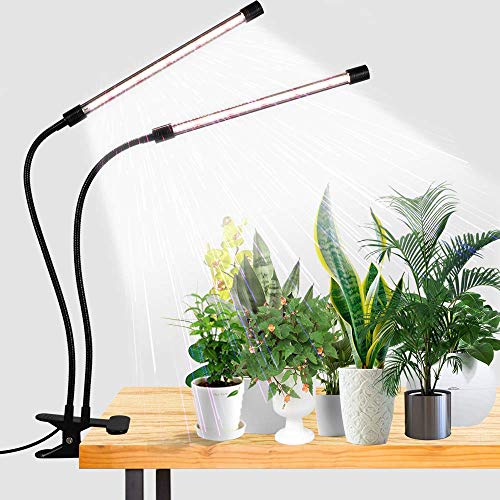
GooingTop LED Grow Light,6000K Full Spectrum Clip Plant Growing Lamp with White Red LEDs for Indoor Plants,5-Level Dimmable,Auto On Off Timing 4 8 12Hrs
6000K White Light – equipped with 10 Red + 74 White LEDs, this growing Lamp is similar to…
As an affiliate, we earn on qualifying purchases.
As an affiliate, we earn on qualifying purchases.
How Does PPFD Differ From Other Light Measurements Like PAR?
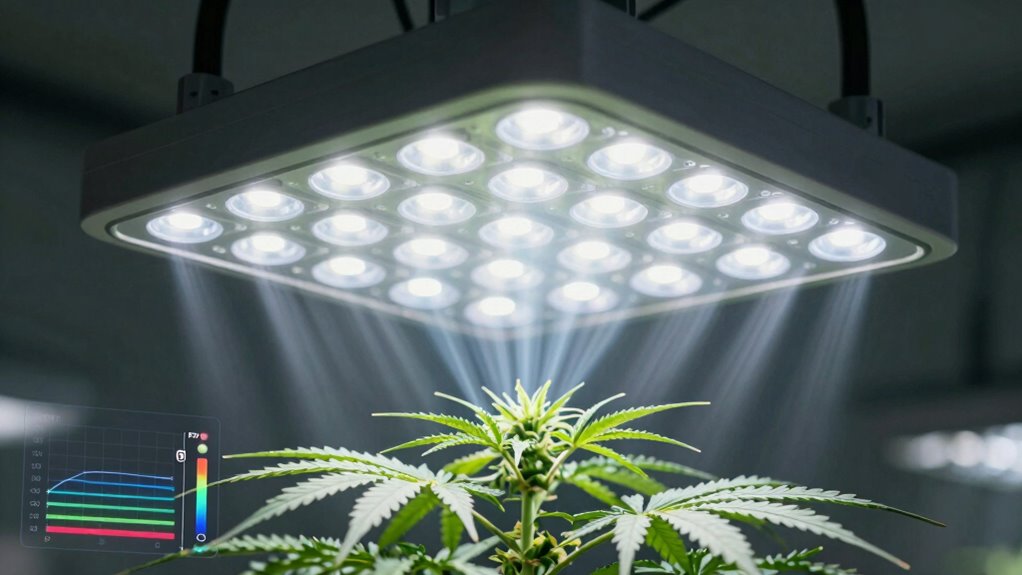
While PPFD measures the intensity of light that your plants receive in a specific area, PAR is a broader concept that encompasses the entire range of light wavelengths useful for photosynthesis. PPFD focuses on how many photons hit a square meter per second, giving you a precise measurement of light intensity. PAR, on the other hand, considers the spectral quality of the light—how well the spectrum matches plants’ photosynthetic needs. This helps you understand if your grow light provides the right wavelengths for paramount growth. Additionally, light uniformity is vital; consistent PPFD across your grow space ensures your plants receive even light distribution. In essence, PPFD offers detailed intensity data, while PAR provides a holistic view of spectral quality and overall light effectiveness.

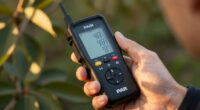
Quantum PAR Meter Full-Spectrum High Precision PPFD Tester for Photosynthetic Activity of Indoor and Outdoor Plants 400-700nm Light Lux Tester
✅RELIABLE TESTER: The measurement range is between 0 and 5000 μmol/m²/sec. The cut-on wavelength is 400 nm and…
As an affiliate, we earn on qualifying purchases.
As an affiliate, we earn on qualifying purchases.
What Is the Ideal PPFD Range for Each Stage of Plant Growth?
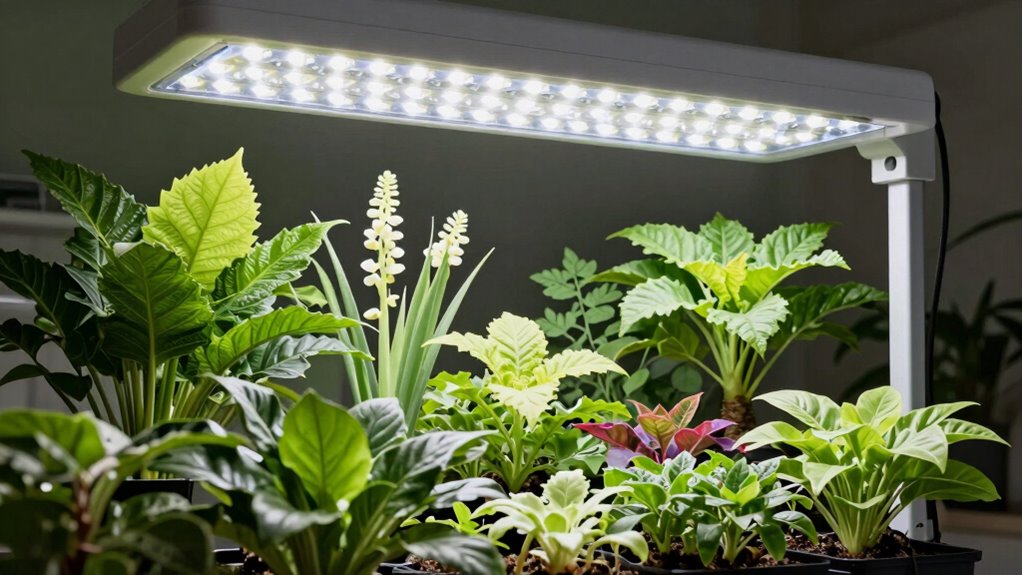
Understanding the ideal PPFD range for each growth stage helps you optimize your lighting setup for healthy, vigorous plants. During the seedling stage, lower light intensity (around 50-150 µmol/m²/sec) supports delicate growth without overstimulating young plants. In the vegetative stage, increasing PPFD to 200-400 µmol/m²/sec boosts photosynthesis efficiency and promotes strong, leafy growth. When flowering begins, higher light levels (around 600-900 µmol/m²/sec) maximize bud development. Recognizing these ranges guarantees your plants receive the right amount of light to optimize photosynthesis efficiency without causing stress. Proper light management and adjusting light intensity based on growth stages ensures your plants grow healthy and productive, making the most of your LED grow lights. Additionally, understanding the photosynthesis process can help you fine-tune light levels for optimal plant health, especially by considering how light interacts with essential oils that support plant immunity and growth. Knowing the light spectrum can further enhance your ability to select the most effective LED grow lights for each stage of development. Monitoring PPFD levels closely allows you to adapt your lighting as plants mature, ensuring optimal growth throughout their lifecycle.

FOXGARDEN Grow Light Stand, Advanced LED Plant Growth Lighting with 4/8/12H Timer, 6 Dimming Options, and Adjustable Height – Optimal for Indoor Plants in Seedlings, Vegetative, and Flowering Phases
Full Spectrum Grow Light: Our plant light is equipped with 108 high-quality LED beads. This advanced lighting solution…
As an affiliate, we earn on qualifying purchases.
As an affiliate, we earn on qualifying purchases.
How to Measure PPFD Accurately in Your Grow Space?
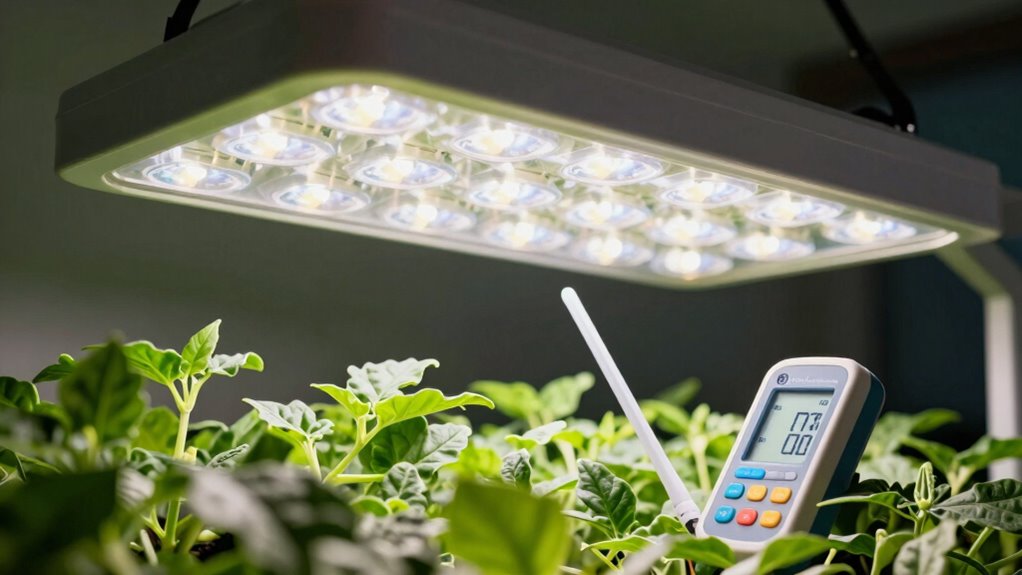
To guarantee your plants receive the correct light levels, measuring PPFD accurately in your grow space is essential. First, use a reliable quantum light meter designed for horticultural measurements. Place the sensor at canopy level in different areas to account for light distribution. Ensure your grow light is operating in the desired light spectrum, as this affects plant response. Take multiple readings across the grow area to identify uneven light coverage. Keep the meter’s sensor flat and avoid shadows or obstructions that could skew results. Record your measurements and compare them with your plants’ needs at each growth stage. Understanding light spectrum and its influence on plant growth can significantly improve your results. Additionally, being aware of light uniformity helps optimize your setup for even plant development. Precise PPFD measurement helps you understand how your light spectrum influences plant response, leading to a more effective and healthy grow environment.
How to Read and Interpret Your Grow Light’s PPFD Map?
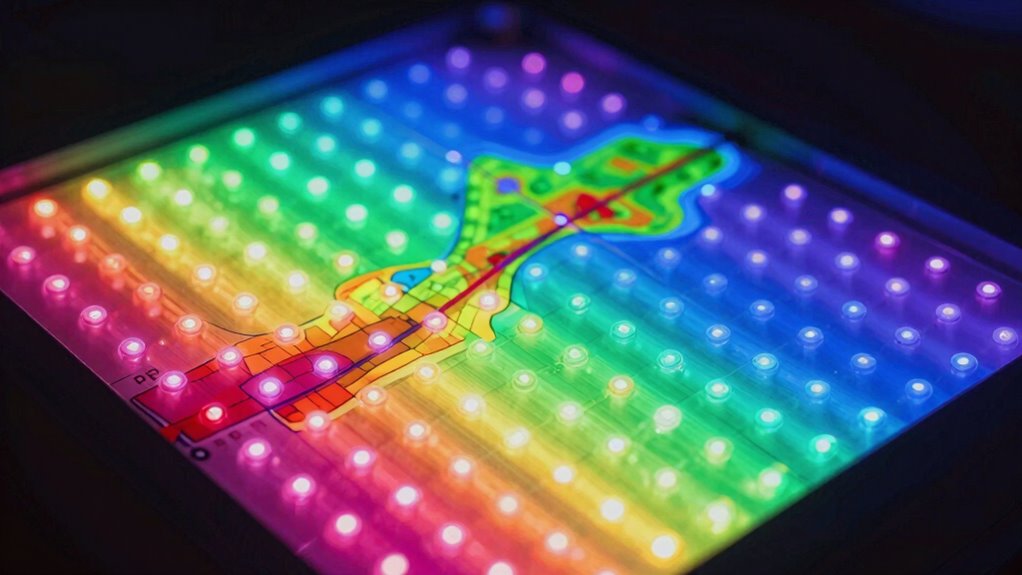
Reading and interpreting your grow light’s PPFD map is essential for optimizing your lighting strategy. It helps you understand where your plants receive the right amount of light for healthy growth. Focus on the color-coded zones, which indicate different PPFD levels, ensuring they match your plant’s stage. Look for areas with consistent light distribution to maximize energy efficiency. Keep in mind that the light spectrum affects how plants use the light, so consider how your light’s spectrum interacts with PPFD data. A well-read PPFD map allows you to make adjustments for even coverage and avoid hotspots. By understanding these elements, you can fine-tune your setup for better growth results and smarter energy use. Additionally, understanding Free Floating concepts can help you design adaptable lighting setups that cater to various plant growth phases. Recognizing light distribution patterns can further improve your setup by ensuring uniform coverage across your grow space. Moreover, paying attention to light uniformity can prevent uneven growth and optimize yield. Incorporating light intensity adjustments based on your PPFD readings can lead to more precise control over your plant’s development.
What Factors Affect PPFD Levels in Your Indoor Garden?
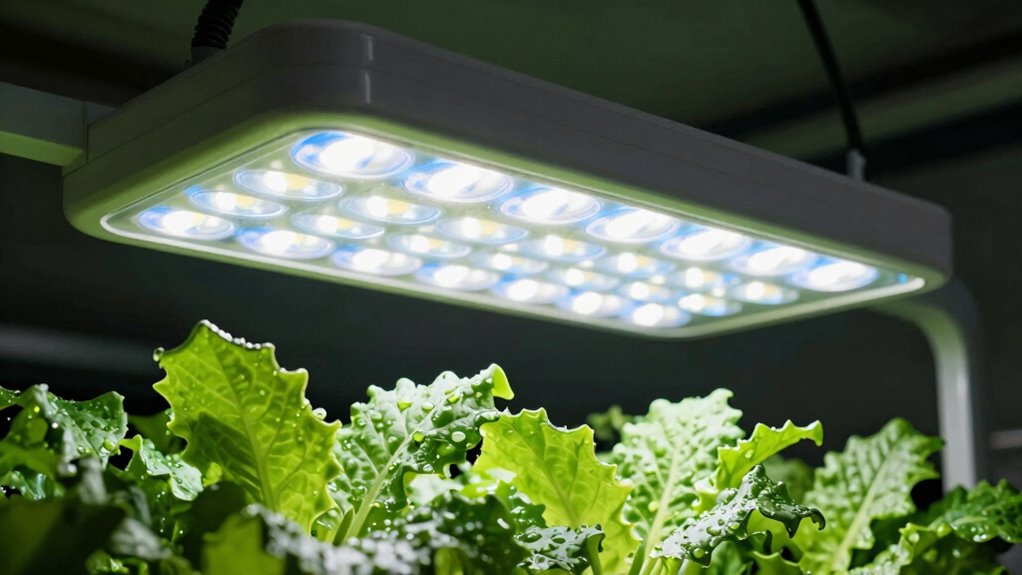
The distance between your LED grow light and your plants considerably influences PPFD levels, with closer lights providing higher intensities. As your plants grow through different stages, their light needs change, affecting how you should position your lights. Reflective surfaces around your grow space can also boost PPFD by redirecting light back onto your plants, making the most of your setup. Additionally, understanding light distribution can help you optimize coverage and ensure uniform light exposure for all your plants. Proper light management is essential to prevent hotspots and ensure even growth across your garden. Monitoring and adjusting light intensity throughout your plant’s lifecycle can further enhance growth efficiency. Recognizing ventilation considerations can also improve overall light and temperature conditions, contributing to healthier plant development. Being aware of light spectrum variations can help tailor your lighting for specific plant growth stages, maximizing yield and health.
Light Distance Impact
As you position your LED grow lights, understanding how light distance influences PPFD levels is crucial for optimizing plant growth. The closer your lights are, the higher the light intensity your plants receive, which can boost growth but may also cause light stress. Conversely, increasing the distance reduces PPFD, possibly slowing development but preventing damage. Factors like fixture design and wattage affect how much light diminishes with distance. Your plant response depends on finding the right balance—too close, and leaves may burn; too far, and growth stalls. To optimize your setup, consider these key points:
- Light intensity diminishes with increased distance
- Proper distance enhances plant response
- Too close can cause heat stress
- Adjusting distance helps maintain ideal PPFD levels
- Fixture design and wattage significantly influence how light spreads and diminishes over distance.
- Understanding how light distribution changes with distance can help you make more informed adjustments for optimal growth.
Growth Stage Variations
Your plants’ light needs change as they progress through different growth stages, affecting the PPFD levels they require. During vegetative growth, they often need higher PPFD with a focus on blue light, which supports leaf and stem development. In flowering, they benefit from a broader light spectrum, especially with increased red light, to promote bud formation. Plant genetics also influence these needs; some strains thrive under specific light intensities or spectra. Adjusting PPFD accordingly ensures ideal growth without stress or stretch. Keep in mind that too much light can cause damage, while too little can stunt development. Monitoring your plants’ responses and tailoring your light spectrum and intensity throughout each stage helps maximize yield and health. Additionally, understanding sound vibrations and their influence on cellular processes can provide innovative insights into optimizing plant growth environments. Recognizing light spectrum variations and their impact can further refine your grow light setup for optimal results, especially when considering light quality and how different wavelengths affect plant responses.
Reflective Surfaces Effect
Reflective surfaces play a crucial role in maximizing PPFD levels in your indoor garden by bouncing light back onto your plants. They improve light diffusion, ensuring even coverage and reducing hotspots. Properly installed reflective materials can markedly boost light efficiency, helping your plants receive more consistent illumination. The type and quality of reflective surfaces matter; high-reflectivity materials reflect more light, increasing PPFD. Additionally, the surface texture influences light diffusion, with matte finishes dispersing light more evenly than glossy surfaces. Environmental factors, like dust or dirt, can diminish reflectivity over time, so regular cleaning is essential. Ultimately, choosing the right reflective surfaces and maintaining them optimizes light use, leading to healthier, more robust plant growth.
- High-reflectivity materials
- Surface texture and finish
- Cleanliness and maintenance
- Proper installation
Practical Tips for Adjusting PPFD to Maximize Plant Growth?
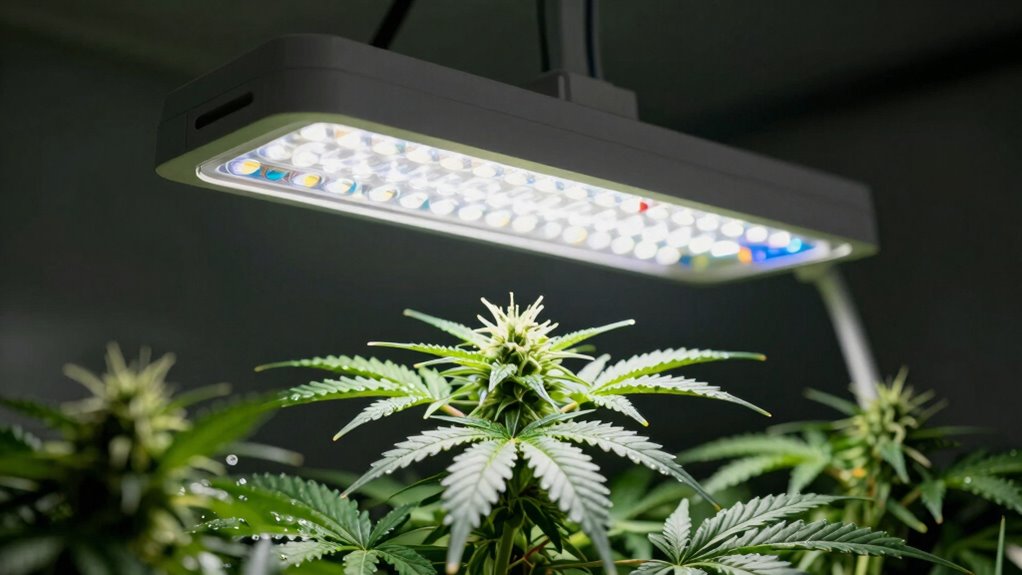
Adjusting PPFD levels correctly is key to maximizing plant growth under LED grow lights. Start by monitoring your plants’ response; if leaves yellow or become scorched, reduce PPFD. Conversely, if growth stalls or plants stretch excessively, increase the light intensity gradually. Consistent light schedules help plants develop ideal plant nutrition, promoting healthy photosynthesis. Keep in mind that higher PPFD can attract pests or encourage mold, so ensure proper pest management practices are in place. Use a light meter to measure PPFD at the canopy level, and adjust height or dimming settings accordingly. Remember, different plants have specific light needs, so tailor your adjustments based on species and growth stage. Properly managing PPFD creates a healthy environment that encourages vigorous growth and minimizes stress.
Common Mistakes to Avoid When Using PPFD for Grow Lights?
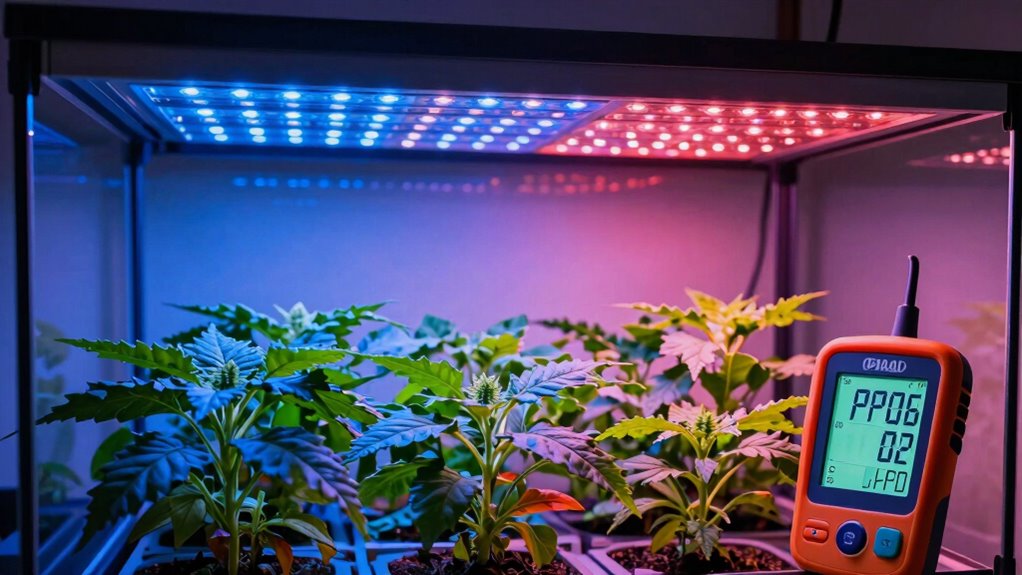
When using PPFD for grow lights, one common mistake is setting the light intensity too high without considering your plants’ specific needs. This can lead to energy waste and stress on your plants. Additionally, ignoring the light spectrum can reduce the effectiveness of your grow setup. To avoid these pitfalls, keep these tips in mind:
- Don’t ignore the ideal PPFD levels for each plant stage
- Avoid sacrificing energy efficiency for overly intense light
- Don’t overlook the importance of a full spectrum tailored to growth phases
- Be cautious of placing lights too close, which can cause light burn and uneven coverage
Focusing on the right light spectrum and appropriate intensity guarantees healthier growth while maximizing energy efficiency and avoiding unnecessary mistakes.
How to Use PPFD Data to Optimize Light Distance and Duration?
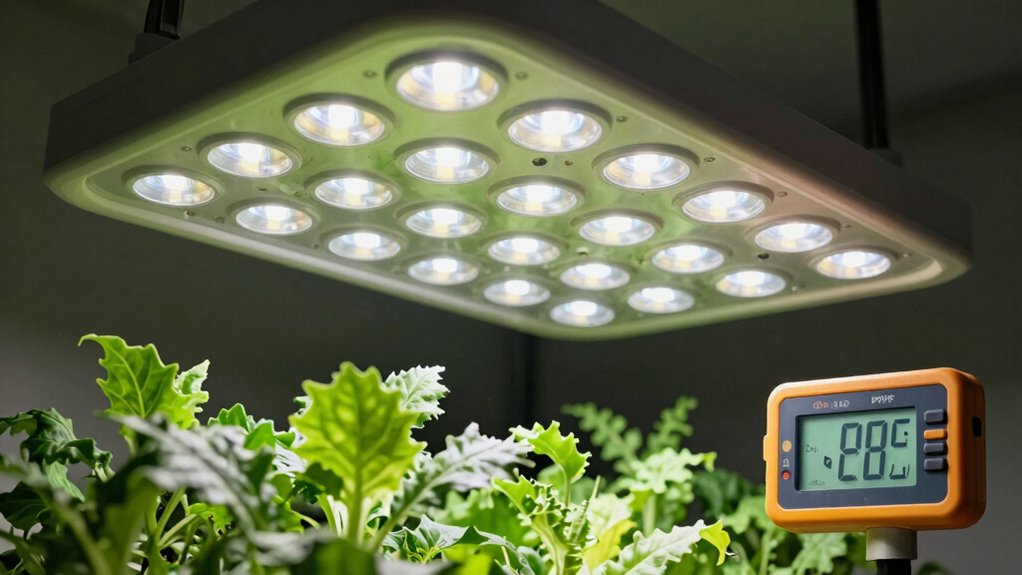
To effectively use PPFD data for optimizing your grow lights, start by monitoring the light intensity at different distances from your plants. This helps you understand how light intensity affects plant response, guaranteeing your plants receive the right amount of light without stress. If the PPFD is too high, reduce the distance to prevent light burn and promote healthy growth. Conversely, if it’s too low, move the lights closer or extend their duration. Observe your plants’ reactions—if they show signs of stress or stretching, adjust accordingly. Consistently tracking PPFD allows you to fine-tune light distance and duration, maximizing growth while avoiding issues caused by improper light exposure. This strategic approach guarantees your plants thrive under optimal light conditions.
Quick Tips to Simplify PPFD and Improve Your Grow Results?
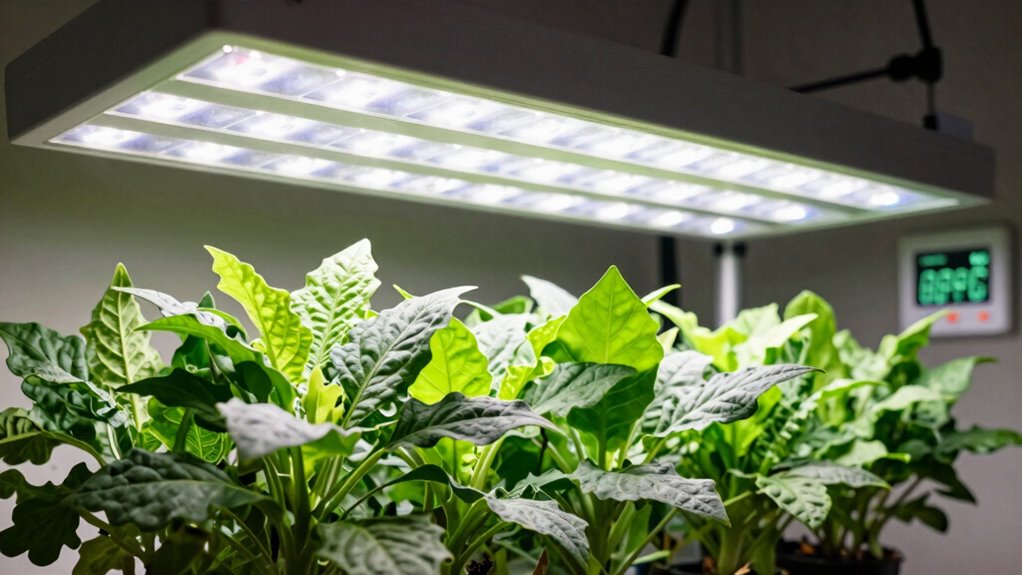
Simplifying PPFD measurements can substantially boost your grow results by making it easier to monitor and manage your lighting setup. To improve plant health and optimize light intensity, focus on clarity and consistency.
- Use a reliable PPFD meter to get accurate readings without confusion.
- Stick to target PPFD ranges for each growth stage to maintain proper light intensity.
- Avoid overcomplicating measurements; focus on overall light distribution rather than exact figures everywhere.
- Regularly check your grow area to ensure even light coverage, reducing hotspots or shadows that can harm plant health.
Frequently Asked Questions
Can PPFD Levels Be Consistent Across Different Brands of Grow Lights?
PPFD levels can vary across different brands of grow lights due to differences in brand consistency and measurement accuracy. You might find that some brands maintain more consistent PPFD outputs, while others fluctuate. To make certain of reliable results, it’s crucial to compare measurements from reputable brands known for precise calibration. Using a quality PAR meter can also help you verify PPFD levels, ensuring your plants receive the right amount of light regardless of the brand.
How Often Should I Adjust PPFD as My Plants Grow?
You should modify light intensity and measure PPFD regularly as your plants grow, ideally every 1-2 weeks. This ensures your plants receive the right amount of light at each stage. When your plants grow taller or develop new leaves, increasing or decreasing the measurement frequency helps you fine-tune the light levels, preventing stretching or light stress. Consistent adjustments promote healthy growth and maximize your yield.
What Is the Impact of Reflector Design on PPFD Distribution?
Think of your reflector as a maestro guiding a symphony of light. Its design influences reflector efficiency, shaping how evenly light disperses across your plants. A well-crafted reflector acts like a lighthouse, maximizing light reflection and minimizing wasted energy, ensuring your plants bask in a balanced PPFD. Poor design, however, causes uneven light dispersion, leading to hotspots and shaded areas, which can hinder healthy growth.
Are There Specific PPFD Levels for Flowering Versus Vegetative Stages?
During vegetative stages, you should aim for a PPFD of 200-400 micromoles per square meter per second, while flowering stages require higher PPFD levels around 600-900. Stage-specific lighting guarantees your plants respond effectively, promoting healthy growth and abundant buds. Adjust your LED grow light accordingly, understanding that plant response varies with these PPFD levels. Properly tailored lighting maximizes yield and quality throughout each growth phase.
How Does Ambient Humidity Affect PPFD Effectiveness?
Humidity impact can reduce PPFD effectiveness because high moisture levels cause interference with light penetration, making your plants receive less light than intended. Excess humidity creates moisture interference on leaves and surfaces, scattering light and diminishing its intensity. To optimize growth, maintain proper humidity levels, especially during flowering and vegetative stages, ensuring your LED grow lights deliver consistent, effective PPFD for healthy plant development.
Conclusion
Mastering PPFD might seem tricky at first, but once you get the hang of it, you’ll reveal plant growth like never before. Think of it as the secret sauce to your thriving garden—without it, your plants are missing out on their full potential. Keep it simple, stay consistent, and you’ll see results that blow your mind. With the right PPFD knowledge, you’re unstoppable in creating lush, healthy plants that outshine even the brightest grow lights!