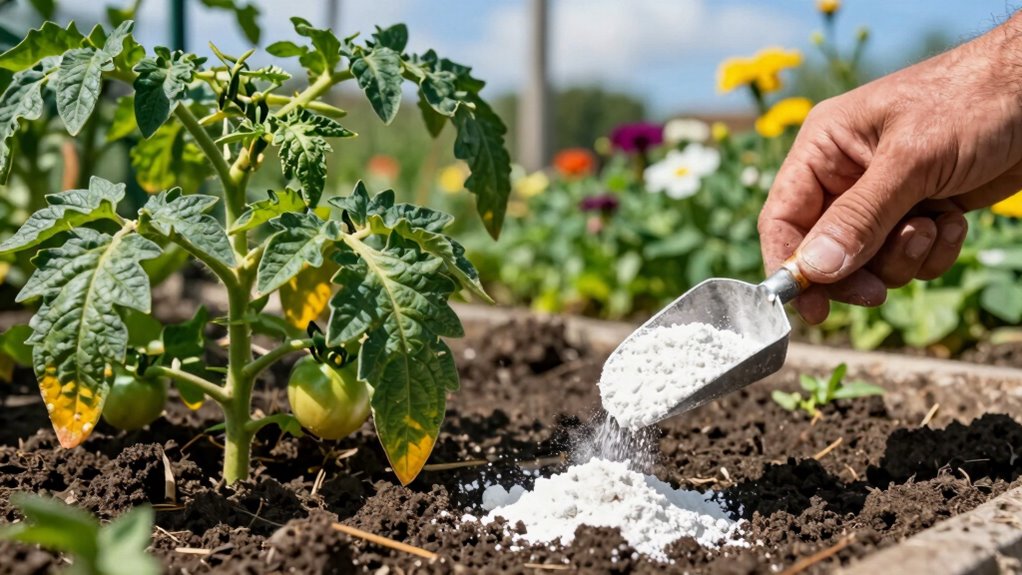
Adding calcium alone won’t fix every garden problem because soil health involves more than just calcium levels. While calcium is important for plant structure and pH balance, overapplying it can create new issues without addressing underlying problems like soil compaction, poor drainage, or nutrient deficiencies. To improve your garden, focus on proper soil testing and management. Keep exploring to understand how calcium fits into a bigger soil health picture and what steps you should take next.

Get garden gear delivered free with Prime
- Fast, free delivery on millions of items
- Prime Video, Amazon Music and more included
- Member-only deals all year
Key Takeaways
- Adding calcium alone doesn’t address soil issues like compaction or poor drainage.
- Excessive focus on calcium can overlook other critical soil factors and management practices.
- Soil pH and structure are vital; calcium’s effectiveness depends on proper soil conditions.
- Soil testing is essential to determine actual needs before applying calcium amendments.
- Calcium strengthens plant cells only when soil health and nutrient balance are already optimal.
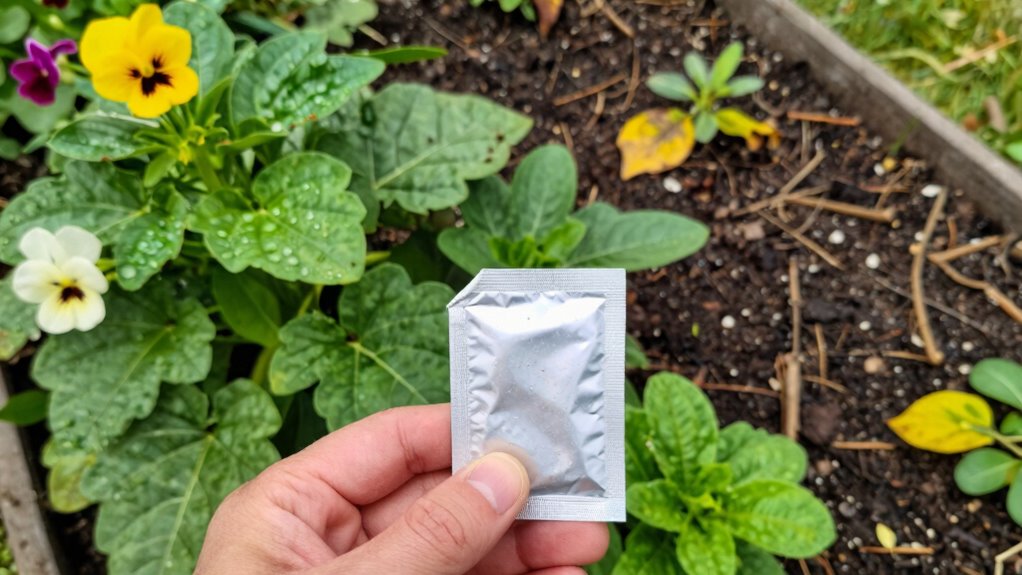
Many gardeners believe that adding calcium to their soil automatically leads to healthier plants, but this is a common myth. While calcium is crucial for plant growth, simply increasing its levels doesn’t guarantee better health. Instead, understanding how calcium interacts with your soil’s pH balance and soil structure is key to making meaningful improvements. When you add calcium without considering these factors, you might not see the results you expect, or worse, you could create new problems.
Adding calcium alone doesn’t ensure healthier plants; understanding soil pH and structure is essential for true growth.
Calcium plays an essential role in maintaining the pH balance of your soil. If your soil is too acidic or too alkaline, adding calcium might help stabilize it, but only if the pH is out of the ideal range for your plants. For example, lime, a common calcium source, is often used to raise soil pH in acidic soils. However, if your soil’s pH is already balanced, adding lime won’t do much and could even lead to nutrient imbalances. Before adding calcium, it’s smart to test your soil’s pH and adjust accordingly. This way, you guarantee your plants can absorb nutrients effectively, rather than just adding calcium blindly.
Beyond pH, calcium influences soil structure. Healthy soil structure improves root growth and water retention, but this isn’t achieved simply by adding calcium. If your soil is compacted or poorly aerated, adding calcium won’t loosen it or create better drainage. Instead, you need to focus on improving soil aeration and organic matter content. Using organic amendments like compost can naturally enhance soil structure, promoting better calcium uptake and overall plant health. When calcium is added in a way that aligns with your soil’s existing structure, it can help strengthen cell walls in plants, leading to sturdier growth. But if your soil is heavily compacted or has poor drainage, calcium alone won’t solve these issues. Soil health is a complex system that depends on multiple factors working together. Additionally, understanding the interaction between calcium and soil pH can help you make more informed decisions about amendments.
In essence, the idea that calcium is a remedy-all for garden problems is a misconception. Your first step should be to assess your soil’s pH and structure before making any amendments. Proper testing and understanding your soil’s needs will guide you in applying calcium effectively, if at all. This approach prevents unnecessary treatments and ensures your garden receives exactly what it needs to thrive. So, remember, calcium isn’t a magic fix; it’s just one piece of a bigger puzzle that involves understanding and managing your soil’s unique conditions. Recognizing the importance of soil testing can help you avoid unnecessary or ineffective treatments and focus on what your garden truly needs.
soil test kit for pH and nutrients
As an affiliate, we earn on qualifying purchases.
As an affiliate, we earn on qualifying purchases.
Frequently Asked Questions
Can Calcium Supplements Harm My Garden Plants?
Yes, calcium supplements can harm your garden plants if misused. Too much calcium can lead to calcium toxicity, which damages roots and hampers nutrient uptake. It can also cause soil imbalance, disrupting the natural nutrient levels essential for healthy growth. Always test your soil first and apply calcium carefully, following recommended amounts. Overdoing it can do more harm than good, so moderation is key to avoiding these issues.
How Do I Test My Soil’s Calcium Levels Accurately?
You can’t just guess if your soil’s calcium levels are okay; you need precise soil testing! Grab a testing kit or send a sample to a lab to detect calcium deficiencies accurately. Soil testing helps you avoid the drama of guessing and guarantees your plants get exactly what they need to thrive. Don’t leave your garden’s health to chance—test today and restore balance for lush, happy plants!
Are There Specific Plants That Benefit Most From Calcium?
Certain plants, like tomatoes, peppers, and broccoli, benefit most from calcium, especially when faced with calcium deficiency or soil pH imbalance. These plants are more sensitive to calcium levels and can develop issues like blossom end rot if deficiencies occur. To support healthy growth, make sure your soil isn’t overly acidic or alkaline, and consider supplementing with calcium sources if your soil tests reveal deficiencies.
How Often Should I Apply Calcium to My Garden?
Imagine your garden as a delicate dance, where calcium is the steady rhythm. You should apply calcium every 4 to 6 weeks, especially if soil pH is off balance. Always check compatibility with your fertilizer to avoid conflicts. Regularly testing your soil guarantees you don’t overdo it. Think of calcium as part of your garden’s harmony—used wisely, it keeps your plants thriving without overwhelming them.
Does Calcium Help With Pest or Disease Resistance?
Calcium doesn’t directly boost pest or disease resistance, but it can help prevent issues related to calcium deficiency, like blossom-end rot in tomatoes. Healthy plants with adequate calcium are more resilient and better equipped to fight off pests and diseases. While calcium isn’t a cure-all, maintaining proper calcium levels contributes to overall plant health, which can indirectly improve pest prevention and strengthen your garden’s defenses.
organic compost for soil improvement
As an affiliate, we earn on qualifying purchases.
As an affiliate, we earn on qualifying purchases.
Conclusion
Remember, not every problem has a silver bullet, and the calcium myth is no exception. While calcium can benefit your garden, it’s not a cure-all for every issue. Before rushing to add supplements, diagnose the real problem and address it accordingly. As the saying goes, “A little knowledge is a dangerous thing.” Approach gardening with patience and research, and you’ll be more likely to see your plants thrive.
As an affiliate, we earn on qualifying purchases.
As an affiliate, we earn on qualifying purchases.
Fall Picks
fall essentials
As an affiliate, we earn on qualifying purchases.