
Your composting speed primarily relies on maintaining the right mix of greens and browns, not just container style. Ensuring proper moisture, turning regularly for oxygen, and balancing nitrogen-rich and carbon-rich materials boost microbial activity. An ideal layer setup improves airflow and decomposition. While container ventilation helps, focusing on the right material combination makes the biggest difference. Keep going, and you’ll discover how fine-tuning your mix accelerates your composting process even more.

Get garden gear delivered free with Prime
- Fast, free delivery on millions of items
- Prime Video, Amazon Music and more included
- Member-only deals all year
Key Takeaways
- A balanced green-to-brown material mix provides essential nutrients, speeding up microbial activity regardless of container type.
- Proper moisture levels, maintained at a wrung-out sponge consistency, are more critical than container style.
- Regular turning and aeration enhance oxygen supply, accelerating composting more than container design.
- Optimized layering of materials improves airflow and decomposition rate, outweighing container differences.
- Correct carbon-to-nitrogen ratios in the mix boost microbial efficiency, influencing compost speed more than container shape.
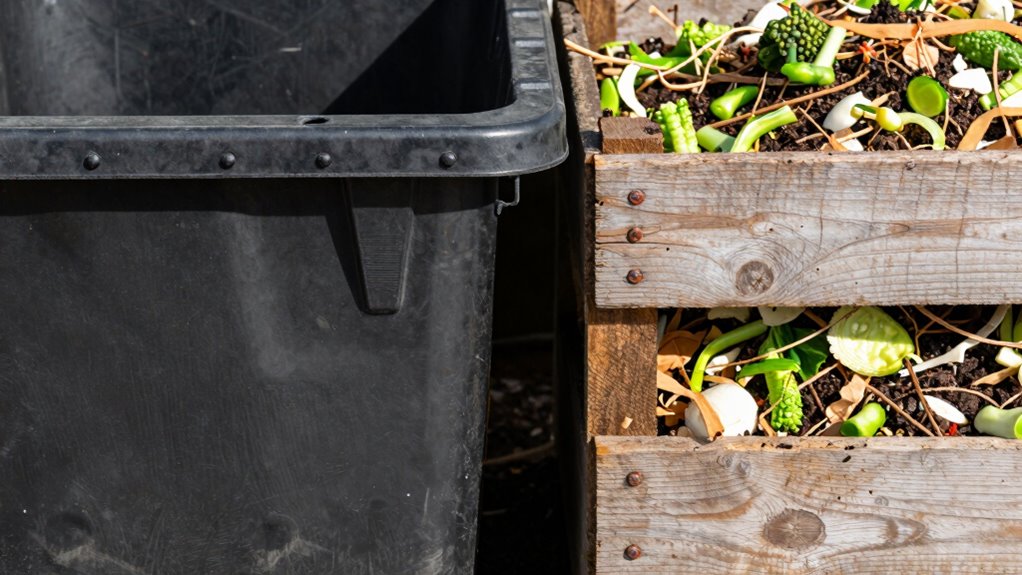
Composting speed varies depending on several factors, but understanding how to accelerate the process can help you turn waste into nutrient-rich soil more quickly. One of the most critical elements is creating the right environment for microbes to thrive. While container style can influence convenience, it’s your compost mix—its ingredients and how you manage it—that truly determines how fast your compost matures. Focusing on soil moisture and aeration techniques is essential in optimizing the microbial activity that breaks down organic matter. Maintaining proper soil moisture levels is fundamental. If your compost is too dry, microbial activity slows down markedly because microbes need moisture to survive and work effectively. On the other hand, overly wet compost can lead to anaerobic conditions, which slow decomposition and cause foul odors. The sweet spot is moist but not soggy—think of a wrung-out sponge. Regularly checking and adjusting moisture levels ensures microbes stay active and decomposition accelerates. Covering your compost pile with a tarp or lid can help retain moisture during dry spells, but you should also turn the pile occasionally to prevent it from drying out unevenly. Aeration techniques are equally important. Oxygen is essential for aerobic microbes, which are responsible for faster, cleaner composting. Without enough air, microbes switch to less efficient anaerobic processes, slowing the breakdown and producing unpleasant smells. To keep air flowing, you should turn your compost regularly—every few days if possible. This not only introduces oxygen but also redistributes materials, ensuring all parts of the pile decompose evenly. If you’re using a container, make sure it has ample ventilation or air holes. Larger bins or piles benefit from aeration tools like pitchforks or compost turners, which help break up dense sections and introduce fresh air. Additionally, understanding how microbial activity influences decomposition can help you optimize your composting process. Creating the right mix of materials with proper carbon-to-nitrogen ratios also plays a vital role in speeding up composting, as microbes need a balanced diet to function efficiently. The mix of organic materials also influences composting speed. A balanced blend of greens (nitrogen-rich materials like food scraps and grass clippings) and browns (carbon-rich materials such as leaves, straw, or shredded paper) creates an ideal environment for microbes. Too many greens can make the pile too wet and slimy, while too many browns can slow microbial activity due to lack of nitrogen. Striking the right balance, along with managing soil moisture and aeration, ensures microbes work efficiently, speeding up your composting process. Incorporating proper composting techniques such as layering materials and maintaining optimal conditions can further enhance the decomposition rate. Additionally, selecting the right container style with adequate ventilation can support healthier microbial activity and faster composting. Proper material layering can also improve airflow and decomposition efficiency, leading to quicker results.
As an affiliate, we earn on qualifying purchases.
Frequently Asked Questions
How Often Should I Turn My Compost for Optimal Speed?
You should turn your compost every 1-3 days to keep the process moving efficiently. Regular turning aerates the mixture, helping microbes break down organic matter faster. Your compost container’s size and type influence turning frequency, but generally, consistent turning prevents odors and compacts, ensuring good airflow. If you notice slow decomposition, increase turning frequency. Stick to this routine for best speed, and you’ll have rich compost in no time.
What Temperature Is Best for Composting Quickly?
For quick composting, aim for a temperature between 135°F and 160°F. To achieve this, guarantee good thermal insulation around your compost to retain heat, and promote proper compost aeration by turning regularly. Insulation helps maintain consistent temperatures, while aeration prevents odor and compaction, keeping microbes active. Monitoring temperature with a compost thermometer lets you adjust your mix and turning frequency to optimize decomposition speed effectively.
Can Compost Speed Be Affected by Outdoor Weather?
You bet outdoor weather can influence compost speed. Seasonal variations, like colder months, slow down microbial activity, while warmer seasons speed it up. Wind effects can also dry out your compost, reducing moisture and hindering decomposition. To keep things humming along smoothly, monitor moisture levels regularly and shield your compost from harsh weather. Think of it as watering your garden—consistent care makes all the difference in nurturing healthy, quick compost.
Do Different Types of Organic Waste Influence Composting Rate?
Yes, different types of organic waste influence composting rates. When you include diverse plant materials, such as leaves, vegetable scraps, and shredded branches, you boost plant diversity, which encourages microbial activity. This heightened microbial activity accelerates decomposition. So, by mixing various organic wastes, you create a richer environment for microbes, speeding up composting, regardless of container style. Keep diversifying your compost inputs for quicker, healthier compost.
Is There a Specific Moisture Level Ideal for Fast Composting?
Imagine your compost as a sponge soaking up the morning dew; the ideal moisture consistency for fast composting is like a damp sponge—moist but not dripping. You want to keep compost hydration balanced, around 40-60% moisture. Too dry, and decomposition slows; too wet, and it becomes anaerobic. Regularly check and adjust moisture to guarantee your compost stays lively and decomposes quickly.
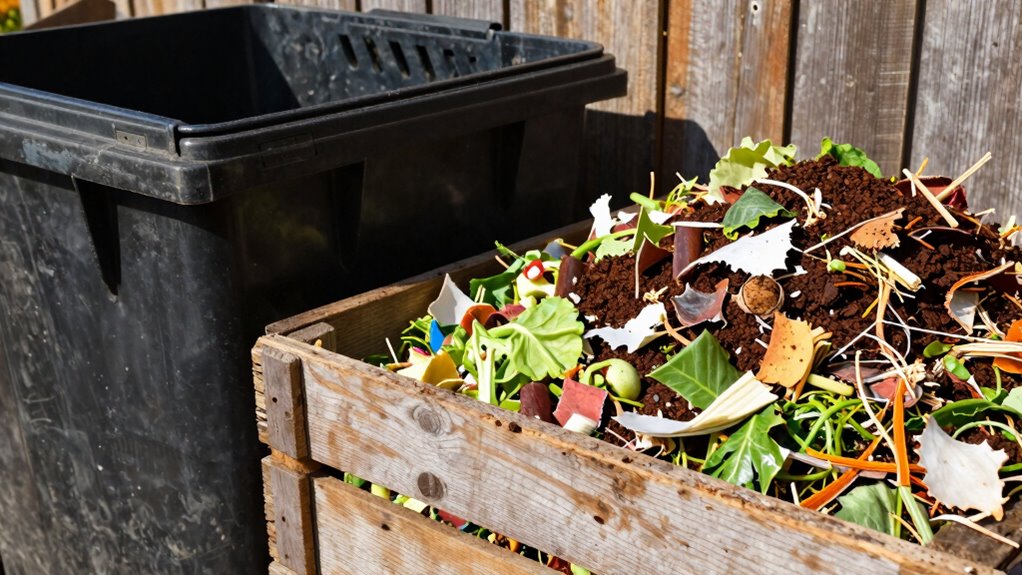
green and brown compost materials
As an affiliate, we earn on qualifying purchases.
As an affiliate, we earn on qualifying purchases.
Conclusion
Remember, the saying “Don’t judge a book by its cover” applies here. Your compost’s speed depends more on the mix than the container style, so focus on balancing greens and browns. Keep the layers thin and turn it regularly, regardless of the container. With the right mix, you’ll see faster results and richer soil. In composting, as in life, it’s what’s inside that truly counts.
As an affiliate, we earn on qualifying purchases.
As an affiliate, we earn on qualifying purchases.
Fall yard work Picks
leaf blowers
As an affiliate, we earn on qualifying purchases.