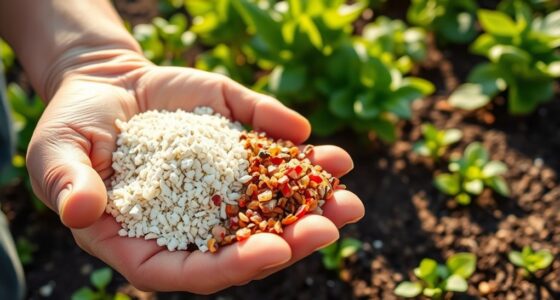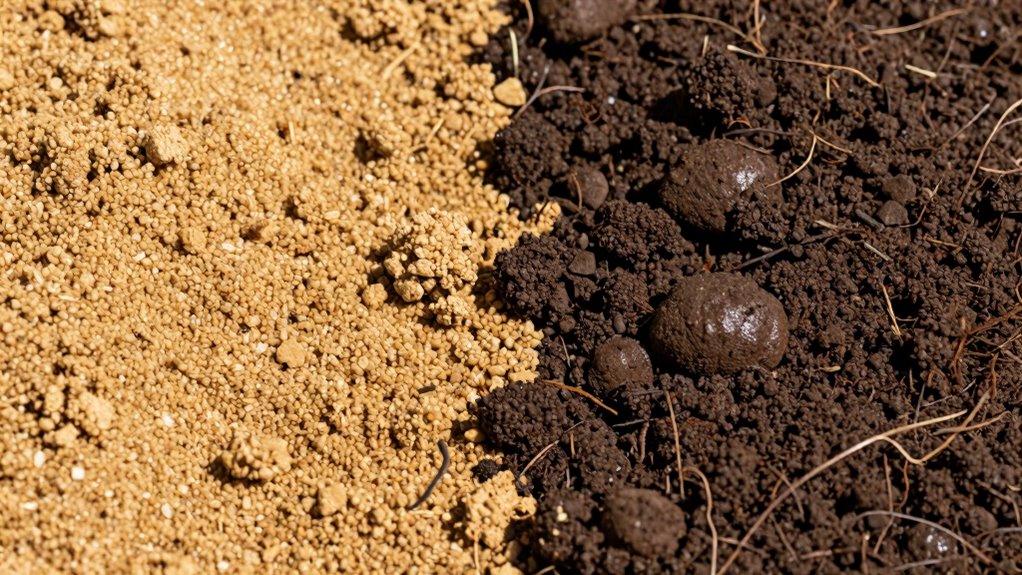

Sandy soil needs different feeding than clay because it drains quickly, causing nutrients like nitrogen to wash away before plants can absorb them. You should add organic amendments to improve nutrient and water retention in sandy soil. Meanwhile, clay retains water and nutrients tightly, so it benefits from amendments that loosen the soil and improve aeration. Understanding these differences helps you choose the right amendments—keep exploring to discover how to optimize your soil for healthy plants.

Get garden gear delivered free with Prime
- Fast, free delivery on millions of items
- Prime Video, Amazon Music and more included
- Member-only deals all year
Key Takeaways
- Sandy soil drains quickly, causing nutrients like nitrogen to leach away before plants can absorb them.
- Organic amendments in sandy soil help retain nutrients and water, compensating for rapid drainage.
- Clay soil retains water and nutrients tightly, requiring less frequent, slow-release fertilization.
- Different textures influence nutrient availability, so feeding strategies must be tailored accordingly.
- Proper soil management ensures optimal plant growth by addressing each soil type’s unique nutrient retention needs.
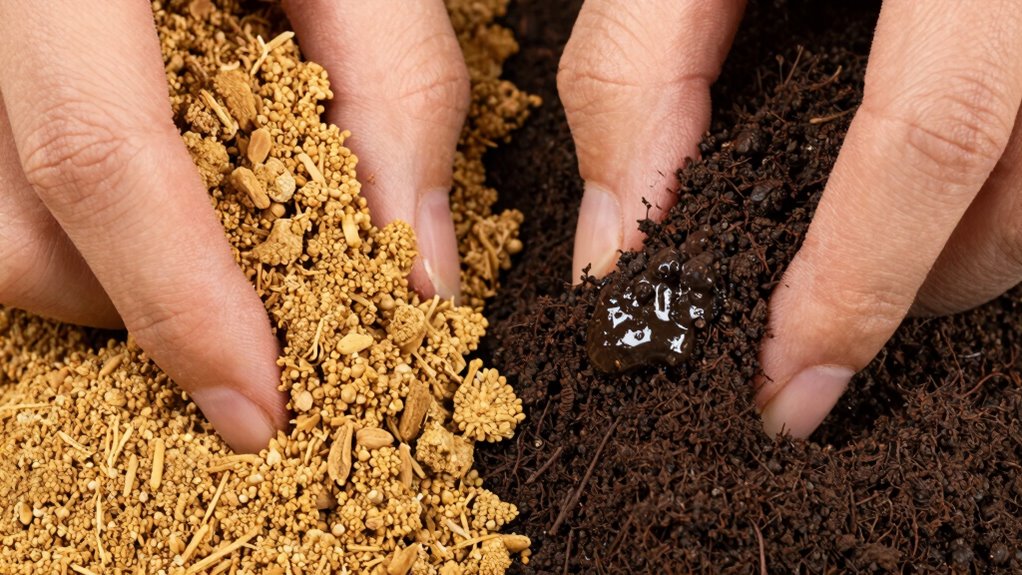
Understanding how to feed your soil is essential because different soil types have unique nutrient needs and challenges. Sandy soil, with its large particles and quick drainage, tends to lose nutrients rapidly through nutrient leaching. When you water or it rains, nutrients like nitrogen can wash away before plants have a chance to absorb them, leaving your soil depleted and plants struggling. This can also result in decreased soil fertility over time if not managed properly. This means you need to be strategic with your feeding approach to maintain healthy growth. Organic amendments become your best allies here, as they help improve the soil’s ability to hold nutrients and water. Incorporating compost, well-aged manure, or organic mulches adds organic matter that binds nutrients more effectively, reducing nutrient leaching and creating a more resilient soil environment.
In contrast, clay soil is dense and retains water and nutrients more tightly, which can sometimes lead to problems with poor drainage and oxygen availability for roots. Since nutrients don’t leach out easily in clay, you don’t need to worry as much about rapid nutrient loss. Instead, your focus should be on enhancing soil structure and ensuring nutrients are available for plant uptake without causing root issues. Organic amendments are just as vital here—they help loosen the clay, improve aeration, and facilitate better nutrient exchange. Adding organic matter, like composted leaves or peat moss, can turn dense clay into a more friable, plant-friendly soil that supplies nutrients more evenly. Additionally, understanding the specific soil composition can help you tailor your amendments effectively. Recognizing the soil texture can also guide you in choosing the right amendments to optimize soil health.
Because sandy soils lose nutrients so quickly, you should apply organic amendments regularly, especially during the growing season, to maintain a steady supply of nutrients. Slow-release organic fertilizers or compost teas can provide your plants with a consistent nutrient source. Also, avoid heavy fertilization with synthetic fertilizers that are prone to leaching, as they can quickly degrade water quality and waste your resources. Instead, focus on building up your soil’s organic matter content, which acts as a sponge, holding nutrients in place and making them available over time. This approach not only reduces nutrient leaching but also enhances microbial activity, further promoting healthy soil. Consistent feeding is key to maintaining soil vitality in sandy soils.
For clay soils, your organic amendments should aim to improve drainage and aeration, so nutrients stay accessible without causing root rot or other issues. You might need less frequent feeding, but when you do fertilize, choose organic options that slowly release nutrients, aligning with the soil’s slower nutrient exchange rate. By understanding these differences and applying organic amendments appropriately, you’ll create a balanced soil environment suited to your specific soil type, leading to healthier plants and a more productive garden.
organic soil amendments for sandy soil
As an affiliate, we earn on qualifying purchases.
As an affiliate, we earn on qualifying purchases.
Frequently Asked Questions
How Does Soil pH Affect Nutrient Absorption in Sandy and Clay Soils?
Soil pH directly impacts nutrient availability in both sandy and clay soils. When pH is too low or high, nutrients become less absorbable, causing deficiencies. Sandy soils, with their faster drainage, may need pH adjustments to maximize nutrient uptake. Clay soils, which retain nutrients longer, can also suffer from pH imbalances. To guarantee healthy plants, you should regularly test soil pH and amend it to maintain ideal nutrient absorption.
Can Organic Fertilizers Work Equally Well in Both Soil Types?
Organic fertilizers can work well in both sandy and clay soils, but their effectiveness depends on organic compatibility and proper fertilizer adjustments. In sandy soil, you might need to apply organic matter more frequently due to quick drainage, while clay soils may require amendments to improve structure. By tailoring your organic fertilizer use and making necessary adjustments, you guarantee nutrient availability and promote healthy plant growth across both soil types.
How Does Watering Frequency Differ Between Sandy and Clay Soils?
You should water sandy soil more frequently because it has low water retention and drains quickly, preventing roots from getting enough moisture. Conversely, clay soil retains water longer and drains poorly, so you should water less often to avoid overwatering and root rot. Adjust your watering schedule based on each soil’s drainage efficiency, ensuring plants get adequate moisture without drowning in excess water.
Are There Specific Plants Best Suited for Sandy or Clay Soils?
You’ll find certain plants thrive better in sandy soils, like succulents and native grasses, due to their drought tolerance and good drainage. For clay soils, choose plants such as azaleas or hydrangeas that prefer nutrient-rich, moisture-retentive conditions. To improve plant compatibility, use soil amendment strategies like adding organic matter to clay or sand. Tailoring your approach helps guarantee healthy growth and successful gardening in either soil type.
What Are Common Signs of Nutrient Deficiencies in Each Soil Type?
You might notice yellowing leaves or stunted growth, signaling nutrient deficiencies. Sandy soils often show quick nutrient loss, so you should consider soil amendment strategies like adding organic matter to boost microbial activity and nutrient retention. Clay soils, with their high nutrient-holding capacity, can suffer from poor drainage, leading to deficiencies like iron chlorosis. Recognizing these signs helps you tailor feeding strategies effectively for each soil type.
slow-release organic fertilizer for garden
As an affiliate, we earn on qualifying purchases.
As an affiliate, we earn on qualifying purchases.
Conclusion
Understanding that sandy and clay soils have different nutritional needs is like knowing that every plant has its own secret recipe for thriving. By adjusting your feeding strategies, you give your plants the perfect feast to flourish, whether in loose, fast-draining sand or dense, moisture-retaining clay. Think of your soil as a garden’s heartbeat—tuned right, it’ll pulse with vibrant life. So, nurture each soil type accordingly, and watch your garden bloom like a well-orchestrated symphony.
compost for improving sandy soil
As an affiliate, we earn on qualifying purchases.
As an affiliate, we earn on qualifying purchases.
organic mulch for soil moisture retention
As an affiliate, we earn on qualifying purchases.
As an affiliate, we earn on qualifying purchases.
Halloween Picks
halloween
As an affiliate, we earn on qualifying purchases.