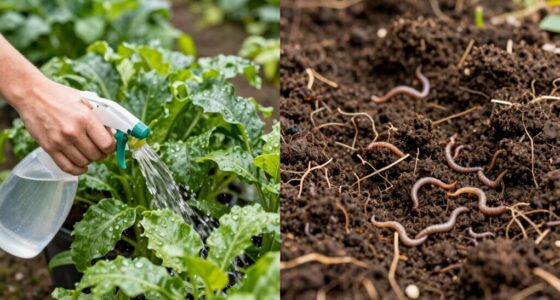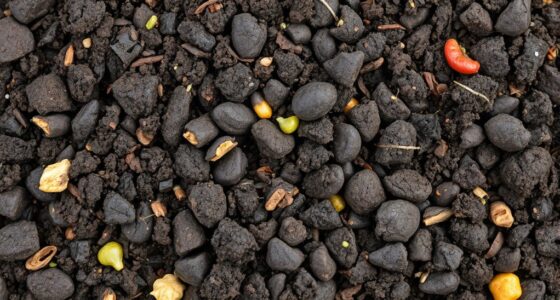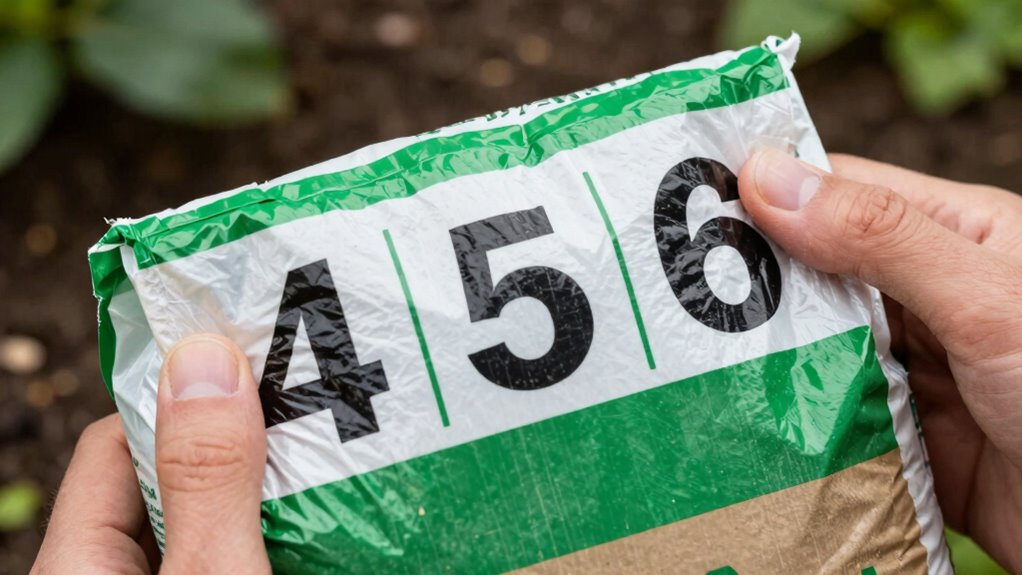

To understand a fertilizer number, look at the three numbers, which show the percentage of nitrogen (N), phosphorus (P), and potassium (K). The first number tells you about leafy, green growth; the second focuses on root and flower development; and the third supports plant health and drought tolerance. Knowing what each number means helps you choose the right fertilizer without guessing. Keep reading to learn more about how to use these numbers effectively.

Get garden gear delivered free with Prime
- Fast, free delivery on millions of items
- Prime Video, Amazon Music and more included
- Member-only deals all year
Key Takeaways
- Recognize that fertilizer numbers represent the percentage of nitrogen (N), phosphorus (P), and potassium (K) in the product.
- Understand that the first number indicates nitrogen content, the second phosphorus, and the third potassium.
- Use soil test results to interpret which nutrients are needed and select fertilizer numbers accordingly.
- Compare fertilizer labels to determine which product offers the right nutrient balance for your plant’s stage.
- Remember that nutrient numbers are fixed percentages, regardless of fertilizer type, helping you read labels accurately.
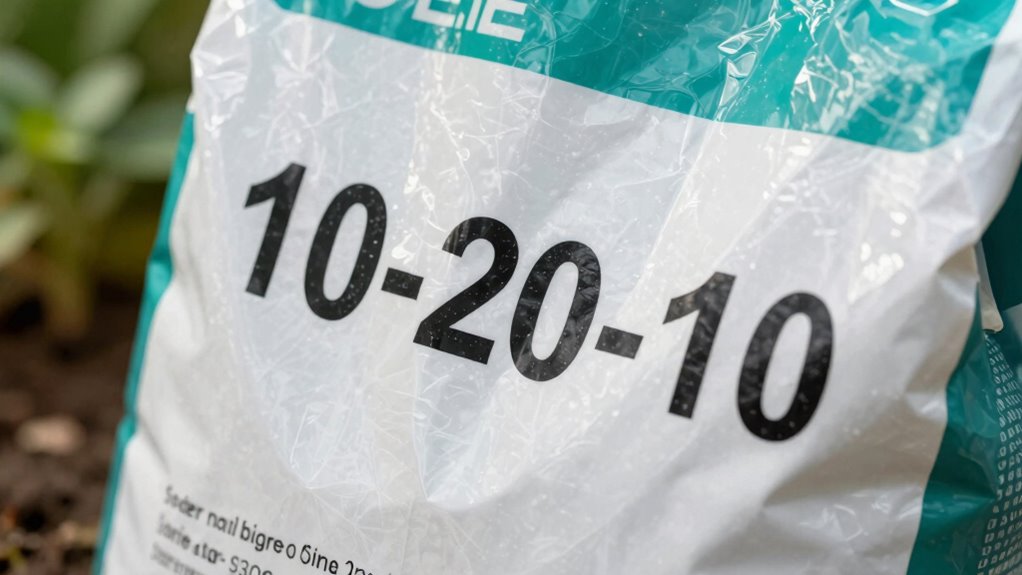
Understanding how to read a fertilizer number is essential for ensuring your plants get the right nutrients. When you pick up a bag of fertilizer, you’re often faced with a set of numbers, like 10-20-10. These numbers aren’t just random; they tell you the proportions of essential nutrients—nitrogen (N), phosphorus (P), and potassium (K)—that the fertilizer contains. Knowing how to interpret these figures helps you choose the right product for your specific soil needs and plant requirements. It’s especially important if you’re using soil amendments, which are added to improve soil health and nutrient content. Different fertilizer types serve different purposes, from quick-acting solutions to slow-release formulas, so understanding what those numbers mean is key to making informed decisions.
The first number indicates the percentage of nitrogen in the fertilizer. Nitrogen is vital for leafy growth and overall plant vigor. If your plants are lush and green but show signs of poor root development or weak stems, they might need a fertilizer with a higher nitrogen content. The second number reveals the amount of phosphorus, which is crucial for root development, flowering, and fruiting. If you’re planting new seedlings or trying to boost flowering in mature plants, look for fertilizers with a higher phosphorus number. The third number reflects potassium, which supports overall plant health, disease resistance, and drought tolerance. A balanced fertilizer with all three nutrients in proper proportions can help maintain healthy growth and yield.
Additionally, understanding the nutrient ratios can help you tailor fertilization to your plants’ specific growth stages and needs. When choosing fertilizer types, consider your soil’s existing nutrient profile. Conducting a soil test can reveal deficiencies or excesses, guiding you to select the most suitable fertilizer number combination. For example, if your soil lacks phosphorus, you might opt for a fertilizer with a higher middle number to address that deficiency directly. Conversely, if your soil already contains enough nitrogen but needs potassium, pick a fertilizer with a higher third number. Keep in mind that different fertilizer types—such as granular, liquid, or slow-release—deliver nutrients in various ways, but the numbers tell you what’s inside. Understanding these numbers can make a significant difference in achieving healthy, vigorous plants and avoiding nutrient imbalances.
fertilizer with NPK ratio 10-20-10
As an affiliate, we earn on qualifying purchases.
As an affiliate, we earn on qualifying purchases.
Frequently Asked Questions
What Do the Numbers on Fertilizer Labels Represent?
The numbers on fertilizer labels show the percentage of nitrogen, phosphorus, and potassium, which are essential nutrients for your soil pH balance and plant health. The first number is nitrogen, promoting leaf growth; the second is phosphorus, supporting roots; and the third is potassium, boosting overall vigor. If you prefer organic options, look for labels with natural ingredients, but always match fertilizer types to your soil’s needs and plant requirements.
Are All Fertilizer Numbers Equally Important?
Not all fertilizer numbers are equally important; it depends on your soil health and plant needs. For example, if your soil lacks nitrogen, the first number (like 10-20-10) becomes more critical. Organic options often focus on balanced, gradual nutrient release. Prioritizing specific nutrients based on your soil’s deficiencies helps you choose the right fertilizer, ensuring healthier plants and sustainable growth without over-reliance on chemical fertilizers.
How Do I Choose the Right Fertilizer for My Plants?
You choose the right fertilizer by considering your plants’ specific needs, which you can determine through soil testing. Opt for organic options whenever possible, as they improve soil health naturally. Match fertilizer nutrients to your plants’ growth stage, focusing on the right balance of nitrogen, phosphorus, and potassium. Regular testing and understanding plant requirements help you make informed decisions, ensuring healthy growth without guesswork.
Can Fertilizer Numbers Indicate Nutrient Deficiencies?
Fertilizer numbers can hint at nutrient deficiencies if you pay close attention. If your plants struggle despite proper soil pH and micronutrient content, it might be a sign of missing nutrients like nitrogen, phosphorus, or potassium. Think of it as a red flag — a clue that something’s off. Regular soil tests help you read these signs accurately, ensuring your plants get the right nourishment without guesswork.
Do Fertilizer Numbers Vary by Crop Type?
Yes, fertilizer numbers do vary by crop type. You should perform soil testing to determine specific nutrient needs, as different crops require different nutrient ratios. Organic options often have different nutrient profiles compared to synthetic fertilizers, so understanding your crop’s requirements helps you choose the right fertilizer. Adjusting fertilizer numbers based on soil test results guarantees ideal growth, preventing over- or under-fertilization for each crop.
liquid fertilizer for flowering plants
As an affiliate, we earn on qualifying purchases.
As an affiliate, we earn on qualifying purchases.
Conclusion
Now that you know how to read a fertilizer number, you hold the key to nourishing your plants wisely—no more guessing like a sailor steering foggy waters. With this knowledge, you’re guiding your garden toward vibrant growth, much like the wise King Midas turning everything to gold. Keep this understanding close, and watch your plants thrive with purpose and precision, transforming your garden into a lush, flourishing kingdom.
slow release fertilizer for vegetables
As an affiliate, we earn on qualifying purchases.
As an affiliate, we earn on qualifying purchases.
soil test kit for nutrient analysis
As an affiliate, we earn on qualifying purchases.
As an affiliate, we earn on qualifying purchases.
Halloween Picks
halloween
As an affiliate, we earn on qualifying purchases.