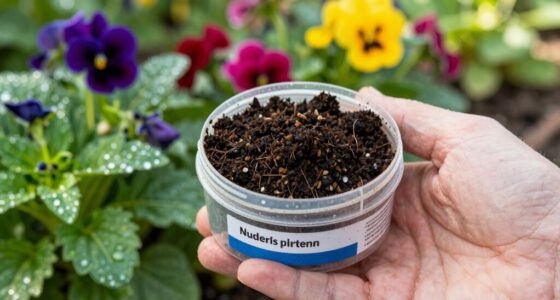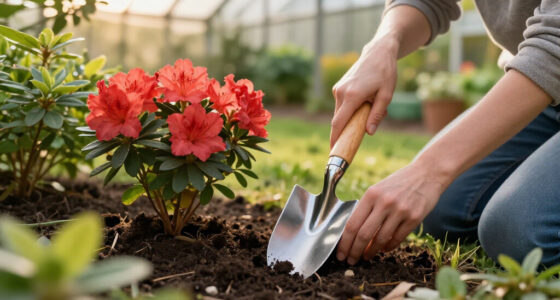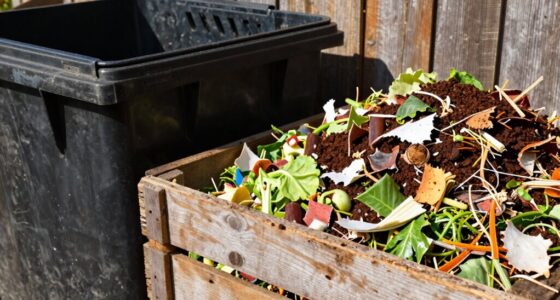

Adding too much nitrogen can make your plants look lush and vibrant at first, with bright green leaves and rapid growth. However, this over-fertilization weakens stems, causes leaf drop, and increases vulnerability to pests and diseases. Over time, excessive nitrogen stunts overall growth, reduces flowering, and disrupts nutrient balance. While your plants may appear healthier initially, their long-term health declines. Keep exploring to discover how proper fertilization helps your plants stay strong and thriving.

Get garden gear delivered free with Prime
- Fast, free delivery on millions of items
- Prime Video, Amazon Music and more included
- Member-only deals all year
Key Takeaways
- Excess nitrogen can initially enhance plant lushness but eventually weakens stems and leaves, impairing overall performance.
- High nitrogen levels may cause rapid growth that leads to structural weakness and reduced flowering or fruiting.
- Over-fertilization disrupts nutrient balance, hindering uptake of essential nutrients like potassium and calcium.
- Excess nitrogen increases susceptibility to pests, diseases, and environmental stress, decreasing long-term plant health.
- Proper, balanced fertilization maintains aesthetic appeal without compromising plant vitality or productivity.
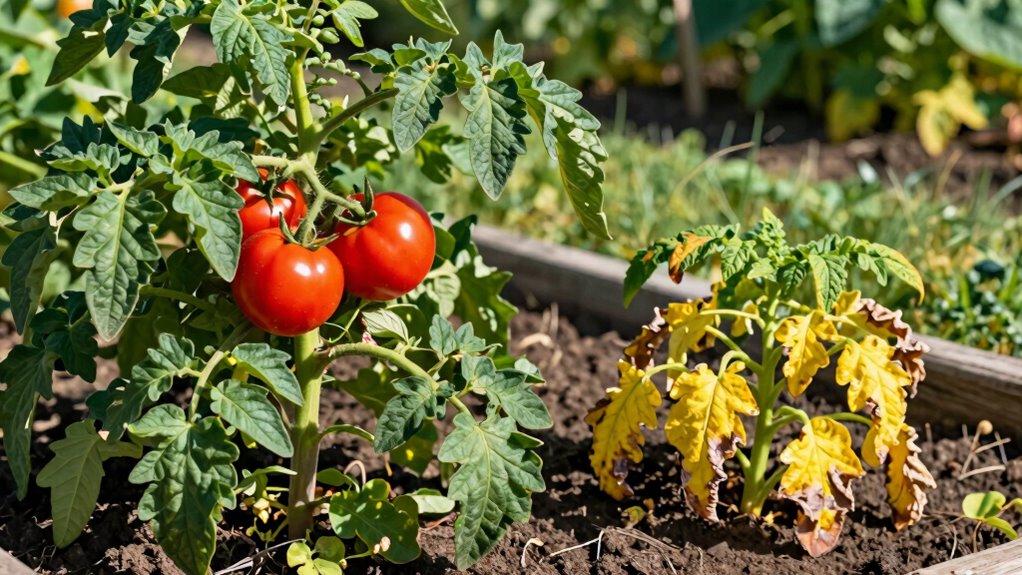
Have you ever wondered what happens to plants when they receive too much nitrogen? You might think that adding more nitrogen will always make your plants look healthier and grow faster, but that’s not the full story. Excessive nitrogen can lead to a condition called nitrogen toxicity, which actually harms your plants rather than helping them. When you over-apply nitrogen, it creates a plant nutrient imbalance, disrupting the delicate balance of nutrients that plants need to thrive.
Nitrogen toxicity occurs when plants absorb more nitrogen than they can effectively use. At first, they may appear lush and vigorous, with vibrant green leaves. However, this rapid growth often comes with downsides. The excess nitrogen can cause weak, overgrown stems and leaves that are more susceptible to pests and diseases. Instead of strengthening your plants, you’re making them more vulnerable. Over time, the toxicity can stunt growth, reduce flowering, and even cause leaf burn or leaf drop. So, what looks like a sign of health could actually be a warning sign of trouble brewing beneath the surface.
A key problem with too much nitrogen is the plant nutrient imbalance it causes. When nitrogen floods the system, it can interfere with the uptake of other essential nutrients like potassium, calcium, and magnesium. These nutrients are *essential* for processes such as root development, flowering, and fruiting. Without the proper balance, your plant’s overall health declines, even if the leaves initially look greener and more vigorous. You might notice poor root growth or fewer blooms, which indicates that your plant’s overall nutrient profile is skewed. Nutrient imbalance can also lead to increased susceptibility to environmental stressors and pests.
Another consequence of excessive nitrogen is that it can lead to environmental issues, such as runoff that pollutes water sources. But for your plants, the main concern is that more nitrogen isn’t always better. Instead of boosting growth, it can cause stress, weaken the plant’s natural defenses, and reduce its longevity. To avoid this, it’s *essential* to follow recommended fertilization guidelines, ensuring your plants get just the right amount of nitrogen. Proper application helps maintain a healthy nutrient balance, supporting robust growth without risking toxicity.
As an affiliate, we earn on qualifying purchases.
Frequently Asked Questions
How Can I Tell if My Plants Have Too Much Nitrogen?
If your plants have too much nitrogen, you’ll notice signs of nitrogen toxicity like dark, lush foliage that’s soft or burnt at the edges. They might also show slowed growth or yellowing leaves, which could indicate nitrogen deficiency if the excess causes imbalance. To tell for sure, check your fertilizer levels and observe your plants closely. Adjust nutrient input accordingly to prevent toxicity and support healthy growth.
What Are Natural Sources of Nitrogen for Plants?
Think of nature’s nitrogen gifts as the hidden gems your garden craves. You can enrich your soil with organic alternatives like compost, manure, or fish emulsion, which provide natural sources of nitrogen. These options boost soil enrichment, encouraging healthy growth without the risks of chemical overuse. By choosing organic, you nurture your plants sustainably, ensuring they thrive beautifully while avoiding the pitfalls of excess nitrogen.
Does Nitrogen Affect Plant Pests or Diseases?
Yes, nitrogen affects plant pest interactions and disease susceptibility. When plants get too much nitrogen, they often become more attractive to pests because of tender, lush growth. This can also increase their vulnerability to diseases, as rapid growth may weaken plant defenses. You should monitor nitrogen levels carefully to prevent making plants more prone to pests and diseases, ensuring healthy growth without attracting unwanted problems.
Can Nitrogen Runoff Harm the Environment?
Nitrogen runoff can cause massive environmental harm, like releasing a domino effect of nitrogen pollution that devastates ecosystems. When excess nitrogen escapes into water bodies, it triggers algae blooms that suffocate aquatic life, creating a dangerous ecosystem imbalance. You might not see it happening instantly, but your garden’s nitrogen overload can ripple out, poisoning rivers, lakes, and oceans, and threatening the health of countless species and even human communities.
How Often Should I Apply Nitrogen Fertilizer?
You should apply nitrogen fertilizer based on your plants’ needs, which you can determine through soil testing. Typically, apply fertilizer in split doses—once at planting and again during peak growth—following proper fertilizer timing. Avoid over-application, as it can harm plants and the environment. Regular soil testing helps you adjust your fertilizer schedule, ensuring your plants receive the right amount of nitrogen for healthy growth without risking runoff or nutrient imbalances.
As an affiliate, we earn on qualifying purchases.
Conclusion
Think of your garden as a delicate painting. Adding nitrogen is like splashing more bright colors onto it. At first, it looks vibrant and lively, but too much can distort the picture, making it look unnatural and less healthy. Just as balance creates beauty in art, moderation in nitrogen keeps your plants thriving without overwhelming them. Remember, more isn’t always better—sometimes, less creates the most stunning, lasting masterpiece.
As an affiliate, we earn on qualifying purchases.
As an affiliate, we earn on qualifying purchases.
Fall yard work Picks
leaf blowers
As an affiliate, we earn on qualifying purchases.