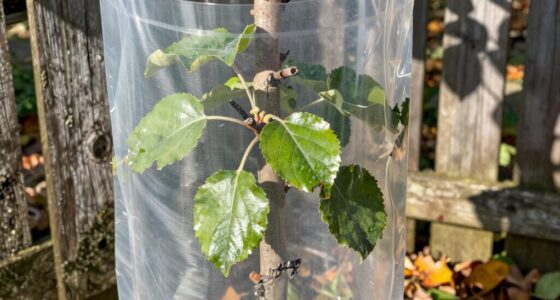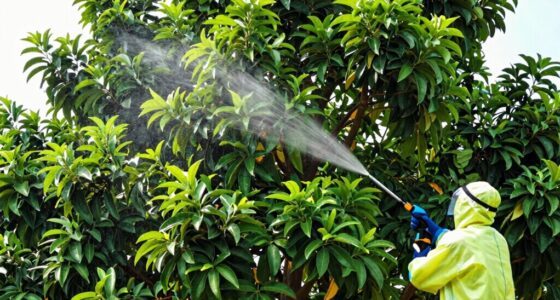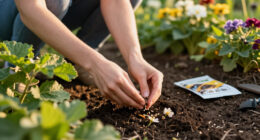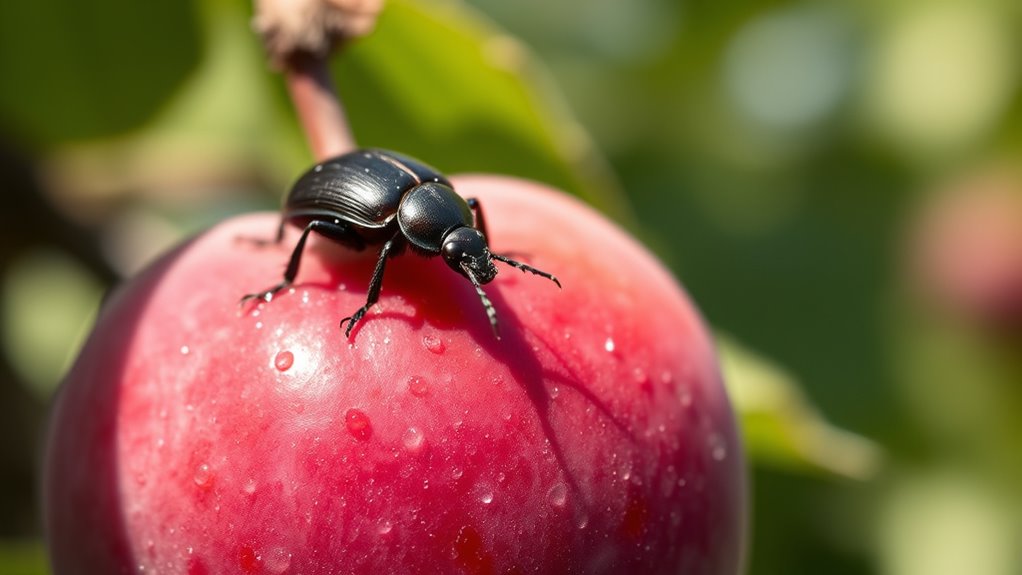
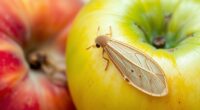
To manage plum curculio in your home orchard, watch for crescent-shaped scars on developing fruit and look for adult beetles, especially in spring and late summer. Use pheromone traps to monitor beetle activity and time organic controls like neem oil or insecticidal soap when beetles are active. Implement cultural practices such as raking fallen debris and pruning to reduce hiding spots. By combining these methods, you can keep pests under control and protect your fruit—learn more on how to fine-tune this approach.

Get garden gear delivered free — and shop member deals
- Fast, free delivery on millions of items
- Access to Prime Big Deal Days deals on October 6–7
- Prime Video, Amazon Music and more included
Key Takeaways
- Regularly inspect developing fruits for crescent-shaped feeding scars and look for adult beetles, especially in early spring and late summer.
- Use pheromone traps to monitor beetle activity and determine the best timing for control efforts.
- Remove fallen fruit and debris, and apply dormant oil sprays to reduce overwintering beetle populations.
- Apply organic insecticides like insecticidal soap or neem oil during early fruit development when beetles are active.
- Implement an integrated approach combining monitoring, cultural practices, and organic controls for sustainable management.
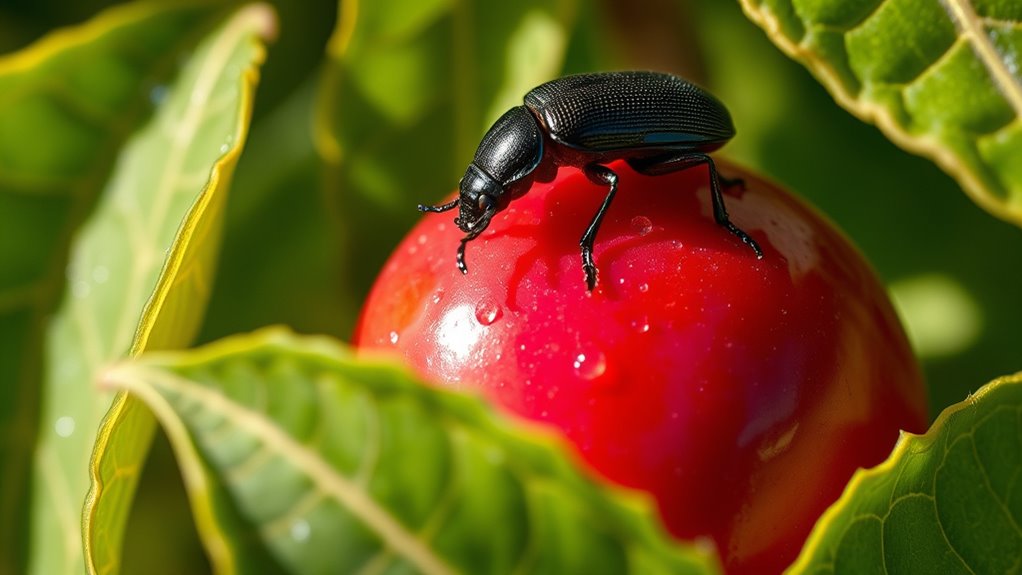
If you have a home orchard, you’re likely to encounter plum curculio pests during the growing season. These tiny beetles can cause significant damage to your fruit, making early detection and management essential. The key to keeping plum curculio populations under control lies in integrated pest management (IPM), which combines multiple strategies to reduce pest numbers while minimizing chemical use. This approach emphasizes monitoring, cultural practices, and organic control methods to protect your trees effectively.
Start by inspecting your trees regularly for signs of plum curculio activity. Look for crescent-shaped scars on developing fruit, which indicate feeding damage, and check for the adult beetles themselves, especially in early spring and late summer when they are most active. Using traps, such as pheromone-baited sticky traps, can help you monitor beetle populations and time your control efforts more precisely. This targeted approach guarantees you don’t waste resources on unnecessary treatments and helps you decide when intervention is necessary.
Cultural practices are essential in a sustainable management plan. Raking up and destroying fallen fruit and debris can remove overwintering sites for beetles, reducing their numbers for the following season. Applying a dormant oil spray during the off-season can smother overwintering beetles and eggs, decreasing the initial pest pressure when the growing season begins. Additionally, pruning your trees to improve airflow and light penetration can make the environment less hospitable for pests and reduce the chances of infestation.
When it comes to organic control methods, you have several options that align with sustainable gardening practices. Applying insecticidal soaps or neem oil during the early stages of fruit development can help deter feeding and reduce adult beetle populations. These organic solutions are less harmful to beneficial insects and pose fewer risks to your family and pets. Timing is essential; applying these treatments at the right moments—typically when beetles are active and before they lay eggs—maximizes their effectiveness.
Integrating cultural practices with organic controls creates a more resilient and balanced approach to pest management. Combining these strategies within an integrated pest management framework allows you to keep plum curculio populations in check effectively and responsibly. By monitoring pests, practicing proper sanitation, and utilizing organic controls, you can protect your home orchard without relying heavily on chemical pesticides. This balanced approach promotes healthier trees, better fruit quality, and a more environmentally friendly garden. Staying vigilant and proactive throughout the season guarantees that you can enjoy a bountiful harvest despite the challenges posed by plum curculio pests.
pest monitoring pheromone traps for orchard
As an affiliate, we earn on qualifying purchases.
As an affiliate, we earn on qualifying purchases.
Frequently Asked Questions
How Do I Identify Plum Curculio Damage Early?
To identify plum curculio damage early, look for fruit damage indicators like crescent-shaped tunnels and scarring on your fruit. Keep an eye out for adult beetle signs such as small, grayish-brown beetles with a distinctive long snout crawling on your trees or fruit. Noticing these signs early helps you take quick action to manage the pests before they cause significant damage.
Are There Organic Methods to Control Plum Curculio?
Yes, you can use organic controls to manage plum curculio. Apply neem oil or insecticidal soap to deter these pests naturally. Encourage natural predators like parasitic wasps and predatory beetles by planting diverse, pest-friendly plants nearby. Regularly handpick and destroy fallen or damaged fruit to reduce their population. Combining these methods creates an effective, eco-friendly approach to control plum curculio without chemicals.
What Is the Lifecycle of the Plum Curculio?
You should understand that the lifecycle stages of the plum curculio involve egg, larva, pupa, and adult. Pest development begins when adults emerge in early spring, mate, and lay eggs in fruit. After eggs hatch, larvae burrow into the fruit, causing damage. They then pupate in the soil before emerging as adults. Managing this lifecycle helps you time organic controls effectively and minimize fruit damage.
Can Plum Curculio Affect Other Fruit Trees?
Like a thief in the night, plum curculio can surprise you by affecting other fruit trees beyond plums. You discover their impact through signs on cherries, apples, or other susceptible fruits, revealing a cross-species impact. Their ability to target various tree types means you should monitor multiple crops, not just your plums, to prevent widespread damage and keep your orchard healthy and thriving.
When Is the Best Time to Apply Controls?
You should apply controls during the early spring when pest monitoring indicates plum curculio activity is beginning. Timing strategies are essential; start treatment just before blooming to target adult beetles emerging from overwintering sites. Regular pest monitoring helps you identify peak activity periods, ensuring your control methods are effective. By acting at the right time, you minimize damage and keep your fruit trees healthy throughout the season.
organic insecticidal soap for fruit trees
As an affiliate, we earn on qualifying purchases.
As an affiliate, we earn on qualifying purchases.
Conclusion
To safeguard your home orchard from plum curculio, it’s crucial to stay vigilant and act early. Many believe that natural predators alone can control the pest, but research shows integrated approaches are most effective. Combining proper sanitation, insecticides, and monitoring considerably reduces damage. Don’t rely solely on assumptions—trust proven methods to keep your fruit healthy. By staying proactive, you ensure a bountiful harvest and a thriving orchard for years to come.
dormant oil spray for fruit tree pest control
As an affiliate, we earn on qualifying purchases.
As an affiliate, we earn on qualifying purchases.
plum curculio damage detection tools
As an affiliate, we earn on qualifying purchases.
As an affiliate, we earn on qualifying purchases.
Fall Picks
fall essentials
As an affiliate, we earn on qualifying purchases.