
The codling moth is a common pest that damages apple crops by laying eggs on developing fruit. When eggs hatch, larvae burrow inside, feeding on the flesh and causing blemishes or premature drops. The cycle repeats as larvae pupate and new adults emerge to reproduce. Understanding this cycle helps you time control methods effectively. Keep exploring to discover how organic techniques can help you manage this pest and protect your apples.
Key Takeaways
- The codling moth’s eggs are laid on developing apples, with larvae hatching to burrow into and damage the fruit.
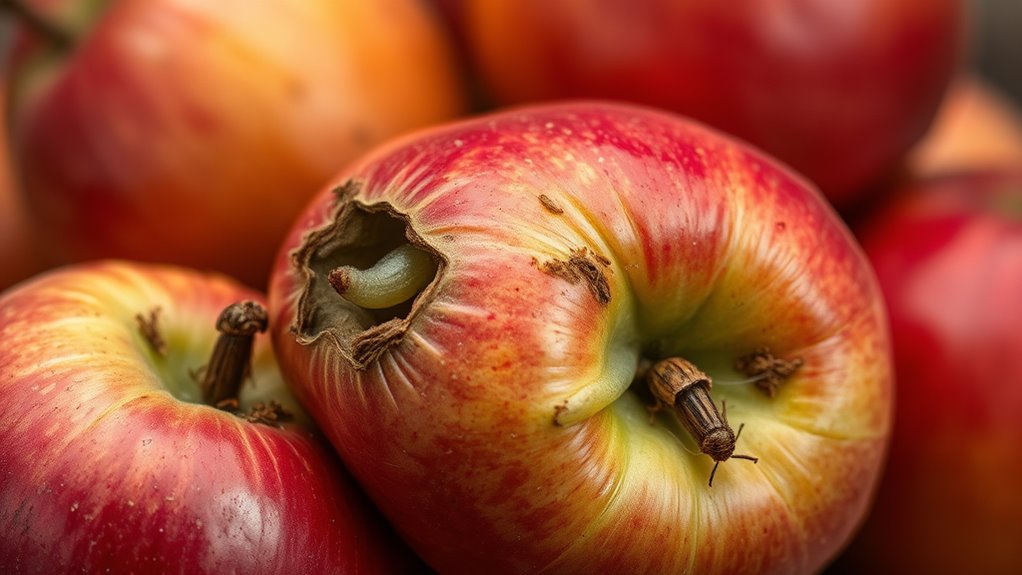
- Larvae feeding inside apples cause blemishes, premature fruit drop, and reduce crop quality.
- The moth’s life cycle includes multiple generations per season, requiring continuous monitoring for effective control.
- Organic methods like pheromone traps, fruit bagging, and debris removal help manage the pest sustainably.
- Early detection and targeted interventions prevent extensive damage and maintain healthy apple production.
If you’re growing apples, you need to be aware of codling moths, a common pest that can cause substantial damage. These tiny insects are notorious for inflicting havoc on your fruit, making it essential to understand their life cycle and how to manage them effectively. Proper pest control strategies are vital to prevent widespread infestation, and adopting organic farming techniques can help you control these pests without relying on harsh chemicals. Recognizing the signs of infestation early allows you to take targeted action that preserves your crop’s health and quality.
Protect your apple crop by understanding and managing codling moths early and organically.
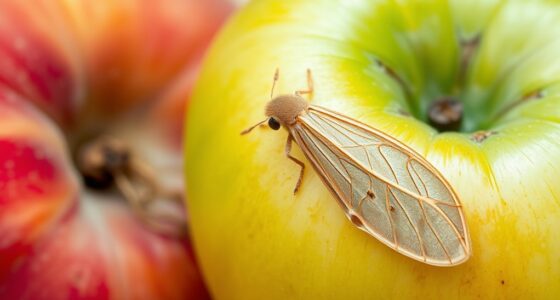
The life cycle of the codling moth begins with eggs laid on or near developing apples. As a grower, you’ll notice the eggs hatch into larvae, which then burrow into the fruit to feed. This feeding damages the apple’s flesh, leading to premature fruit drop and unsightly blemishes. The larvae eventually pupate inside the fruit or in the surrounding debris, emerging as adult moths ready to reproduce. This cycle can repeat multiple times during a growing season, making timely intervention essential. Understanding this cycle helps you plan your pest control strategies more effectively, applying treatments before the larvae cause extensive damage. Full understanding of the moth’s behavior can significantly improve your pest management outcomes.
When it comes to organic farming techniques, physical barriers such as fine netting or bagging your fruit can be highly effective. These methods prevent moths from reaching the fruit to lay eggs, considerably reducing the infestation rate. Additionally, you can employ pheromone traps that mimic the scent of female moths, disrupting their mating process. This targeted approach minimizes the need for chemical pesticides and aligns with organic principles. Regularly cleaning fallen fruit and orchard debris also helps eliminate breeding sites for the larvae, breaking the cycle at its source. Combining these organic methods offers a sustainable way to control codling moth populations without compromising your commitment to eco-friendly farming.
Monitoring is key to managing codling moths successfully. Use sticky traps or pheromone lures to keep tabs on adult moth activity. When you notice increased moth presence, that signals it’s time to activate your pest control strategies. Applying organic insecticides like Bacillus thuringiensis (Bt) can be effective against young larvae, especially if timed correctly. Biological controls, such as introducing natural predators like Trichogramma wasps, can also help keep moth numbers in check. By integrating these tactics into your orchard management plan, you create a multi-layered defense that minimizes damage and promotes healthy fruit development.
Frequently Asked Questions
How Can I Prevent Codling Moth Infestation Naturally?
To prevent codling moth infestation naturally, you should encourage natural predators like beneficial insects such as parasitic wasps. Additionally, practice companion planting by growing herbs like dill or marigolds near your apple trees, which can repel moths. Keep your orchard clean by removing fallen fruit and prune trees regularly to improve airflow. These methods help reduce moth populations without relying on chemicals, keeping your apples healthier and pest-free.
What Are the Economic Impacts of Codling Moth Damage?
You face significant economic loss when codling moth damage affects your apple crop, leading to reduced fruit quality and yield. This damage can cause market decline as consumers avoid blemished or compromised apples, impacting your sales and profits. The financial strain might also increase your costs for pest control and post-harvest sorting. Overall, managing this pest is essential to protect your income and maintain your farm’s reputation in the marketplace.
Are There Resistant Apple Varieties to Codling Moth?
You might think resistant varieties are rare, but advances in genetic breeding have created apples with natural resistance to codling moths. While no variety is completely immune, many resistant varieties markedly reduce damage and pesticide use. These varieties are developed through careful genetic breeding, making them a smart choice if you want healthier fruit and less chemical dependency. Embracing these options can improve your orchard’s resilience and sustainability.
How Does Climate Change Affect Codling Moth Populations?
Climate change accelerates codling moth populations by enabling pest migration to new areas and extending their breeding seasons. As temperatures rise, you’ll notice more frequent infestations, making climate adaptation essential. Warmer conditions may also cause moths to emerge earlier, increasing the risk of damage. To protect your crops, stay vigilant, implement integrated pest management strategies, and consider adjusting your orchard practices to address these evolving threats effectively.
Can Organic Methods Effectively Control Codling Moth?
Yes, organic methods can effectively control codling moths. You should use pheromone traps to disrupt mating and monitor populations, reducing infestations. Incorporate biological control by introducing natural predators like Trichogramma wasps, which target moth eggs. Combining these techniques, you can manage the pest sustainably without chemicals, keeping your apples healthy and organic. Consistent monitoring and timely interventions are key to success with organic control methods.
Conclusion
Understanding the codling moth’s life cycle helps you protect your apples from damage. While these tiny pests hide within fruit, causing unseen destruction, your vigilance keeps your harvest safe. It’s a delicate balance—nature’s relentless cycle against your efforts to defend your orchard. By staying informed and proactive, you turn the threat into an opportunity to nurture healthier trees. In this quiet battle, your careful attention makes all the difference between a lost crop and a bountiful harvest.