If you notice tiny pests, distorted leaves, or silvery spots on your indoor peppers and ornamentals, you might have broad mites. These pests are very small and cause quick, significant damage. To control them, use natural predators like Neoseiulus californicus, or apply carefully chosen miticides, following instructions. Keep your environment clean, maintain proper humidity, and regularly inspect plants. For detailed prevention and management tips, continue exploring how you can protect your plants effectively.

Get garden gear delivered free with Prime
- Fast, free delivery on millions of items
- Prime Video, Amazon Music and more included
- Member-only deals all year
Key Takeaways
- Identify broad mites by tiny size, distorted leaves, and silvery stippling on indoor peppers and ornamentals.
- Use natural predators like Neoseiulus californicus and Amblyseius swirskii for effective biological control.
- Apply targeted miticides compatible with indoor plants early in infestation for best results.
- Quarantine new plants, maintain cleanliness, and monitor regularly to prevent and detect infestations early.
- Maintain proper humidity, avoid harmful pesticides, and support plant health with integrated pest management strategies.
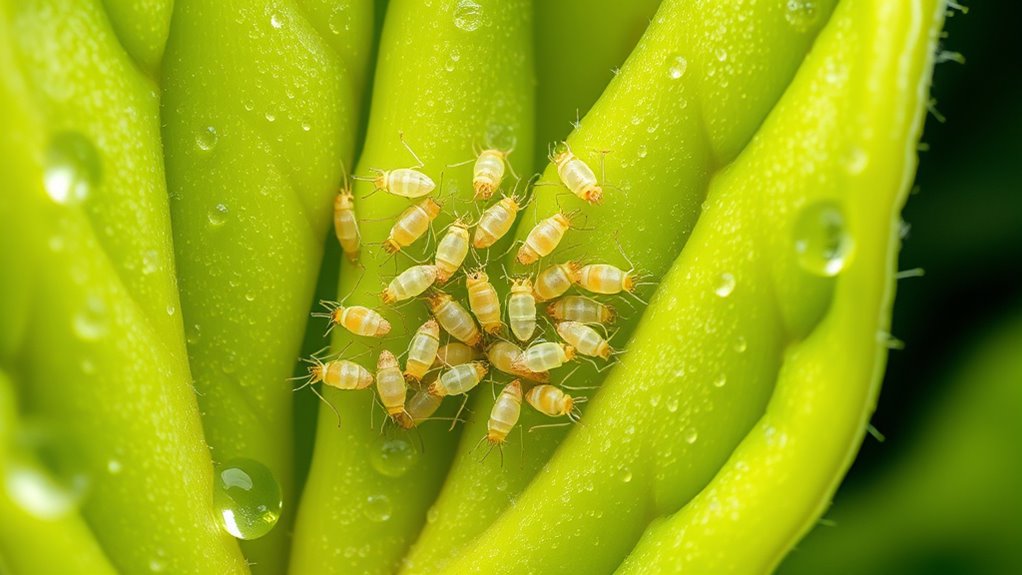
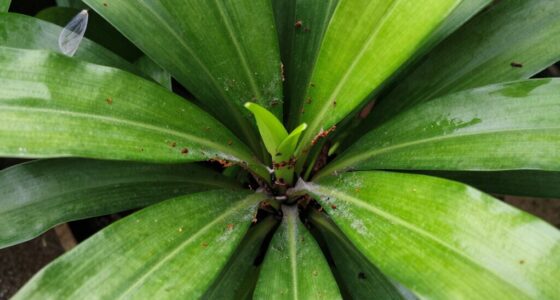
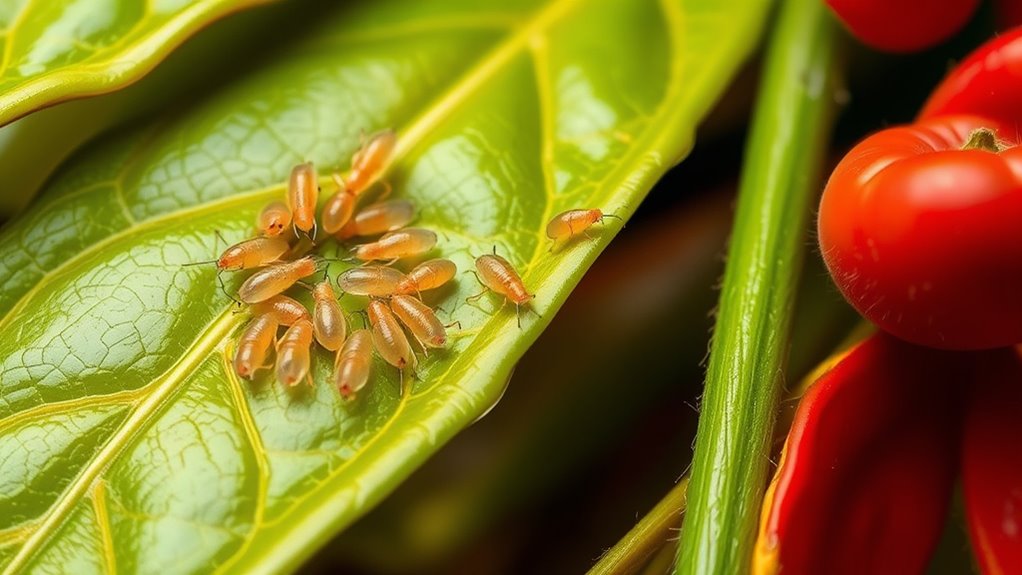
Broad mites are a common pest that can quickly damage your indoor peppers and ornamentals if left unchecked. These tiny pests, often less than 0.2 millimeters in size, can cause significant harm by feeding on plant tissues. You might notice distorted leaves, silvery stippling, or stunted growth—clear signs that broad mites are invading your indoor garden. Acting swiftly is vital to prevent irreversible damage and keep your plants healthy.
One effective strategy to manage broad mite infestations is biological control. This approach involves introducing natural predators, such as predatory mites like Neoseiulus californicus or Amblyseius swirskii, which feed on broad mites. Biological control offers a sustainable, chemical-free option that minimizes harm to beneficial insects and reduces the risk of pesticide resistance. To implement this, you should make certain your environment is conducive to predator survival—maintain proper humidity, avoid broad-spectrum pesticides that can harm beneficials, and release predators early in the infestation. Regular monitoring helps you determine if the natural enemies are effectively reducing mite populations or if additional measures are necessary.
When biological control alone doesn’t fully suppress the mites, you might consider pesticide options. Several miticides are available specifically for broad mite control, but use them with caution. Select products labeled for indoor use and compatible with your plants to avoid phytotoxicity. Always follow the manufacturer’s instructions carefully, applying treatments during the early stages of infestation for the best results. Combining chemical options with biological control can often provide a synergistic effect, rapidly reducing mite populations while supporting long-term suppression. Remember, though, that chemical treatments can also impact beneficial insects, so use them judiciously and as part of an integrated pest management plan.
Prevention is equally important. Quarantine new plants before introducing them to your indoor space to prevent bringing in mites. Keep your growing environment clean and free of debris, and regularly inspect your plants for early signs of infestation. Proper watering and ventilation can strengthen your plants, making them more resistant to pests. If you catch broad mites early, you’ll have a better chance of controlling the problem without heavy chemical use.
Neoseiulus californicus predatory mites for indoor plants
As an affiliate, we earn on qualifying purchases.
As an affiliate, we earn on qualifying purchases.
Frequently Asked Questions
How Do Broad Mites Affect Plant Flowering and Fruit Production?
Broad mites damage your plants by feeding on new growth, which leads to pollination disruption and weakens your plants’ ability to produce flowers and fruit. You’ll notice stunted growth, distorted leaves, and failed fruit set. As a result, your plants produce fewer or no fruits, severely impacting your harvest. To prevent this, regularly inspect your plants and take swift action to control the mites before they cause significant damage.
Are Broad Mites Contagious Between Different Plant Species Indoors?
It’s ironic, but broad mites can indeed hop between different plant species indoors. You might think they’re picky, but cross infestation risks make cross species transmission quite real. If you don’t isolate infested plants, you’re opening the door for mites to spread, regardless of plant type. So, take precautions—quarantining new plants and inspecting regularly—to prevent these tiny invaders from sneaking into your entire indoor garden.
What Natural Predators Can Control Broad Mite Populations Indoors?
You can control broad mite populations indoors using natural predators as part of biological control methods. Predator identification is key; predatory mites like Phytoseiulus persimilis and Amblyseius cucumeris effectively target broad mites. Introduce these predators early and guarantee proper humidity and temperature conditions to help them thrive. Regular monitoring will help you maintain pest levels, reducing the need for chemical treatments and promoting healthier plants naturally.
How Long Does It Take to See Visible Damage After Infestation?
Think of your plant as a storybook; the damage symptoms are the sudden plot twists. Usually, you’ll start noticing visible damage within 5 to 10 days after infestation, depending on the mite population. The infestation timeline can be rapid, so early signs like curling leaves and stippling alert you to the problem. Act quickly to prevent further damage, and keep a close eye on your plants’ evolving story.
Can Broad Mites Survive in Soil or Only on Plant Surfaces?
Broad mites primarily survive on plant surfaces, but they can also persist in soil contamination if they happen to be present. While their main habitat is on plants, mite survival in soil is limited, making it less likely they’ll thrive there long-term. To prevent reinfestation, you should focus on treating both the plant and soil areas, especially if you notice persistent problems despite surface treatments.
broad mite miticide for indoor peppers
As an affiliate, we earn on qualifying purchases.
As an affiliate, we earn on qualifying purchases.
Conclusion
While broad mites may be tiny invaders, their damage can feel enormous on your peppers and ornamentals. Protecting your plants is like shielding a delicate masterpiece from silent, invisible threats. With quick action and careful monitoring, you hold the power to keep your indoor garden thriving. Remember, small pests cause big problems, but your vigilance turns the tide—because sometimes, the tiniest warriors need the biggest defenses.
indoor plant pest control biological predators
As an affiliate, we earn on qualifying purchases.
As an affiliate, we earn on qualifying purchases.
indoor plant quarantine and pest prevention kit
As an affiliate, we earn on qualifying purchases.
As an affiliate, we earn on qualifying purchases.
Halloween Picks
halloween
As an affiliate, we earn on qualifying purchases.