
To make your compost heat up, aim for a brown-to-green ratio of about 25-30:1, meaning you need more carbon-rich materials like dried leaves, straw, or paper compared to nitrogen-rich greens like grass clippings and vegetable scraps. This balance boosts microbial activity and generates heat essential to composting. Keep an eye on your compost, and you’ll discover key tips to optimize this ratio for faster, more effective results.

Get garden gear delivered free with Prime
- Fast, free delivery on millions of items
- Prime Video, Amazon Music and more included
- Member-only deals all year
Key Takeaways
- An optimal brown-to-green ratio of approximately 25-30:1 promotes microbial activity and heat generation in compost.
- Proper balance provides enough nitrogen from greens to fuel microbial metabolism and produce heat.
- Excess greens can cause odors and pests, while too many browns slow microbial activity and reduce heat.
- Monitoring compost temperature helps adjust the ratio for sustained heating and efficient decomposition.
- Maintaining the correct ratio ensures microbial health, resulting in a hotter, faster composting process.
Have you ever wondered how to measure the balance between degraded land and healthy ecosystems? One way to do that is by understanding the brown-to-green ratio in composting. This ratio is crucial because it influences how well your compost heats up, which in turn affects the speed and quality of the decomposition process. When you get the ratio right, your compost pile can reach higher temperatures, killing off pathogens and weed seeds more effectively. But achieving the perfect balance isn’t just about mixing browns and greens; it’s about managing the underlying chemistry, particularly carbon sources and nitrogen balance.
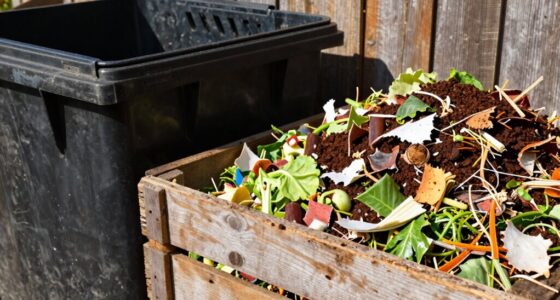
Carbon sources, or “browns,” include materials like dried leaves, straw, and paper. These provide the carbon energy that microbes need to thrive. On the other hand, “greens” are nitrogen-rich materials such as fresh grass clippings, vegetable scraps, and coffee grounds. The key to heating up your compost is maintaining the right ratio between these two types of materials. If you add too many browns, the compost may stay cold and decompose slowly. Too many greens and you risk a slimy, smelly mess that can attract pests. Ideally, you want a carbon-to-nitrogen ratio of about 25-30:1. This balance ensures microbes have enough energy and nutrients to perform their work efficiently.
Maintain a 25-30:1 carbon-to-nitrogen ratio for optimal compost heating and efficient decomposition.
Nitrogen balance plays a central role here. Microbes use nitrogen to build proteins and carry out metabolic processes, which generate heat. When nitrogen is in short supply, microbial activity slows down, and the pile doesn’t heat up as much. Conversely, too much nitrogen can lead to excess ammonia, causing foul odors and potential microbial imbalance. Managing this nitrogen balance involves adjusting your input materials and sometimes adding supplemental nitrogen or carbon sources. For example, if your pile isn’t heating as expected, mixing in more browns can help rebalance the nitrogen ratio and stimulate microbial activity. Additionally, understanding the importance of carbon sources can help you better manage your compost’s heat and decomposition rate. Recognizing the optimal brown-to-green ratio is essential for creating an efficient composting environment that promotes healthy microbial activity.
Understanding the relationship between carbon sources and nitrogen balance allows you to control the composting process more precisely. By maintaining an optimal brown-to-green ratio, you promote vigorous microbial activity, which generates heat and accelerates decomposition. This heat is a sign that your compost is thriving, transforming organic waste into rich, fertile soil. To optimize this process, paying attention to compost temperature can guide you in adjusting your materials effectively. Properly managing microbial activity is key to ensuring your compost heats up efficiently and decomposes thoroughly. Recognizing how a balanced carbon-to-nitrogen ratio influences microbial efficiency can help you troubleshoot common composting issues. So, next time you start a compost pile, think about the underlying chemistry—balance your carbon and nitrogen, and your compost will heat up naturally, making the most of degraded land’s potential to regenerate into healthy ecosystems.
As an affiliate, we earn on qualifying purchases.
Frequently Asked Questions
How Does Moisture Affect Compost Heating?
Moisture levels play a vital role in compost heating by promoting microbial activity. When moisture is just right, microbes break down organic material efficiently, generating heat. Too much moisture, however, can cause anaerobic conditions and cool down the compost, while too little dries out microbes, reducing heat. Proper compost insulation helps maintain ideal moisture levels, ensuring consistent warmth and faster decomposition.
Can Certain Brown Materials Slow Down Compost Temperature Rise?
Yes, certain brown materials can slow down compost temperature rise. When you add excess carbon-rich browns like dried leaves or paper, it disrupts the carbon balance needed for ideal organic decomposition. This slows microbial activity, reducing heat generation. To keep compost hot, you need a proper balance of browns and greens, ensuring efficient organic decomposition and maintaining the right conditions for microbial heat production.
Does Compost Temperature Influence Nutrient Retention?
Yes, compost temperature influences nutrient retention by affecting microbial activity. Warm temperatures boost microbes that break down organic materials, helping preserve essential nutrients like nitrogen. When temperatures get too high, though, microbes can become inactive or die, leading to nutrient loss. Balancing the carbon-to-nitrogen ratio keeps compost warm enough for microbial activity without overheating, ensuring nutrients stay locked in the compost instead of escaping as gases.
How Often Should I Turn My Compost for Optimal Heat?
You should turn your compost every 3 to 5 days to maintain ideal heat. This encourages microbial activity, which accelerates carbon decomposition and keeps the compost hot. Regular turning introduces oxygen, boosts microbial health, and prevents compaction. By doing this consistently, you help sustain the heat necessary for efficient composting, ensuring faster breakdown of materials and producing rich, healthy compost in less time.
Are There Specific Brown-To-Green Ratios for Different Compost Types?
You should aim for a specific brown-to-green ratio based on your compost type to maintain proper carbon balance and promote compost maturity. For yard waste, a 3:1 ratio works well, while food scraps might need a slightly higher green content. Adjust ratios accordingly to keep microbial activity active without causing odors. Consistently monitoring and balancing these ratios helps your compost heat up and mature efficiently.
compost bin with temperature gauge
As an affiliate, we earn on qualifying purchases.
As an affiliate, we earn on qualifying purchases.
Conclusion
Mastering the brown-to-green ratio is like tuning a delicate orchestra, where each element plays its part to ignite the symphony of compost warmth. When you strike the right balance, your compost heats up like a fiery heartbeat, transforming scraps into rich soil. Keep your green and brown layers harmonized, and watch your compost become a vibrant garden’s secret engine—an alchemical dance of decay and renewal, fueling life from the ground up.
As an affiliate, we earn on qualifying purchases.
As an affiliate, we earn on qualifying purchases.
Columbus Day / Indigenous Peoples' Day Picks
long weekend sales
As an affiliate, we earn on qualifying purchases.