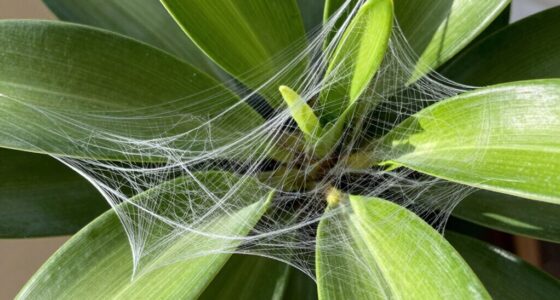
Mealybugs love plant crowns and hidden joints because these tight, protected spaces shield them from predators, harsh weather, and chemical treatments. You’ll often find them nestled where roots meet stems or tucked into plant crevices, providing a cozy environment for their colonies to grow. If you want to understand more about why they target these spots and how to control them effectively, keep exploring these ideas further.

Get garden gear delivered free with Prime
- Fast, free delivery on millions of items
- Prime Video, Amazon Music and more included
- Member-only deals all year
Key Takeaways
- Plant crowns and joints provide protected, sheltered environments that hide mealybugs from predators and environmental elements.
- These areas offer easy access to nutrients from plant tissues, supporting mealybug growth and reproduction.
- Hidden spots in crowns and joints shield mealybugs from chemical treatments and natural predators.
- The tight spaces create cozy habitats where mealybugs can thrive undisturbed.
- These locations facilitate infestation spread by allowing mealybugs to move between plant parts easily.

If you’ve ever noticed tiny, cottony pests hiding at the base of your plants or nestled in their joints, you’ve encountered mealybugs in action. These pests are masters at hiding in the nooks and crannies of plant crowns and the hidden joints along stems and branches. That’s because these spots provide the perfect shelter—protected from both environmental elements and your attempts at control. The plant crown, where the roots meet the stem, offers a cozy, often overlooked environment for mealybugs to thrive. Similarly, the joints between branches or leaf stalks create tight spaces that shield these pests from predators and treatments alike. This hidden nature makes mealybugs especially challenging to detect early, which is why regular inspection is essential. Recognizing these protected spots can help you catch infestations before they become severe. Additionally, understanding the plant anatomy can improve your ability to identify and treat these hidden pests effectively.
Mealybugs tend to congregate in these concealed spots because they’re less exposed to natural predators. Lady beetles, lacewings, and certain parasitic wasps are among the natural predators that can help keep mealybug populations in check. These beneficial insects are drawn to the pests’ cottony wax coating and can reduce their numbers markedly when introduced or encouraged in your garden. However, relying solely on natural predators isn’t always enough, especially if the infestation has already become severe. That’s when chemical treatments come into play. Using insecticidal soaps, horticultural oils, or systemic insecticides can help target mealybugs hiding deep within the plant’s crown and joints. When applying chemical treatments, it’s essential to reach those hidden spots thoroughly, as the pests tend to cluster within those protected areas. Applying targeted treatments can be more effective when you focus on these specific hiding places. Incorporating integrated pest management strategies can further enhance your control efforts and prevent future infestations.
You should also consider combining approaches for optimal results. Promoting natural predators through planting companion plants and avoiding broad-spectrum chemicals that kill beneficial insects can create a balanced environment where mealybugs struggle to establish themselves. When chemical treatments are necessary, target the infested areas directly, making sure to spray under leaves and into crevices where mealybugs hide. Be patient and persistent; it may take several treatments to fully eradicate them from the plant’s crown and joints. Remember, the key to managing mealybug infestations is early detection and a strategic approach that combines biological controls with targeted chemical interventions. By understanding why these pests love the plant’s hidden spots, you can take smarter steps to protect your plants and prevent future invasions.
mealybug insecticidal soap for plants
As an affiliate, we earn on qualifying purchases.
As an affiliate, we earn on qualifying purchases.
Frequently Asked Questions
How Can I Prevent Mealybugs From Infesting Plant Crowns?
To prevent mealybugs from infesting plant crowns, you should start with cultural practices like regular inspection and removing any infected plant parts. Biological control methods, such as introducing natural predators like ladybugs or parasitic wasps, can also help keep the population in check. Keep your plants healthy by avoiding overwatering and ensuring proper airflow, which makes the environment less attractive to mealybugs and reduces their chances of establishing themselves.
Are Certain Plant Species More Prone to Mealybug Attacks?
Certain plant species are more prone to mealybug attacks due to their plant susceptibility and pest resistance factors. You’ll find that plants with soft, fuzzy, or tender tissues, like succulents and new growths, attract mealybugs more easily. Conversely, hardy, pest-resistant plants with tough leaves or strong defenses tend to resist infestations better. Understanding these factors helps you choose resistant species and protect your garden effectively.
What Natural Predators Help Control Mealybug Populations?
You can control mealybug populations through natural predator relationships, which are a key part of biological pest control. Ladybugs, lacewing larvae, and parasitic wasps actively hunt mealybugs, reducing their numbers naturally. Introducing or encouraging these predators in your garden helps manage infestations without chemicals. By fostering biological pest control, you support a healthier ecosystem and keep your plants safe from mealybug damage effectively.
How Often Should I Inspect Hidden Plant Joints for Pests?
You should inspect hidden plant joints at least once a week, especially during growing seasons. Keep an eye on soil moisture levels, as overly moist soil can attract pests like mealybugs. Practice plant rotation to prevent pest buildup in the soil. Regular inspections help you catch infestations early, making it easier to manage pests before they spread. Stay vigilant and maintain healthy soil conditions for better pest resistance.
Can Mealybugs Cause Long-Term Damage to Plant Health?
Yes, mealybugs can cause long-term damage to plant health by feeding on plant tissue, weakening stems, and disrupting nutrient flow. Their pest resilience allows them to hide in plant crowns and hidden joints, making them difficult to eliminate completely. If left unchecked, they can lead to stunted growth, leaf drop, and even plant death. Regular inspections and prompt treatment are essential to protect your plants’ long-term health.
beneficial insects for pest control
As an affiliate, we earn on qualifying purchases.
As an affiliate, we earn on qualifying purchases.
Conclusion
Just like Pandora’s box, your plant’s crown and hidden joints hold secrets that mealybugs eagerly exploit. By understanding their favorite hideouts, you can outsmart these tiny invaders before they take over. Stay vigilant and treat infestations early, or risk releasing chaos like Pandora’s unleashed misfortunes. Remember, the best defense is awareness—protect your green sanctuary by paying attention to those hidden nooks and crannies where mealybugs love to hide.
plant crown and joint pest treatment
As an affiliate, we earn on qualifying purchases.
As an affiliate, we earn on qualifying purchases.
systemic insecticide for mealybugs
As an affiliate, we earn on qualifying purchases.
As an affiliate, we earn on qualifying purchases.
Halloween Picks
halloween
As an affiliate, we earn on qualifying purchases.