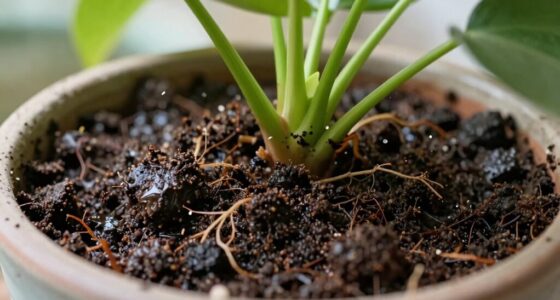
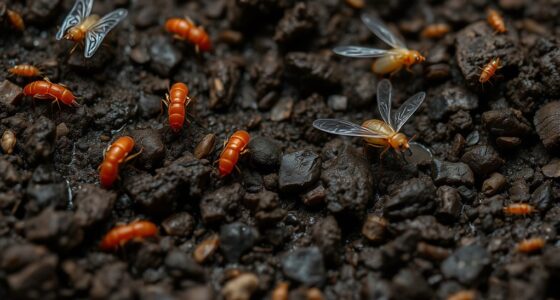
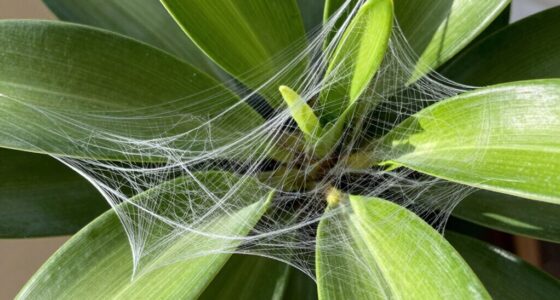
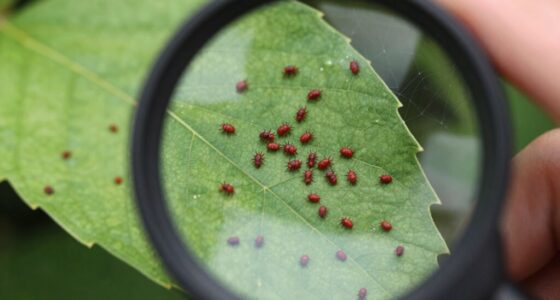
If your plant’s leaves are shiny, it could signal a scale insect infestation, as these pests produce a sticky honeydew that coats the surface. This creates a glossy appearance and may attract mold or fungi. You might also see small bumps or cottony residues indicating pests are feeding on sap. Addressing these pests quickly is key; sticking with preventative tips can help you understand more about keeping your plant healthy and pest-free.

Get garden gear delivered free with Prime
- Fast, free delivery on millions of items
- Prime Video, Amazon Music and more included
- Member-only deals all year
Key Takeaways
- Shiny leaves with a sticky, glossy coating often indicate scale insect infestation producing honeydew.
- Presence of small bumps or cottony residues on leaves suggests scale pest activity.
- Scale insects feed on sap, weakening plants and causing shiny, discolored, or curling leaves.
- Honeydew buildup from scale pests fosters mold or fungal growth, worsening leaf condition.
- Early detection and targeted pest treatments help prevent extensive damage from scale infestations.

Have you ever noticed a leaf that gleams more brightly than the others and wondered what makes it so shiny? Sometimes, that glossy appearance is simply the leaf’s natural waxy coating, but other times, that shiny sheen signals a problem lurking beneath the surface. When leaves look unnaturally shiny or have a slick, reflective quality, it’s often a sign that something isn’t quite right. Two common culprits are pest infestation and nutrient deficiency, both of which can cause that unmistakable shiny sheen.
If pests like scale insects or mealybugs are present, they often produce a sticky, shiny substance called honeydew. This sugary secretion coats the leaf surface, giving it a glossy, almost wet look. As the pests feed on the plant’s sap, they weaken the leaf tissue and can lead to further issues like mold or fungal growth. The shiny coating isn’t just a cosmetic problem—it’s a visual cue that your plant is under attack. You might also notice other signs, such as small bumps or cottony residues, which are clear indicators of pest presence. If left unchecked, pests can sap the plant’s nutrients, stunt growth, and even cause leaf drop.
On the other hand, a shiny leaf can be a sign of nutrient deficiency, particularly excess nitrogen or imbalances in other minerals. When plants lack essential nutrients, they sometimes produce excess wax or cuticle to protect themselves, resulting in a slick, shiny appearance. This response is a kind of defense mechanism, but it’s also a red flag that your plant isn’t getting what it needs to thrive. Nutrient deficiencies can cause leaves to look abnormal, and the shiny surface may be accompanied by other symptoms like discoloration, curling, or spotting. Additionally, plant health issues can sometimes be identified early through the presence of a shiny or reflective surface on leaves. Recognizing and understanding these plant deficiencies can help you adjust your care routine effectively. A proper understanding of plant health can help prevent further complications and promote better growth. Sometimes, these signs are linked to soil quality, which plays a vital role in overall plant vitality.
In either case, recognizing that a shiny leaf isn’t just a sign of good health is vital. It prompts you to examine your plant more closely and take corrective actions. For pest infestations, you’ll want to remove or treat the pests directly—using insecticidal soap or natural predators—while also cleaning the leaves to remove honeydew. When nutrient deficiency is suspected, adjusting your fertilization schedule and ensuring the plant receives a balanced diet can help restore its health. Paying close attention to these signs allows you to address the root causes early, preventing more serious damage and keeping your plants vibrant and healthy.
As an affiliate, we earn on qualifying purchases.
Frequently Asked Questions
What Causes the Shiny Appearance on the Leaf?
The shiny appearance on the leaf surface is caused by a thin layer of insect excretions, like honeydew, which creates a glossy look. When insects feed on the plant, they leave behind this sticky residue that reflects light, making the leaf look shiny. This coating often attracts more insects and can promote mold growth, which further enhances the shiny, wet look on the leaf surface.
Is Scale Harmful to Other Plants Nearby?
Yes, scale can harm nearby plants, impacting their plant health. When scale insects infest one plant, they can spread through contact or shared pests, spreading their damage. This makes pest control essential to prevent the colonies from multiplying and affecting surrounding plants. Keeping an eye on your garden and treating infested plants early helps protect the overall health of your garden and keeps pests from spreading further.
How Quickly Does Scale Infestation Spread?
Scale infestations can spread rapidly, sometimes within a few days to weeks, especially if untreated. You should use monitoring techniques like regular visual inspections and sticky traps to catch early signs. When you detect scale, explore treatment options such as horticultural oils or insecticidal soaps. Acting quickly helps prevent the infestation from spreading further and damaging your plants, keeping your garden healthy and thriving.
Are There Natural Predators for Scale Insects?
A natural predator, such as lady beetles, can help control scale insects through biological control. For example, introducing lady beetles in an infested citrus grove effectively reduces scale populations without chemicals. These predators feed on scale insects, keeping their numbers in check naturally. Using natural predators is an eco-friendly, sustainable method to manage scale infestations, reducing reliance on pesticides and promoting healthier plant growth.
Can Scale Be Prevented Before It Appears?
Yes, you can prevent scale insects before they appear by maintaining plant health and practicing pest identification. Keep your plants healthy through proper watering, fertilizing, and pruning, which makes them less attractive to pests. Regularly inspect your plants for early signs of pests, catching issues early before scale infestations develop. Early detection and good plant care are key to preventing scale from establishing and causing further damage.
As an affiliate, we earn on qualifying purchases.
Conclusion
As you walk through the garden, those shiny leaves catch your eye, shimmering like tiny mirrors reflecting sunlight. But now you see beyond their gleam, noticing the subtle signs of scale creeping beneath. The leaf’s glossy surface masks the quiet invasion, a reminder to look closer, dig deeper. Pay attention to the shimmer—sometimes, what sparkles most hides the problem. Stay vigilant, and your garden will stay vibrant, free from hidden threats lurking beneath the glossy surface.
As an affiliate, we earn on qualifying purchases.
As an affiliate, we earn on qualifying purchases.
Halloween Picks
halloween
As an affiliate, we earn on qualifying purchases.