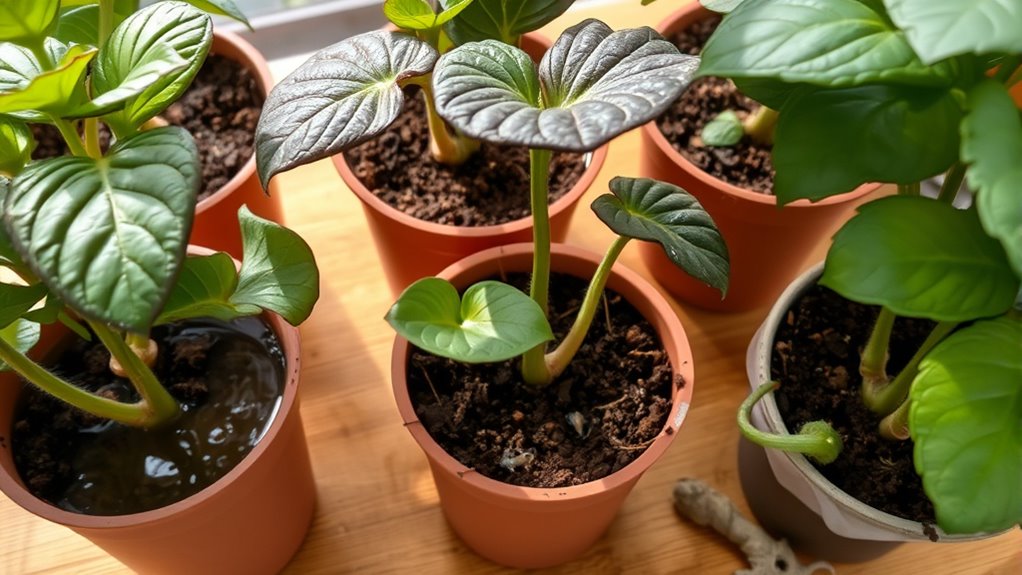
Overwatering your potted plants can create a damp environment that promotes root rot, mold, and pest infestations like fungus gnats. When the soil stays too wet, it prevents roots from getting enough oxygen, weakening your plant’s defenses. Excess moisture also attracts pests and fungal growth, making problems worse. To avoid this, guarantee proper drainage, don’t water excessively, and monitor soil moisture regularly. Keep exploring to learn more ways to protect your plants and keep them thriving.
Key Takeaways
- Overwatering creates moist conditions that attract pests like fungus gnats and promote mold growth.
- Poor drainage soil retains excess water, increasing root rot risk and pest susceptibility.
- Excess moisture weakens plant defenses, making them more vulnerable to pest infestations and fungal issues.
- Using pots without proper drainage holes or blocking outlets can lead to waterlogging and pest problems.
- Regularly monitoring soil moisture and adjusting watering habits prevents overwatering and reduces pest outbreaks.
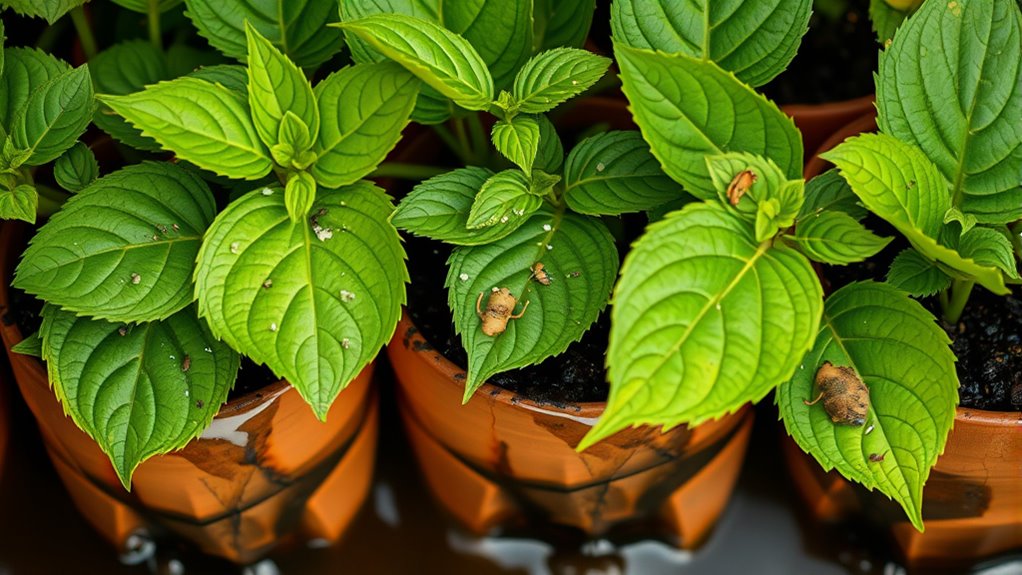
Overwatering your potted plants can quickly lead to problems like root rot and weakened defenses against pests. One of the main issues that often causes overwatering is poor drainage, which can stem from improper soil composition. When you water excessively, but the soil doesn’t drain well, excess water lingers around the roots, suffocating them and creating an ideal environment for fungi and bacteria to thrive. Understanding how drainage issues relate to soil composition is vital. If your soil is too dense or heavy, it retains moisture longer than it should, increasing the risk of root rot. Conversely, if your soil drains too quickly, your plants may not receive enough water, but the primary concern with overwatering is when the soil retains too much moisture over extended periods. To prevent this, you need to choose or amend your soil to balance water retention with proper drainage. Incorporate ingredients like perlite, coarse sand, or pumice to improve aeration and drainage. This way, you create a soil mix that allows excess water to flow freely, reducing the chance of waterlogging and the subsequent pest problems that thrive in damp environments.
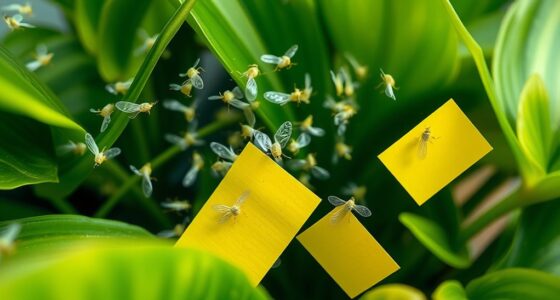
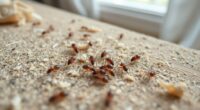
When you neglect to address drainage issues, pests such as fungus gnats and mold are more likely to appear. These pests are attracted to consistently moist conditions that promote fungal growth. Fungus gnats, in particular, lay their eggs in the moist soil, and their larvae feed on organic matter and roots, further weakening your plants. Mold and mildew can also develop on the soil surface or plant leaves, causing additional stress on your plants and making them more susceptible to invasive pests. To avoid this, always check the soil’s drainage capacity before watering. Feel the weight of your pots; if they feel heavy after watering, it’s a sign that water isn’t draining properly. Use pots with drainage holes, and don’t forget to empty saucers of excess water regularly. Adjusting your soil composition is a simple yet effective way to fix drainage issues.
Frequently Asked Questions
How Can I Prevent Pests Caused by Overwatering?
To prevent pests caused by overwatering, make certain your soil has good drainage and avoid excessive watering. Check your watering frequency and only water when the top inch of soil feels dry. Use pots with drainage holes to prevent water from pooling, which attracts pests. Regularly inspect your plants for signs of pests or disease, and allow the soil to dry out between waterings to keep pests at bay.
What Are the Signs of Overwatering in Potted Plants?
Like a sponge soaking up water, your potted plant shows signs of overwatering through yellowing leaves and wilting. You might notice a foul smell, which hints at root rot or fungal infections. The soil stays soggy, and new growth stalls. If you see these symptoms, it’s time to let the soil dry out and improve drainage, preventing further damage and keeping your plant healthy and happy.
Which Pests Are Most Common in Overwatered Pots?
You’ll find root rot and fungus gnats are the most common pests in overwatered pots. Excess moisture creates a perfect environment for root rot, which damages your plant’s roots and causes yellowing leaves. Fungus gnats thrive in damp soil, flying around and laying eggs that hatch into larvae. To prevent these pests, let the soil dry out between waterings and improve drainage, keeping your plants healthy and pest-free.
How Does Soil Type Influence Pest Outbreaks?
Soil type greatly influences pest outbreaks by affecting soil drainage and nutrients. If you use poorly-draining soil, excess moisture creates a perfect environment for pests like fungus gnats and root maggots to thrive. Nutrient-rich soils can attract pests such as aphids and fungus gnats, which feed on the abundant nutrients. To prevent this, choose well-draining soil and avoid over-fertilizing, keeping your plants healthier and pest-free.
Can Overwatering Lead to Long-Term Plant Health Issues?
Jumping the gun, overwatering can cause long-term plant health issues. It often leads to root rot, damaging roots and blocking nutrient absorption, which results in nutrient deficiency. This weakens your plant, making it more vulnerable to diseases and pests. If ignored, these problems can stunt growth, reduce vitality, and even kill your plant over time. To keep your plant thriving, water wisely and guarantee proper drainage.
Conclusion
Remember, preventing pest problems and overwatering begins with paying close attention. Stay vigilant by watering wisely, watching for warning signs, and wiping out pests swiftly. By balancing your botanic basics, you’ll banish bothersome bugs and keep your potted plants perfectly healthy. With consistent care and clever control, you can conquer crises and cultivate a thriving, pest-free paradise. Keep these tips in mind, and your pots will flourish with fun and foliage!