If you notice curling leaves and sticky honeydew on your brassicas, aphid infestation is likely the culprit. These tiny insects cluster on new growth, excrete honeydew that can cause sooty mold, and weaken your plants. To control them naturally, try washing them off with water, use insecticidal soaps, or attract their predators like ladybugs. Keep an eye on signs of trouble to protect your plants; understanding these steps helps keep your garden healthy.

Get garden gear delivered free with Prime
- Fast, free delivery on millions of items
- Prime Video, Amazon Music and more included
- Member-only deals all year
Key Takeaways
- Aphids cluster on new growth, causing leaves to curl and distort.
- They excrete honeydew that covers leaves, leading to black sooty mold.
- Visible curling and sticky residue are signs of aphid infestation on brassicas.
- Natural predators like ladybugs and lacewings help control aphid populations.
- Organic treatments such as insecticidal soap and water sprays effectively manage infestations.
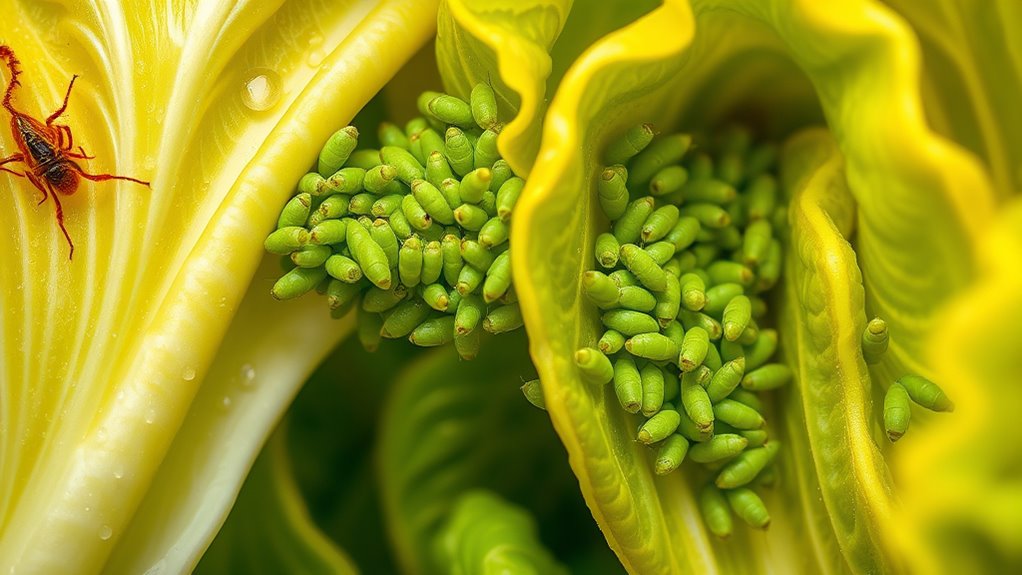
Have you ever noticed tiny green or black insects clustering on your brassica plants? If so, you’re likely dealing with aphids, small sap-sucking pests that can quickly become a serious problem. These pests tend to congregate on new growth, causing leaves to curl and distort. Their feeding activity doesn’t just damage the plant’s appearance; it also hampers overall health and productivity. Aphids excrete a sticky substance called honeydew, which can cover leaves and stems, attracting mold and further weakening your plants. The presence of honeydew also invites sooty mold, adding a black, fuzzy coating that hampers photosynthesis and stunts growth.
Dealing with aphids can feel overwhelming, but employing natural predators and organic control methods offers an effective, environmentally friendly solution. Ladybugs, lacewing larvae, and parasitic wasps are some of the natural predators that feed on aphids. Introducing these beneficial insects into your garden can help bring balance back to your brassicas without the need for chemical pesticides. You can attract them naturally by planting nectar-rich flowers nearby or purchasing them from garden centers. When you encourage natural predators, you create a self-sustaining system that keeps aphid populations in check over time.
Encourage natural predators like ladybugs and lacewings to control aphids organically and sustainably.
Organic control methods are also straightforward and safe for your plants and the environment. Spraying a strong jet of water can dislodge aphids from leaves, reducing their numbers without harming your plants. You might also consider using insecticidal soaps or neem oil, which are effective against aphids but gentle enough to use regularly. These substances break down the pest’s outer shell or interfere with their feeding, leading to quick declines in their populations. Be sure to thoroughly cover all plant surfaces, especially the undersides of leaves where aphids tend to hide.
Another organic tactic involves making homemade sprays using ingredients like garlic, hot pepper, or a mixture of soap and water. These can deter aphids from settling on your plants or encourage natural predators to move in. Regular monitoring is *vital*—early detection allows you to act before aphids establish large colonies. Keep an eye out for curled leaves, sticky honeydew, and black mold, all signs of infestation. Proper plant health management can help your brassicas resist pests more effectively. By combining these methods—encouraging natural predators and applying organic controls—you’ll protect your brassicas effectively while maintaining a healthy, chemical-free garden environment.
aphid insecticidal soap for garden
As an affiliate, we earn on qualifying purchases.
As an affiliate, we earn on qualifying purchases.
Frequently Asked Questions
Can Aphids Spread Plant Diseases to Brassicas?
Yes, aphids can spread plant diseases to brassicas through disease transmission. As they feed on the plants, they often carry pathogens on their bodies or within their saliva, which can infect healthy tissue. When you notice aphids, you’re also at risk of pathogen spread, so it’s important to control their population promptly. Managing aphids helps prevent disease transmission and keeps your brassicas healthy.
What Natural Predators Control Aphid Populations?
Predators protect plants by preying on pests like aphids. Ladybugs and lacewings are your natural predators, providing effective biological control. These beneficial insects scout and seek out aphids, reducing their populations naturally. By encouraging these predators in your garden, you create a balanced, bug-busting ecosystem that keeps aphids in check without chemicals. So, fostering ladybugs and lacewings helps maintain healthy brassicas effortlessly and environmentally.
How Does Curling Leaves Affect Crop Yield?
Curling leaves can substantially reduce your crop yield by causing crop stress and leaf damage. When leaves curl, it limits sunlight exposure and hampers photosynthesis, weakening the plant and slowing growth. This damage makes your brassicas more vulnerable to pests and diseases, further decreasing productivity. To protect your crop, monitor for curling signs early and implement integrated pest management strategies to minimize stress and preserve healthy leaf development.
Are There Resistant Brassica Varieties to Aphids?
Imagine vibrant brassicas standing tall, their leaves untouched by pests. Yes, there are resistant varieties available, thanks to targeted breeding programs. These resistant varieties are developed to withstand aphid attacks, reducing damage and honeydew buildup. By choosing these cultivars, you can minimize pest issues naturally, making your crop management easier. Keep an eye out for new resistant options, as breeding programs continually improve and expand these pest-resistant brassica varieties to protect your harvest.
When Is the Best Time to Treat Aphids?
You should treat aphids as soon as you notice signs like curling leaves or honeydew. Timing optimization is key, so regularly monitor your brassicas for pest activity. Early intervention prevents populations from booming, making control easier and more effective. Keep an eye out during early growth stages, especially in spring and early summer, when aphids tend to multiply rapidly. Prompt treatment helps protect your plants and reduces the need for harsher chemicals later on.
As an affiliate, we earn on qualifying purchases.
Conclusion
Now that you know how aphids curl leaves and produce honeydew, you can act quickly to protect your brassicas. Don’t let these tiny invaders turn your garden into a scene straight out of a medieval tapestry! Regular inspection and natural remedies like neem oil or introducing ladybugs can keep aphids at bay. Stay vigilant, and your garden will flourish, proving that even in this modern age, a little old-fashioned care goes a long way to keep pests in check.
As an affiliate, we earn on qualifying purchases.
beneficial insects for pest control
As an affiliate, we earn on qualifying purchases.
As an affiliate, we earn on qualifying purchases.
Fall yard work Picks
leaf blowers
As an affiliate, we earn on qualifying purchases.