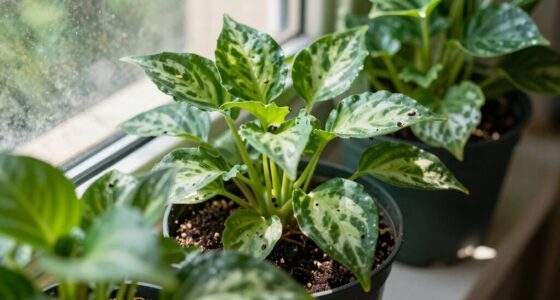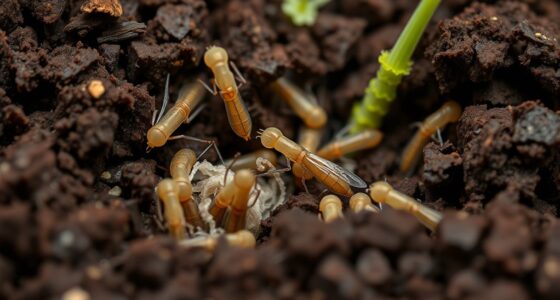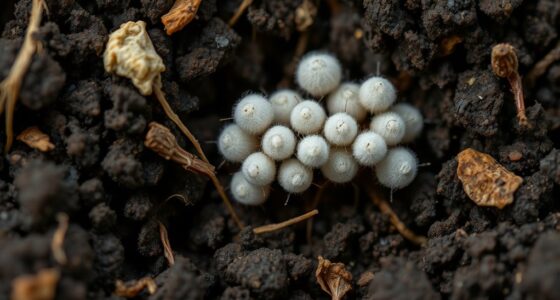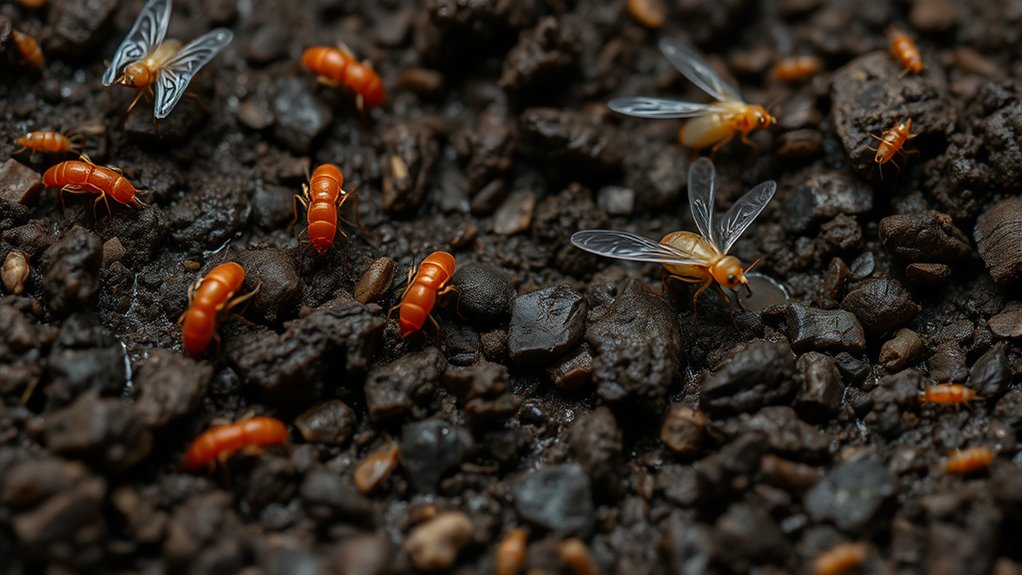

Soil mites are tiny beneficial organisms that help break down organic matter and improve soil health, while fungus gnats are small flies whose larvae can damage plant roots and stunt growth. You’ll find soil mites mostly beneficial if kept in balance, but fungus gnat larvae thrive in moist, overwatered soil and pose a threat to plants. Understanding these differences helps you manage your soil better—keep exploring to learn how to keep pests at bay and promote healthy plants.

Get garden gear delivered free with Prime
- Fast, free delivery on millions of items
- Prime Video, Amazon Music and more included
- Member-only deals all year
Key Takeaways
- Soil mites are beneficial decomposers that improve soil health, while fungus gnat larvae can damage plant roots.
- Soil mites feed on organic matter and rarely harm healthy plants, unlike gnat larvae that feed on roots.
- Fungus gnats are attracted to overwatered, poorly-drained soil, whereas soil mites thrive in balanced, organic-rich soil.
- Natural predators, such as predatory mites and nematodes, help control fungus gnat larvae but do not eliminate beneficial soil mites.
- Promoting proper watering and organic matter encourages beneficial soil mites and discourages fungus gnat infestations.

If you’re dealing with pests in your indoor garden or outdoor plants, you’ve likely come across soil mites and fungus gnats, two common but very different creatures. Understanding what sets them apart is key to managing your plants effectively. Soil mites are tiny, often beneficial creatures that live within the soil, feeding on decaying organic matter and helping break down nutrients for plant roots. They generally don’t harm healthy plants and can even improve soil health. Fungus gnats, on the other hand, are small flies whose larvae feed on organic matter in the soil, especially overwatered or poorly drained soil. Their larvae can damage roots, stunting plant growth or causing wilting. Recognizing these differences guides your pest control methods and helps you decide whether to encourage natural predators or take more direct action.
When it comes to pest control methods, the focus with soil mites and fungus gnats diverges. For soil mites, the goal isn’t to eliminate them but to maintain a balanced soil ecosystem. In fact, some soil mites are natural predators of fungus gnat larvae, creating a natural form of pest control. Encouraging beneficial organisms in your soil can keep pest populations in check without resorting to chemicals. You might add organic matter or compost to promote a diverse microbial environment that supports beneficial mites and other natural predators. For fungus gnats, reducing excess moisture is a vital step. Allowing the soil to dry out between waterings limits the habitat for larvae and discourages their proliferation. Sticky traps can catch adult gnats, preventing them from laying more eggs. If infestations persist, introducing beneficial nematodes or predatory insects like Hypoaspis miles can target gnat larvae and reduce their numbers naturally. Additionally, understanding the beneficial roles that soil mites play can help you foster a healthier soil environment.
Using natural predators plays a significant role in managing these pests. Soil mites themselves can be beneficial if they are the right type, as they may feed on fungus gnat larvae. Also, leveraging biological control agents such as predatory mites or nematodes can help keep gnat populations under control without harmful chemicals. These natural predators fit into an integrated pest management approach, emphasizing minimal chemical intervention and promoting a healthy soil ecosystem. This method not only protects your plants but also sustains the soil’s natural balance, making pest problems less likely to escalate over time.
As an affiliate, we earn on qualifying purchases.
Frequently Asked Questions
How Do Soil Mites and Fungus Gnats Impact Plant Health Long-Term?
Soil mites help improve long-term plant resilience by breaking down organic matter and maintaining soil ecosystem balance, promoting healthy root growth. Fungus gnats, however, can harm plants over time by damaging roots and spreading diseases. If you manage these pests effectively, you can support a balanced soil environment that fosters strong, resilient plants. Regular monitoring and natural controls keep your soil ecosystem healthy, ensuring your plants thrive in the long run.
Can Soil Mites and Fungus Gnats Coexist Without Harming Plants?
Yes, soil mites and fungus gnats can coexist peacefully within a shared habitat. They often occupy different niches in the soil, reducing direct competition and harm. As long as the environment remains balanced, they typically don’t harm your plants. You might notice a natural mutual coexistence, which can even benefit soil health by promoting nutrient cycling and controlling pests naturally. Just monitor their populations to prevent any imbalance.
Are There Natural Predators for Soil Mites and Fungus Gnats?
Ever wonder if nature has your back against pests? Yes, there are natural predators for both soil mites and fungus gnats. Biological control employs predator species like predatory mites and beneficial nematodes to keep pest populations in check. These natural enemies help maintain a healthy balance in your soil, reducing the need for chemical treatments. Using predator species is an eco-friendly way to protect your plants naturally and effectively.
How Quickly Can Soil Mites or Fungus Gnats Infest a Garden?
You can see soil mites or fungus gnats infest your garden within a few weeks, especially if conditions favor rapid reproduction. Fungus gnats reproduce quickly, often leading to noticeable infestation indicators like adult gnats flying around or larvae in the soil. Soil mites also reproduce swiftly under moist, organic conditions. To prevent a severe infestation, monitor your garden regularly and address any signs early before populations grow uncontrollably.
What Environmental Conditions Favor Soil Mites Over Fungus Gnats?
You might notice soil mites thriving when moisture levels are consistently high and organic matter is abundant. These conditions create a cozy habitat, encouraging mites to flourish. Unlike fungus gnats, which prefer damp, decaying plant material, soil mites love rich, moist soil that’s teeming with organic debris. Keep your environment balanced, and you’ll keep soil mites at bay, preventing them from becoming your garden’s uninvited guests.
As an affiliate, we earn on qualifying purchases.
Conclusion
Now that you understand the differences between soil mites and fungus gnats, you can better protect your plants. Think of soil mites as tiny guardians, silently working beneath the surface, while fungus gnats are like unwelcome invaders invading your soil’s peaceful landscape. By recognizing each’s role, you can nurture a healthy, balanced environment. With your knowledge, you’ll turn your garden into a thriving oasis where nature’s tiny warriors keep the pests at bay.
As an affiliate, we earn on qualifying purchases.
As an affiliate, we earn on qualifying purchases.
Fall Picks
fall essentials
As an affiliate, we earn on qualifying purchases.