
TL;DR

Get garden gear delivered free — and shop member deals
- Fast, free delivery on millions of items
- Access to Prime Big Deal Days deals on October 6–7
- Prime Video, Amazon Music and more included
A Country Living report says deer may eat chrysanthemums despite their scent, particularly in fall when other food is becoming scarce and fresh potted mums are easy to reach. Repellents and motion sprinklers may work only temporarily; placing pots near the house or using a physical barrier can help reduce damage.
Deer can eat chrysanthemums despite the plants’ strong, bitter-herby smell, according to a Country Living report featuring florist Christina Stembel. The report says fresh, watered mums can be attractive when other vegetation is drying back in fall, and suggests placing pots near the home or using barriers to limit browsing.
Stembel, founder and CEO of Farmgirl Flowers, told Country Living that she has found deer will eat many plants marketed as deer-resistant. She described rosemary, lavender and eucalyptus as among the few plants she has found deer leave alone, while cautioning that deer may feed on other plants. That is her experience, not a guarantee that any particular flower is safe from browsing.
The report says mums may offer deer moisture and nutrients as seasonal food becomes less available. Freshly planted pots can be especially exposed because they are often set out at a reachable height and receive regular water and fertilizer. A strong scent, on its own, does not reliably protect them.
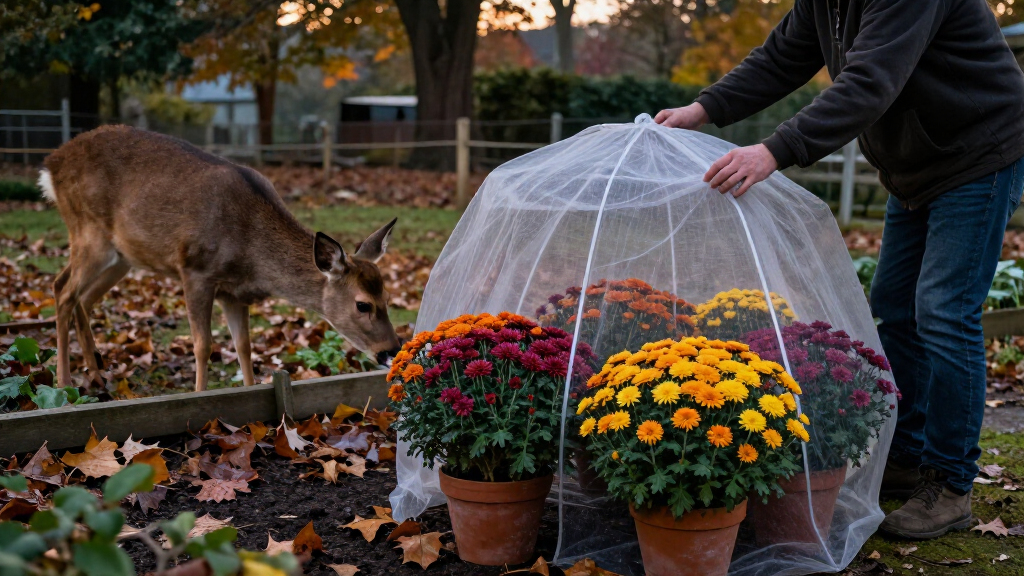
Suggested measures include commercial repellents, garlic- or vinegar-based homemade sprays, motion-activated sprinklers, and physical coverings such as chicken wire or bird netting. Repellents may need to be reapplied after rain and according to product directions; the report also cautions that deer can become accustomed to scents. Stembel recommends keeping pots close to the door, where activity, porch lighting or dogs may discourage deer.
Protecting Mums Before Frost
Fall mums are often bought for their late-season color, so browsing can spoil a display just as other garden plants are fading. Timing matters: the report says mums nibbled earlier in the growing season may have time to recover, but damage to buds in September or October may leave too little time for a full display before frost.
For gardeners, the practical takeaway is to treat deterrents as ways to reduce risk rather than guarantees. Physical barriers and placement may protect individual containers without relying only on scent. If a hardy mum is eaten late in the season, its roots may still survive and return the following year, provided they remain healthy.
As an affiliate, we earn on qualifying purchases.
Why Fall Mums Attract Browsers
Chrysanthemums are popular fall flowers because they produce blooms when many other plants are winding down. The same timing can leave them conspicuous in gardens as other foliage dries or is eaten. Country Living’s report characterizes the tender, well-watered leaves and buds as an appealing food source for deer preparing for winter.
The report also stresses that “deer-resistant” is not a firm promise. Stembel says deer may eat many plants when hungry, while naming daffodils, foxglove and hellebores as toxic plants deer avoid. That observation should not be taken as a reason to plant toxic flowers where children or pets could encounter them. The report lists Japanese anemones, sedum, Russian sage, salvia, agastache, marigolds, snapdragons, ornamental grasses, asters and goldenrod as possible fall alternatives, but none is presented as guaranteed deer-proof.
Deer are not the only possible cause of damage. The report also names rabbits, groundhogs and voles as animals that eat mums; squirrels and chipmunks may dig up plants while looking for places to store acorns. Aphids, thrips, spider mites and slugs can also damage plants, though their feeding is different from large-animal browsing.
As an affiliate, we earn on qualifying purchases.
Deterrents Are Not Guaranteed
The report does not provide controlled comparisons or success rates for repellents, sprinklers, lights, dogs or plant placement. Their effectiveness can vary by location and by how hungry or accustomed deer are. Stembel says sprinklers can work for a short time, but deer may return.
It is also not possible to diagnose damage from the report’s general advice alone. Chewed leaves or missing buds may come from deer or other animals, while small-scale damage can come from insects or slugs. Gardeners may need to inspect plants and look for signs of the likely cause before choosing a response.
motion-activated sprinkler for deer
As an affiliate, we earn on qualifying purchases.
As an affiliate, we earn on qualifying purchases.
Steps Gardeners Can Take Now
Gardeners can move potted mums nearer an entrance, cover plants with chicken wire or netting, or try a suitable commercial repellent. Follow each product label for application frequency and precautions, including any protective equipment it specifies. For homemade sprays, the report gives garlic and vinegar as examples but does not provide a tested recipe or application guidance.
After a late-season browse, check whether the mum is hardy and whether its roots remain intact. The report advises cutting back and mulching surviving hardy mums so they can grow again next year. It does not establish whether any damaged plant will recover, or how much protection each deterrent will provide before frost.
As an affiliate, we earn on qualifying purchases.
Key Questions
Do deer eat mums even though the flowers smell strong?
Yes. The Country Living report says deer may eat mums despite their scent. A strong smell should not be treated as reliable protection.
What is the most practical way to protect potted mums?
The report suggests placing pots close to the home and using a physical covering such as chicken wire or bird netting. These measures may reduce access but are not guaranteed to stop deer.
Do deer repellents work on chrysanthemums?
They may discourage browsing, but the report says results vary and deer can get used to scents. Reapply products as directed, including after rain when the label calls for it.
Will a mum grow back after deer eat it?
A hardy mum may return if its roots are healthy. The report says plants damaged earlier in the season have more time to recover; late-season bud loss may prevent a full display before frost.
Are any fall flowers guaranteed not to be eaten?
No flower in the report is described as guaranteed deer-proof. Stembel names several possible alternatives, including sedum, salvia, marigolds and ornamental grasses, while warning that deer may eat many plants.
Source: rss
Fall yard work Picks
leaf blowers
As an affiliate, we earn on qualifying purchases.