Vole damage often shows up after snow melts because their underground tunnels and burrows get hidden beneath the snow during winter. Once the snow recedes, you can clearly see signs like soil shifts, tunneling, and damaged irrigation lines that were previously concealed. This makes it easier to spot their activity and damage to your garden or irrigation system. If you want to understand how to identify and prevent vole damage, keep exploring these clues further.

Get garden gear delivered free with Prime
- Fast, free delivery on millions of items
- Prime Video, Amazon Music and more included
- Member-only deals all year
Key Takeaways
- Snow melt uncovers underground vole tunnels and burrows, revealing signs of their activity.
- Voles damage irrigation lines underground, which become visible after snow melts and leaks emerge.
- Tunneling causes soil shifts and collapses that are only noticeable once snow recedes.
- Damage signs like dry patches or pooling water appear when the snow has melted and irrigation is affected.
- Vole activity increases in winter, and damage becomes apparent after snow melts when their tunnels and effects are exposed.
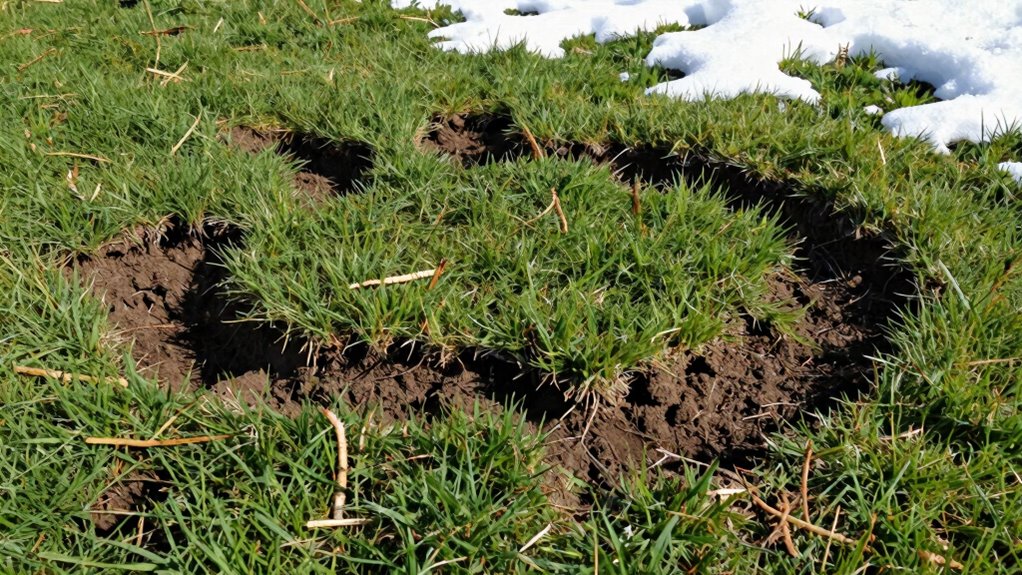
Voles are notorious for damaging garden irrigation systems as well. Their burrowing can disrupt underground hoses, sprinkler lines, and drip emitters. When the snow melts, you might find leaks or reduced water flow in your irrigation setup, which can lead to uneven watering and stressed plants. Their extensive tunnel networks can cause the soil around your irrigation components to shift or collapse, making it harder to maintain consistent watering schedules. This damage often goes unnoticed until you see dry patches or water pooling in unexpected areas, highlighting the importance of inspecting your irrigation system thoroughly after winter. Recognizing the typical signs of underground rodent activity can help you identify problems early and prevent further damage. Additionally, understanding how voles choose their habitats can assist in creating a more vole-resistant landscape. Learning about vole behavior and preferred environments allows you to implement more effective preventative measures. Being aware of their burrowing habits can further improve your ability to detect early signs of infestation and protect your garden.
Voles can damage irrigation lines, causing leaks and uneven watering—inspect your system thoroughly after winter to prevent issues.
Moreover, knowing where voles are most active can help you identify potential high-risk areas in your yard before damage occurs. This proactive approach ensures you’re better prepared to safeguard your garden and irrigation system.
Additionally, the appearance of vole damage signals a need for effective wildlife control. Voles are not just pests; they’re part of the local ecosystem, but their unchecked activity can devastate your garden. Controlling their population involves more than just trapping or repellents; it requires understanding their habits and habitat. Installing barriers, such as hardware cloth around valuable plants or garden beds, can prevent voles from accessing roots and bulbs. Maintaining a tidy yard by removing debris and dense ground cover minimizes their hiding spots. If you notice vole activity early, you can implement these wildlife control measures before the damage becomes extensive, saving your plants and reducing future problems. Recognizing their ecological role while managing their impact helps maintain a balanced local ecosystem.
Ultimately, the signs of vole damage after snow melt serve as a reminder to stay vigilant. Regular inspection of your garden and irrigation system helps catch problems early. Recognizing the damage and understanding vole behavior allows you to take targeted action, protecting your landscape and maintaining a healthy garden. While they are part of the natural environment, managing their presence through thoughtful wildlife control methods ensures your plants and infrastructure remain intact as the seasons change.
vole damage underground irrigation lines
As an affiliate, we earn on qualifying purchases.
As an affiliate, we earn on qualifying purchases.
Frequently Asked Questions
How Can I Prevent Vole Damage Before Snow Melts?
To prevent vole damage before snow melts, you should focus on reducing their habitat and managing winter burrows. Remove dense ground cover, tall grasses, and weeds that provide shelter. Use wire mesh or hardware cloth around vulnerable plants to create barriers. During winter, carefully manage burrows by gently filling them in or blocking entrances, discouraging voles from settling nearby. These proactive steps help protect your garden from vole damage early on.
Are Certain Plants More Vulnerable to Vole Damage?
Certain plants are more vulnerable to vole damage because of their habitat preferences and tender roots. You might notice that young shrubs, vegetable seedlings, and bulbs often fall prey, especially if they’re near vole habitats like grassy areas and woodlands. These plants attract voles seeking shelter and food, making them prime targets for damage. To protect your garden, focus on resilient plants and create barriers around vulnerable species.
What Signs Indicate Vole Activity Beneath the Snow?
You can identify vole activity beneath the snow by looking for signs of vole tunnel identification, such as shallow runways or small, round entrance holes in the snow or ground. During winter vole activity, these tunnels become more noticeable as voles forage beneath the snow cover. Keep an eye out for gnawed plants, shredded bark, or fresh droppings near these tunnels, indicating ongoing winter vole activity beneath the snow.
Do Vole Damages Differ Seasonally?
Vole damage varies wildly with the seasons, as if these tiny pests switch costumes! In winter, they create intricate Vole burrows and cozy winter nesting spots beneath the snow, leading to underground chaos. Come spring and summer, their activity shifts above ground, gnawing on plant roots and stems. So yes, their damage is seasonal—shifting from underground tunnels in winter to visible destruction in warmer months.
Can Vole Damage Be Repaired Easily?
Yes, vole damage can be repaired, but it depends on the extent. First, identify vole burrows and damaged areas to assess the problem. To prevent future damage, you should focus on vole burrow identification and implement vole damage prevention strategies like removing debris and installing barriers. Repairing damaged grass or plants involves reseeding or replanting, and maintaining a healthy lawn helps minimize future vole issues.
vole control traps and repellents
As an affiliate, we earn on qualifying purchases.
As an affiliate, we earn on qualifying purchases.
Conclusion
As snow melts, you’ll notice vole damage becoming more apparent. These tiny rodents cause significant underground harm that only shows up once the ground thaws. Did you know that voles can reproduce rapidly, with litters of up to 10 young multiple times a year? This means your yard could quickly become a hotspot for damage if left unchecked. Staying vigilant and taking preventive measures now can save you from bigger problems later.
hardware cloth for vole prevention
As an affiliate, we earn on qualifying purchases.
As an affiliate, we earn on qualifying purchases.
As an affiliate, we earn on qualifying purchases.
Halloween Picks
halloween
As an affiliate, we earn on qualifying purchases.