Horticultural oils are applied differently during dormancy and summer to target pests effectively while protecting your plants. Dormant oils are used before new growth starts, penetrating crevices to kill overwintering pests with minimal plant stress. Summer oils are applied during active growth, targeting pests like aphids and mites to act as a contact, curative treatment. Timing is essential to avoid plant damage and maximize control. If you want to understand when and how to apply these oils for best results, keep exploring further.
Key Takeaways
- Dormant oils are applied before new growth to target overwintering pests, while summer oils are used during active pest feeding periods.
- Dormant applications minimize plant stress and penetrate crevices, whereas summer oils form a contact layer to suffocate pests on active growth.
- Timing for dormant oils is before bud break, whereas summer oils are applied early morning or late evening during pest activity.
- Dormant oils serve as preventative control, while summer oils are curative, targeting pests like aphids and mites during growth.
- Both application timings require careful weather considerations to prevent plant damage and maximize pest control effectiveness.
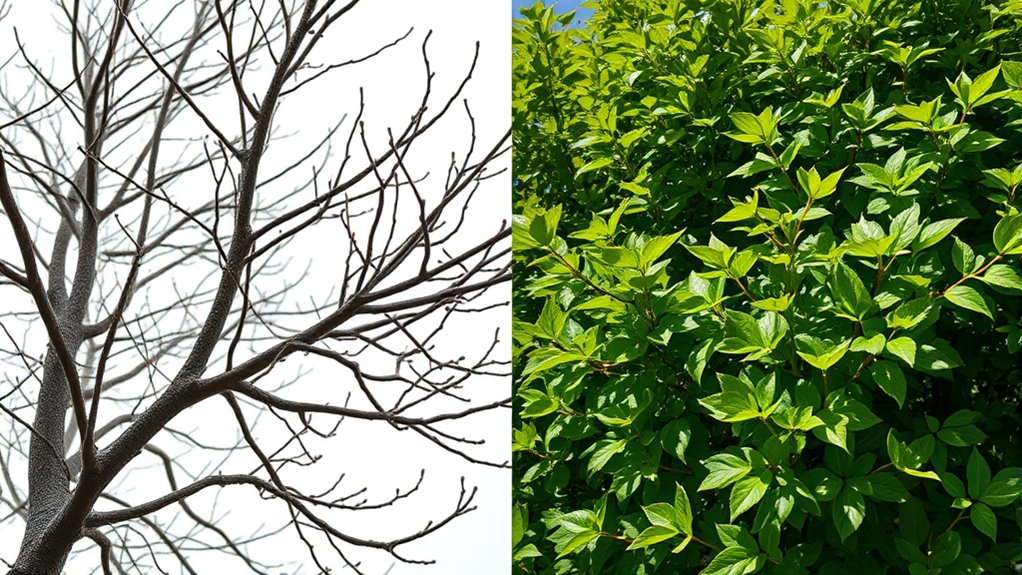
Horticultural oils are versatile tools in pest management, widely used by gardeners and farmers to protect plants from insects and diseases. One of the key factors in their effectiveness is application timing, which depends on the plant’s growth stage and the pests you aim to control. During dormancy, applying horticultural oils can be especially beneficial because pests like overwintering eggs or dormant scales are more vulnerable. In contrast, summer applications target active pests like aphids, mites, and leafhoppers, which are feeding and reproducing rapidly. Understanding when to apply the oil is vital to maximize pest control methods and minimize plant stress.
Dormant oil applications are typically made before new growth begins in early spring, when the plant’s sap flow is minimal. This timing allows the oil to coat overwintering pests hiding on branches, trunks, and stems without interfering with the plant’s growth. Since the plant isn’t actively growing, the risk of phytotoxicity is lower, and the oil can penetrate crevices, killing pests and their eggs effectively. It’s essential to guarantee the weather forecast predicts no frost or rain for at least 24 hours after application, as cold temperatures can damage the plant or reduce the oil’s efficacy.
During the summer, application timing shifts to when pests are actively feeding. Summer horticultural oils are often used as a contact pest control method, suffocating insects on contact. You want to spray during early morning or late evening when the sun isn’t direct, preventing heat stress or phytotoxicity. The oil forms a thin layer over pests and plant surfaces, disrupting their breathing and reproduction. Regular applications may be necessary, especially during peak pest activity, but you need to be cautious not to overuse, which can harm beneficial insects or cause leaf burn.
Different pest control methods are aligned with the application timing of horticultural oils. Dormant sprays are more about preventative control, targeting pests before they become active, while summer sprays are more curative, aiming to suppress existing infestations. Using horticultural oils at the right time guarantees you’re not only controlling pests effectively but also preserving the health of your plants. Always follow label instructions regarding application rates and intervals, and pay attention to weather conditions to avoid phytotoxicity.
Frequently Asked Questions
Can Horticultural Oils Harm Beneficial Insects?
Horticultural oils can harm beneficial insects if not applied carefully, especially during active seasons. They may impact beneficial insect populations and other non-target organisms if they come into contact with the oils. To minimize harm, you should spray oils early in the morning or late in the evening when beneficial insects are less active. Proper application guarantees better non-target organism safety and reduces beneficial insect impact.
Are There Differences in Application Techniques for Dormant and Summer Oils?
You need to adjust your application techniques based on whether you’re using dormant or summer horticultural oils. For dormant oils, apply early in the season with a thorough spray method, targeting twigs and branches before buds swell. In summer, focus on application timing when pests are active, using a fine mist to cover foliage evenly. Remember, proper timing and spray methods are key to effective and safe oil applications.
How Do I Choose the Right Horticultural Oil for My Plants?
To choose the right horticultural oil for your plants, consider their plant health and the oil formulation. For dormant periods, select a lightweight, refined oil that helps control overwintering pests without harming the plant. During summer, opt for a summer oil with a different formulation to prevent burn and maintain plant health. Always read labels carefully to match the oil type with your plant’s needs and seasonal conditions.
What Safety Precautions Should I Take When Applying Horticultural Oils?
Think of applying horticultural oils like walking a tightrope—you need balance and caution. Always wear protective gear such as gloves, goggles, and a mask to shield yourself from potential irritation. Pay attention to application timing; avoid spraying during hot, sunny periods to prevent plant damage. Follow label instructions carefully, and apply in the early morning or late evening for safe, effective coverage that keeps you protected.
Can Horticultural Oils Be Used on Edible Plants?
Yes, you can use horticultural oils on edible plants, but you should prioritize edible plant safety and follow label instructions carefully. Make sure to apply the oil during the appropriate time, like early morning or late evening, to minimize oil residue concerns. Always wash harvested produce thoroughly before eating to reduce any remaining oil residue. When used correctly, horticultural oils are a safe and effective pest control method for edible plants.
Conclusion
Horticultural oils are your garden’s silent guardians, whether used in dormancy or summer. Think of them as a gentle shield, wrapping your plants like a protective blanket against pests and diseases. By choosing the right time and application, you harness their power to nurture healthy, resilient plants. Just like a calming tide, these oils help your garden flourish quietly, ensuring your plants thrive with less fuss and more beauty.