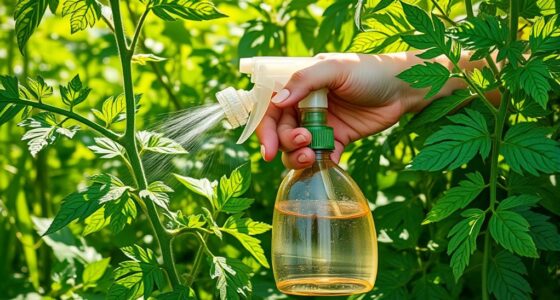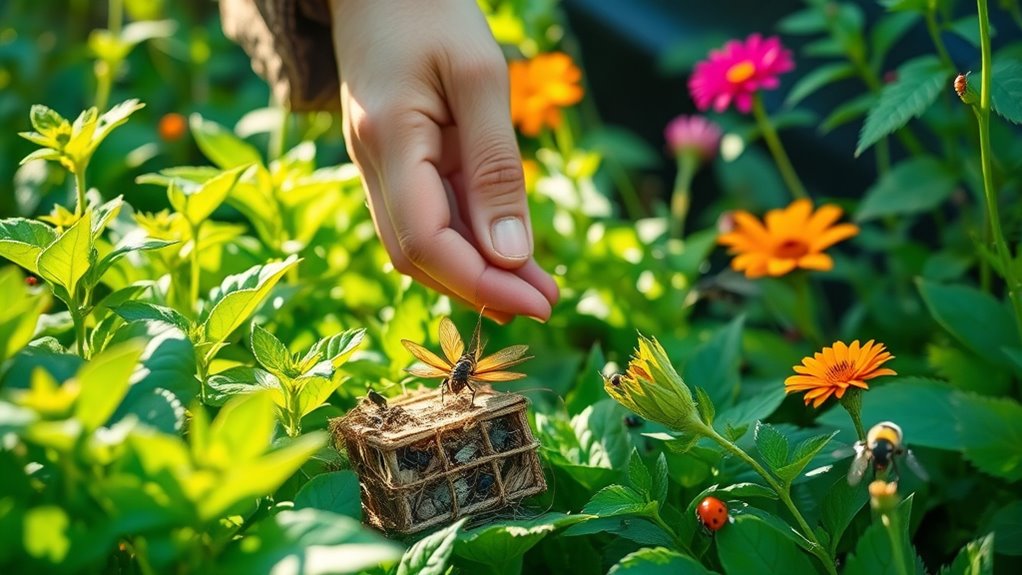

Integrated Pest Management (IPM) is a smart, eco-friendly way for gardeners like you to manage pests. It combines different methods such as monitoring, biological controls, cultural practices, and responsible chemical use to keep pests at bay. The goal is to protect your plants while minimizing risks to people, beneficial insects, and the environment. By using IPM, you create a healthier garden ecosystem. Keep exploring to learn how you can implement these effective strategies in your garden.
Key Takeaways
- IPM is a sustainable pest control approach combining biological, cultural, mechanical, and chemical strategies to minimize risks.
- It emphasizes monitoring and correctly identifying pests to guide targeted, effective management.
- Biological control uses natural enemies like beneficial insects to reduce pest populations naturally.
- Preventive practices such as crop rotation and using resistant varieties help reduce pest problems proactively.
- Chemical controls are used sparingly and responsibly, only when pest levels threaten crops, to protect the environment and beneficials.
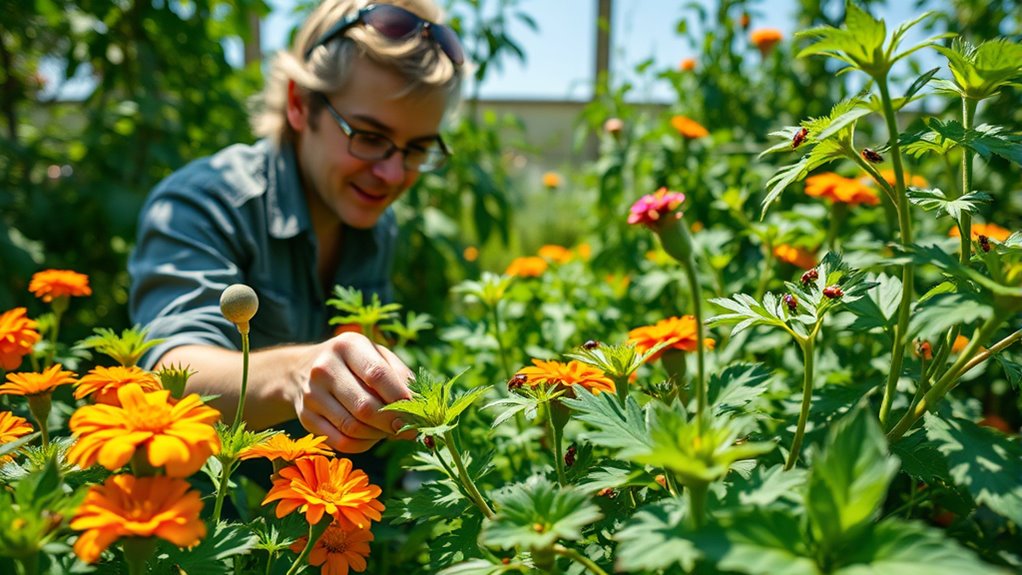
Integrated Pest Management (IPM) is a sustainable approach to controlling pests by combining various strategies to minimize risks to people, crops, and the environment. As a gardener, you can embrace IPM by understanding how to work with nature rather than against it. One key component of IPM is biological control, which involves using natural enemies like beneficial insects, predators, or pathogens to keep pest populations in check. These helpful organisms hunt down pests, reducing the need for chemical interventions and promoting a balanced ecosystem in your garden. Incorporating biological control means releasing ladybugs to combat aphids or introducing parasitic wasps to target certain caterpillars. This method is effective, eco-friendly, and helps maintain long-term pest suppression.
Another essential aspect of IPM that you should prioritize is pest monitoring. Regularly inspecting your plants allows you to catch pest issues early before they become severe. Pest monitoring involves observing your garden closely, identifying pest species, and evaluating their populations. By keeping detailed records, you can recognize patterns and determine whether pest levels are manageable or require intervention. Monitoring also guides your decision-making process, ensuring you apply control methods only when necessary, which minimizes unnecessary pesticide use. This proactive approach not only saves your crops but also supports beneficial insects and other natural enemies crucial for biological control. Additionally, understanding pest identification helps in selecting the most effective control methods and prevents unnecessary treatments.
Implementing IPM means you don’t rely solely on chemical solutions. Instead, you start with preventive practices like crop rotation, selecting pest-resistant plant varieties, and maintaining healthy soil. When pests do appear, pest monitoring helps you decide if biological control or other mechanical methods, such as handpicking or traps, will suffice. If chemical controls are required, you choose targeted, least-toxic options and apply them carefully, only when pest levels threaten your crops. This integrated approach ensures your garden remains productive without harming beneficial insects, pollinators, or the environment.

WZQH Leather Work Gloves for Men or Women.Gardening,Welding,Coffee-grey L
- Material and Design: 100% split cowhide leather with soft cotton lining
- Protection Features: High abrasion, puncture, cut, and heat resistance
- Reinforced Palm: Extra protection for hands during heavy tasks
As an affiliate, we earn on qualifying purchases.
Frequently Asked Questions
How Does IPM Differ From Traditional Pest Control Methods?
Traditional pest control relies heavily on chemical reliance, often using pesticides that can harm your plants and environment. In contrast, IPM emphasizes using natural methods like predator introduction to manage pests. You’ll monitor pest levels carefully, applying chemicals only when necessary. This approach reduces chemical dependence, promotes ecological balance, and keeps your garden healthier in the long run. IPM offers a sustainable, effective alternative to conventional pest control methods.
Are There Specific Pests That IPM Is Most Effective Against?
You might wonder if IPM works better for certain pests. It’s especially effective for specific pests like aphids, caterpillars, and beetles, because it targets them precisely without harming your garden. IPM combines monitoring, natural predators, and minimal chemical use, making pest targeting more sustainable. This tailored approach helps manage pests efficiently while protecting beneficial insects, ensuring your garden stays healthy and balanced.
Can IPM Be Used in Organic Gardening Practices?
Yes, you can definitely use IPM in organic gardening practices. It aligns well with organic methods because it emphasizes pest suppression through natural techniques like biological controls, mechanical barriers, and habitat management. By carefully monitoring pests and applying targeted, eco-friendly solutions, you keep your garden healthy without synthetic chemicals. IPM helps you manage pests effectively while maintaining your commitment to organic principles and sustainable gardening.
What Tools or Equipment Are Needed for Implementing IPM?
While you might think you need fancy gadgets, basic tools often do the trick. For effective pest monitoring, you’ll want sticky traps or pheromone traps, which help detect pest presence early. Hand lenses or magnifying glasses can assist in close inspection. Proper trap placement is key, so position traps near problem areas. With these simple tools, you’ll stay ahead of pests and maintain a healthy garden without unnecessary fuss.
How Long Does It Typically Take to See Results With IPM?
You might see results from IPM within a few weeks, depending on pest levels and your efforts. Regular pest monitoring helps catch issues early, while practices like crop rotation reduce pest populations over time. Consistency is key, so keep monitoring, applying targeted controls, and adjusting strategies as needed. Patience pays off, and you’ll notice healthier plants and fewer pests as your integrated approach takes effect.
Conclusion
So, now you know IPM isn’t just fancy buzzwords for “spray everything.” Instead, it’s your clever plan to outsmart pests while saving your garden, your wallet, and maybe even your reputation as a green thumb. Who knew fighting bugs could be so strategic? So go ahead, embrace IPM—because a pest-free garden doesn’t have to come at the expense of your sanity or the planet. Happy gardening, pest warrior!

COOLJOB 2 Pairs Gardening Gloves for Women Ladies, Breathable Rubber Coated for Yard Garden, Outdoor Indoor Protective Work with Grip, Medium Size, Red & Green
- Designed for Women: Lightweight, breathable, comfortable fit
- Enhanced Hand Protection: Thickened fingertips for nail and hand safety
- Long, Flexible Cuffs: Keeps dirt and debris out
As an affiliate, we earn on qualifying purchases.