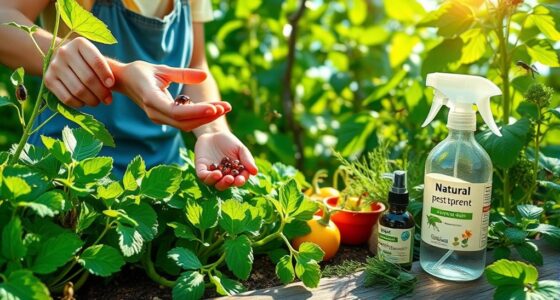

Insecticidal soaps work best when you apply them early in a pest infestation, targeting soft-bodied insects like aphids, whiteflies, and spider mites. Use them during cooler parts of the day, such as morning or late afternoon, and avoid applying in direct sunlight or when temperatures climb above 85°F. For maximum effectiveness, spray evenly on all plant surfaces and reapply every 7 to 10 days, especially after rain. If you want to learn more, keep exploring how weather and timing impact soap success.
Key Takeaways
- Insecticidal soaps effectively target soft-bodied pests like aphids, whiteflies, and spider mites.
- They work best when applied early in pest infestation and during cooler parts of the day.
- Proper coverage, including undersides of leaves, ensures maximum contact with pests.
- Weather conditions such as wind and rain can reduce soap effectiveness by washing it away.
- Reapplications every 7-10 days or after rain help maintain pest control.

Have you ever wondered how to control pesky insects without harsh chemicals? Insecticidal soaps offer a natural, eco-friendly solution that’s gaining popularity among gardeners and homeowners alike. But to make the most of these soaps, it’s vital to understand when they work best and how to use them effectively. This is where pest control strategies come into play, and mastering soap application techniques can make all the difference in your pest management efforts.
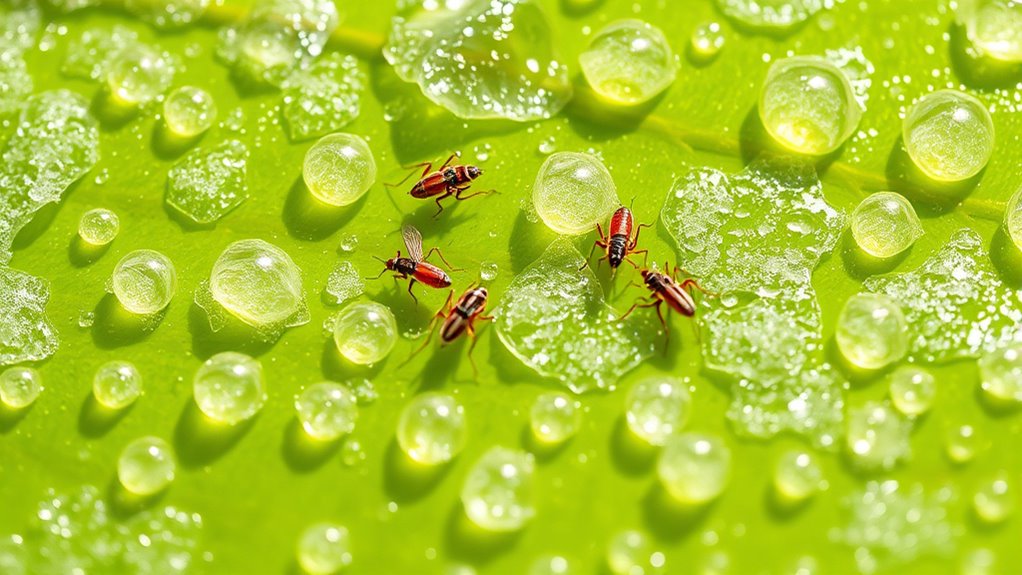
Insecticidal soaps are most effective against soft-bodied insects such as aphids, whiteflies, mealybugs, and spider mites. These pests have delicate exteriors that allow the soap to penetrate their outer layers, disrupting their cell membranes and ultimately causing their demise. However, they aren’t a universal solution for all pests. Hard-bodied insects like beetles or caterpillars tend to resist these soaps, so it’s important to identify your target pests accurately. Knowing when these soaps work best involves timing your applications correctly—early detection and prompt treatment provide the highest success rate.
When using pest control strategies involving insecticidal soaps, it’s vital to apply them thoroughly and consistently. Soap application techniques include spraying the affected plants evenly, covering both the tops and undersides of leaves where pests often hide. Make sure to coat all surfaces thoroughly, but avoid excessive drenching, which can lead to runoff and waste. Applying the soap during the cooler parts of the day, such as early morning or late afternoon, minimizes the risk of leaf burn and allows the soap to dry more slowly, increasing contact time with the pests. Additionally, avoid applying soaps during direct sunlight or when temperatures exceed 85°F, as this can harm your plants and reduce efficacy.
Another key aspect of soap application techniques involves paying attention to weather conditions. Dry, calm days are ideal because wind can blow the soap off your plants, and rain can wash it away before it has a chance to work. Reapplying every 7 to 10 days or after heavy rain ensures continuous pest control. It’s also wise to test the soap on a small part of the plant first to check for any adverse reactions, especially if you’re working with sensitive foliage.

Garden Safe Insecticidal Soap Insect Killer Spray, 32 Oz
- Ready-to-Use Spray: No mixing needed, spray directly
- Versatile Use: Suitable for indoor, outdoor, greenhouse
- Safe for Edibles: Use up to harvest day
As an affiliate, we earn on qualifying purchases.
As an affiliate, we earn on qualifying purchases.
Frequently Asked Questions
Are Insecticidal Soaps Safe for Organic Gardening?
Yes, insecticidal soaps are safe for organic gardening because they use natural ingredients like fatty acids that target pests without harmful chemicals. You can confidently apply them, knowing they have a minimal ecological impact and won’t harm beneficial insects or your plants. Just follow the instructions carefully, and you’ll protect your garden naturally and effectively while supporting sustainable practices.
How Long Does It Take to See Results After Application?
You can expect to see visible effects within a few days of applying insecticidal soap, but timing expectations may vary depending on pest severity and plant type. Typically, you’ll notice pests weakening, their populations decreasing, and new damage stopping. Consistent applications every 7 to 10 days help improve results. Stay patient and observe the plants closely; your efforts should lead to healthier, pest-free foliage over time.
Can Insecticidal Soaps Be Used Indoors Safely?
Yes, insecticidal soaps can be used indoors safely if you follow proper guidelines. They are generally safe for indoor use because they target pests without harmful chemicals. To guarantee indoor safety and soap effectiveness, test a small area first and ventilate the room during application. Keep pets and children away during and after spraying, and follow product instructions carefully to avoid damage to indoor plants or surfaces.
Are There Pests Resistant to Insecticidal Soaps?
Pest adaptation can sometimes make insects resistant to insecticidal soaps, reducing soap efficacy over time. While soap treatments target soft-bodied pests, some hardy pests develop defenses, making them less responsive. To stay successful, you should rotate treatments and combine methods to combat pest resistance. Staying vigilant and adaptable guarantees your pest control efforts remain effective, helping you protect your plants without relying solely on insecticidal soaps.
How Often Should I Reapply Insecticidal Soap?
You should reapply insecticidal soap every 7 to 10 days to maintain effective pest control. Reapplication frequency depends on the severity of the infestation and weather conditions. Make sure to target the underside of leaves and affected areas during each application. Regular reapplication helps prevent pests from developing resistance and guarantees continuous protection, especially during active pest seasons. Always follow label instructions for the best results and safety.

Bonide Captain Jack's Insecticidal Super Soap, 32 oz Ready-to-Use Spray For Organic Gardening and Outdoor Plants
- Insect Control: Targets various pests including aphids and mites
- Outdoor Use: Suitable for gardens, lawns, and greenhouses
- Dual Action: Kills insects on contact and through ingestion
As an affiliate, we earn on qualifying purchases.
As an affiliate, we earn on qualifying purchases.
Conclusion
Insecticidal soaps act like a gentle but fierce storm, knocking out pests without harming your plants. When used correctly, they’re your garden’s knight in shining armor, swooping in to banish pesky invaders. Think of them as a quiet hero, working behind the scenes to keep your garden thriving. With patience and proper application, you’ll watch your plants flourish, free from pests’ grasp—making your garden a peaceful oasis where nature’s balance reigns supreme.

AVON Skin So Soft Bug Guard Plus Picaridin Insect Repellent Spray – 4 oz
- Skin-safe, DEET-free protection: Guards mosquitoes, ticks, no-see-ums
- Long-lasting defense: 8 hours for mosquitoes, 12 hours for ticks
- Family-friendly and gentle: Oil-free, PABA-free, dermatologist-tested
As an affiliate, we earn on qualifying purchases.
As an affiliate, we earn on qualifying purchases.
eco-friendly insecticidal soap for plants
As an affiliate, we earn on qualifying purchases.
As an affiliate, we earn on qualifying purchases.