Soap sprays are a simple, natural way to control garden pests like aphids, mites, and whiteflies. Mix 1-2 teaspoons of pure biodegradable soap with a quart of water, then spray on affected plants, focusing on undersides of leaves. Always test a small area first and reapply regularly for best results. By using soap sprays, you support eco-friendly gardening while keeping your plants healthy — learn more to master this effective method.
Key Takeaways
- Mix 1-2 teaspoons of biodegradable soap per quart of water to create an effective, natural insecticide.
- Test the spray on a small plant patch before full application to prevent potential damage.
- Focus on spraying the undersides of leaves where pests often hide for maximum effectiveness.
- Apply the soap spray early in infestations to reduce pest populations and prevent severe damage.
- Use as part of an integrated pest management plan to promote a healthy, balanced garden ecosystem.
Have you ever wondered how soap sprays can make plant care easier and more effective? If you’re looking for a simple, natural way to protect your garden from pests, soap sprays are a great option. They’re a key component of pest control methods that align with organic gardening techniques, allowing you to keep your plants healthy without resorting to harsh chemicals. Using soap sprays is straightforward, economical, and environmentally friendly, making them an ideal choice for both novice and experienced gardeners alike.
Discover how soap sprays simplify organic pest control and promote healthy, thriving plants naturally.
When it comes to pest control methods, many gardeners turn to homemade solutions that are safe for beneficial insects, pets, and the environment. Soap sprays fit perfectly into this approach because they work by suffocating or disrupting the cell membranes of soft-bodied insects like aphids, spider mites, and whiteflies. Unlike synthetic pesticides, soap sprays don’t leave harmful residues, which means you can spray with confidence knowing you’re not harming your soil or water sources. This makes soap sprays an effective part of organic gardening techniques, supporting a balanced ecosystem where beneficial insects and pollinators thrive alongside pest control.
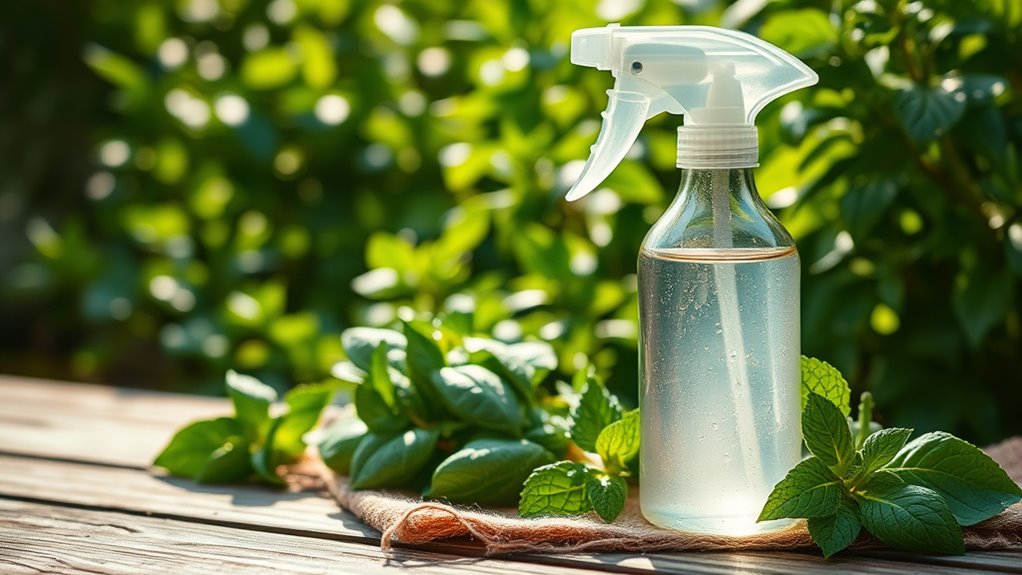
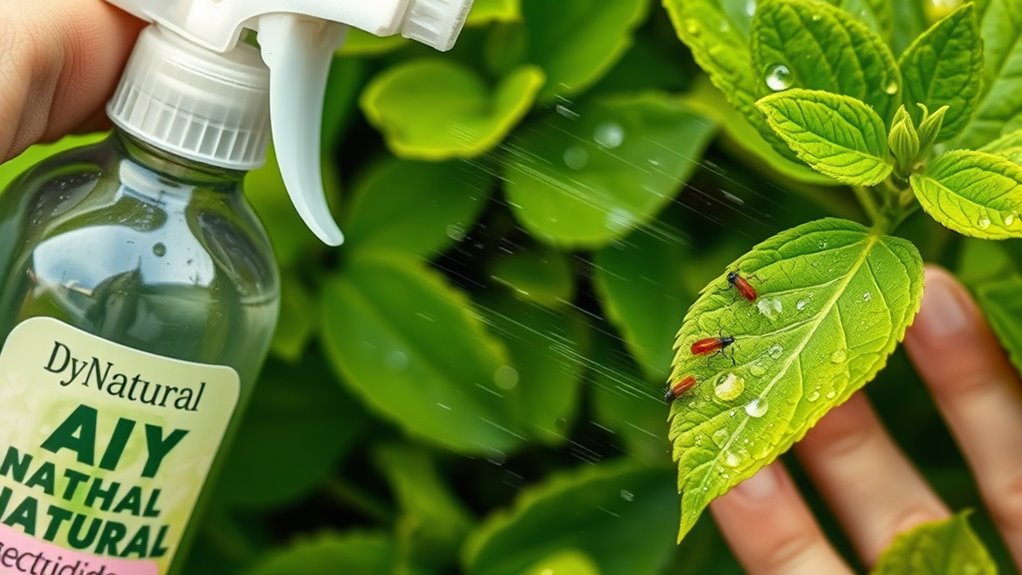
To create a soap spray, you typically mix a gentle liquid soap—preferably pure castile soap or a biodegradable option—with water. A common ratio is about one to two teaspoons of soap per quart of water, but you should always test a small patch of your plants first to ensure they don’t react negatively. Once mixed, pour the solution into a spray bottle and apply it directly onto affected plants, focusing on the undersides of leaves where pests often hide. Regular application, especially during early infestations, can considerably reduce pest populations without harming your plants or beneficial insects like bees and ladybugs.
Organic gardening techniques emphasize the importance of prevention and natural methods, and soap sprays fit seamlessly into this philosophy. They’re non-toxic, biodegradable, and can be easily integrated into your gardening routine. Plus, they’re versatile enough to be used on a wide range of plants, from vegetables to ornamentals. By incorporating soap sprays into your pest control methods, you not only protect your garden from harmful pests but also promote overall plant health and soil vitality. Understanding suction power and filtration systems can help you choose the most effective sprayer equipment for applying your soap solutions. As part of a holistic approach, soap sprays help you grow lush, thriving plants while maintaining the integrity of your eco-friendly garden.
As an affiliate, we earn on qualifying purchases.
Frequently Asked Questions
Can Soap Sprays Harm Beneficial Insects in My Garden?
You might wonder if soap spray impact could harm beneficial insects in your garden. Generally, soap sprays are safe when used correctly, promoting beneficial insect safety. However, overapplication or using strong soap solutions can inadvertently harm bees, ladybugs, and other helpful bugs. To protect beneficial insects, apply soap sprays during early mornings or evenings, and avoid spraying flowering plants directly. Proper use minimizes risks and maintains a healthy, balanced garden ecosystem.
How Often Should I Reapply Soap Spray for Effective Pest Control?
You might find it interesting that reapplication frequency can make or break your pest control efforts. Typically, you should reapply soap spray every 7 to 10 days, especially during active pest seasons. Timing is key—apply in the early morning or late evening to minimize harm to beneficial insects. Keep an eye on pest activity, and adjust your reapplication schedule as needed for consistent, effective pest control.
Are There Specific Plant Types That React Poorly to Soap Sprays?
You wonder if certain plants react poorly to soap sprays. Some plants have higher plant sensitivity, making them more prone to damage from soap compatibility issues. For example, plants like succulents, ferns, or those with delicate foliage may get scorched or develop leaf spots. Always test a small area first to check for soap sensitivity, and use milder solutions on sensitive plants to avoid harm.
What Ingredients Should I Avoid in Homemade Soap Sprays?
Back in the days of hand-cranked phones, people knew to avoid harsh chemicals and synthetic fragrances in homemade soap sprays. You should steer clear of ingredients like industrial detergents, bleach, or any additives that could harm your plants. These chemicals can cause leaf burn or stress your garden’s ecosystem. Stick to gentle, natural ingredients like pure castile soap or mild liquid soap, and your plants will thank you.
How Long Does It Take to See Results After Applying Soap Spray?
Timing expectations vary, but you should start seeing visible signs of pest control within a few days of applying soap spray. Usually, pests die off or move away within 24 to 48 hours, and new infestations decrease over the next week. Keep monitoring your plants, reapply every 7 to 10 days if needed, and be patient to achieve the best results. Your garden will gradually become healthier and pest-free.
As an affiliate, we earn on qualifying purchases.
Conclusion
Now that you know how to make and use soap sprays, you’re ready to protect your garden naturally. These DIY insecticides are simple, effective, and gentle on the environment. Imagine having a safe way to keep pests at bay without harsh chemicals—doesn’t that sound like a win for your garden and the planet? Give it a try and enjoy healthy, thriving plants all season long. Are you excited to start your natural pest control journey today?
homemade insecticide spray for plants
As an affiliate, we earn on qualifying purchases.
As an affiliate, we earn on qualifying purchases.
garden spray bottle for pest control
As an affiliate, we earn on qualifying purchases.
As an affiliate, we earn on qualifying purchases.