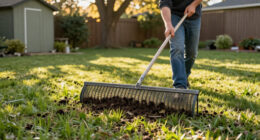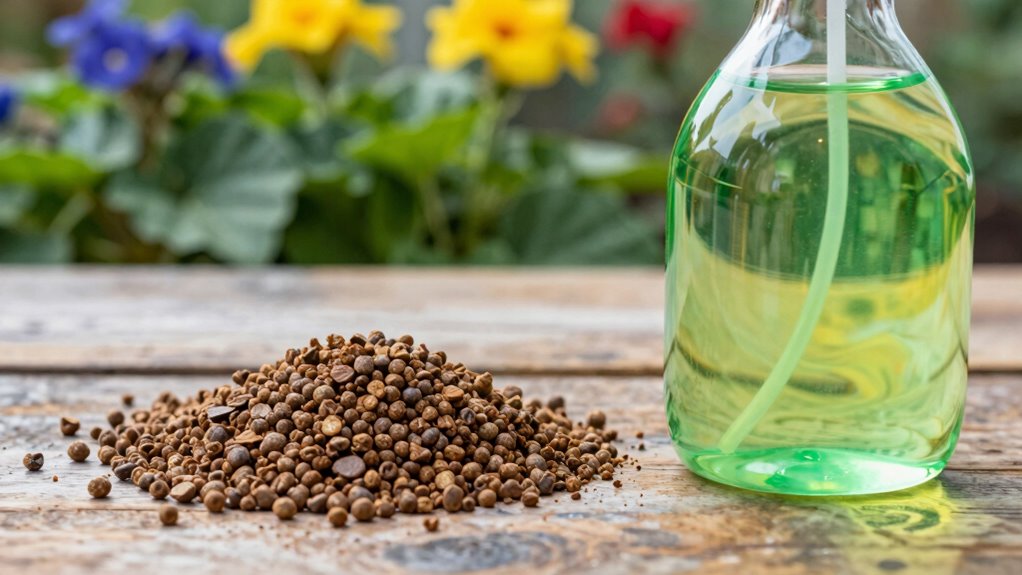
Choosing between granular and liquid fertilizers depends on your garden’s soil and plant needs. Liquids give quick nutrients, perfect for rapid growth or correcting deficiencies, and are easy to apply. Granular options release nutrients slowly, supporting long-term soil health and steady growth. If your goal is quick results, liquids work best; for sustained nourishment, granules are ideal. To fully optimize your garden’s potential, explore how combining both can benefit your plants.

Get garden gear delivered free with Prime
- Fast, free delivery on millions of items
- Prime Video, Amazon Music and more included
- Member-only deals all year
Key Takeaways
- Liquid fertilizers provide quick nutrient absorption, ideal for rapid growth and correcting deficiencies in home gardens.
- Granular fertilizers release nutrients slowly, supporting long-term soil health and steady plant development.
- Liquid options enable precise application and immediate pH adjustments, while granular fertilizers promote balanced soil pH.
- Combining both types can optimize nutrient availability and cater to different gardening goals.
- Consider soil pH, garden size, and maintenance preferences to choose the most suitable fertilizer type.
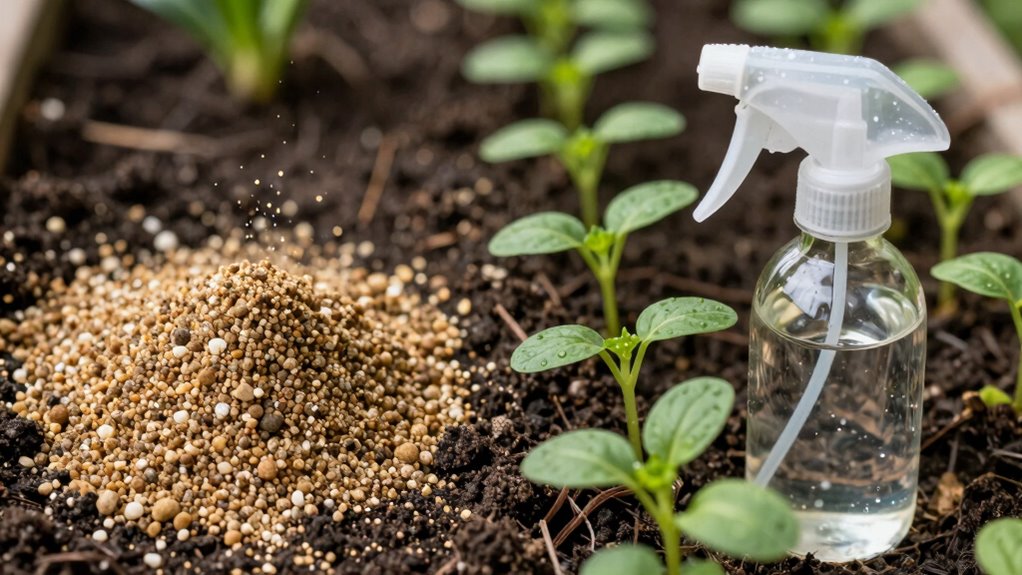
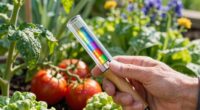
Are you unsure whether to choose granular or liquid fertilizer for your plants? Both options have their advantages, but understanding how they work can help you make the best choice for your home garden. When deciding, consider how each fertilizer type interacts with your soil pH and influences plant nutrient uptake. Soil pH plays a crucial role because it affects how nutrients are absorbed by your plants. If your soil is too acidic or alkaline, nutrients may become less available, regardless of the fertilizer you choose. Liquid fertilizers are quickly absorbed, making them ideal for adjusting nutrient levels in response to soil pH issues. They deliver nutrients directly to the roots in a readily available form, which can be especially beneficial when plants need an immediate boost. On the other hand, granular fertilizers tend to release nutrients slowly over time, helping to maintain balanced soil pH and providing steady nourishment. This slow release can encourage healthier root development and reduce the risk of nutrient leaching, particularly in garden soils with fluctuating pH levels. Additionally, understanding soil pH can help you tailor your fertilization approach for optimal plant health. Incorporating soil testing can further refine your fertilization strategy, ensuring your plants receive the right nutrients at the right time.
Plant nutrient uptake depends heavily on the form and timing of fertilizer application. Liquid fertilizers allow you to fine-tune your plant’s nutrition by offering immediate access to essential nutrients, making them ideal for rapid growth or correcting deficiencies. They’re also easier to apply in specific situations, like foliar feeding or when you want to target particular plants. Granular fertilizers, however, work well for ongoing feeding, especially in established gardens. Because they release nutrients gradually, they support consistent growth and help prevent overfeeding, which can harm roots and disturb soil pH balance. This slow release is particularly advantageous if your garden’s soil pH is slightly off, as it reduces the risk of sudden nutrient surges that could upset the pH balance or cause nutrient lockout. Moreover, selecting fertilizers based on soil properties can improve nutrient efficiency and plant health. Proper nutrient management, including understanding fertilizer composition, can further enhance plant growth while minimizing environmental impact. Furthermore, choosing the right fertilizer also depends on how well it integrates with soil properties, ensuring that nutrients are available when your plants need them most.
In addition, considering the environmental impact of your chosen fertilizer can help you make more sustainable gardening choices and protect local ecosystems. Ultimately, your choice depends on your gardening goals and the specific needs of your soil. If you want quick results and precise control, liquid fertilizers are your best bet. But if you prefer a more hands-off approach that promotes long-term soil health, granular options may be better. Remember, understanding your soil’s pH and how it affects plant nutrient uptake is key to making the right decision. Both types of fertilizer can work well if used appropriately, but combining them or timing their application can give your home garden the best of both worlds—immediate nourishment and sustained growth.
granular fertilizer for home gardens
As an affiliate, we earn on qualifying purchases.
As an affiliate, we earn on qualifying purchases.
Frequently Asked Questions
Can Granular and Liquid Fertilizers Be Used Together Safely?
Yes, you can safely use granular and liquid fertilizers together, but you should consider compatibility concerns first. Some fertilizers may react negatively if mixed directly, so it’s best to apply them separately or follow manufacturer instructions. Also, keep in mind storage requirements, as liquid fertilizers often need containers tightly sealed and stored in cool, dark places, while granular types are more versatile. Always read labels for safety tips.
Which Fertilizer Type Is More Environmentally Friendly?
You’re nurturing your garden’s future, so choosing eco-friendly options matters. Liquid fertilizers often wash away quickly, risking runoff, while granular types release nutrients slowly, reducing pollution. Organic alternatives are even kinder to the environment, enriching soil naturally. Overall, granular fertilizers, especially organic ones, tend to be more eco-friendly, giving your plants what they need without harming the earth beneath your feet. It’s a gentle, sustainable approach to thriving garden life.
How Do Cost and Long-Term Expenses Compare?
You’ll find that liquid fertilizers often have higher initial costs, but their ease of application can save you time and reduce waste. Granular fertilizers generally have lower upfront expenses and last longer, making them more cost-effective over time. Conducting a thorough expense comparison reveals that while liquid options might seem pricier initially, their quicker results could offset costs. Overall, consider your garden’s needs and your budget to decide which option offers the best long-term value.
Are There Specific Plants That Prefer One Type Over the Other?
Some plants prefer liquid fertilizers because they absorb nutrients quickly, ideal for fast-growing or sensitive plants like vegetables and flowering annuals. Others, like trees, shrubs, or perennials, often favor granular fertilizers due to their slow-release nature, providing steady nutrition over time. Consider plant preferences and fertilizer compatibility when choosing, ensuring your garden plants get the right type for healthy growth and vibrant blooms.
How Does Application Frequency Differ Between the Two?
Back in the day, gardeners relied on more frequent applications, and today, application timing still varies. Liquid fertilizers need weekly or bi-weekly feeds because they offer rapid nutrient release, perfect for quick boosts. Granular fertilizers, on the other hand, are applied less often—every few weeks—since they release nutrients gradually. Your choice depends on your plants’ needs and how often you want to tend to your garden.
liquid plant fertilizer for quick nutrient absorption
As an affiliate, we earn on qualifying purchases.
As an affiliate, we earn on qualifying purchases.
Conclusion
Choosing between granular and liquid fertilizer depends on your garden’s needs, but don’t worry—you can always combine both for ideal results. Some folks hesitate because they think mixing fertilizers is complicated, but with a little planning, it’s simple and effective. Remember, your garden is unique, so experiment to see what works best. Ultimately, your care and attention will make your plants thrive, no matter which fertilizer type you choose.
soil pH testing kit for gardening
As an affiliate, we earn on qualifying purchases.
As an affiliate, we earn on qualifying purchases.
garden fertilizer combination pack
As an affiliate, we earn on qualifying purchases.
As an affiliate, we earn on qualifying purchases.
Halloween Picks
halloween
As an affiliate, we earn on qualifying purchases.