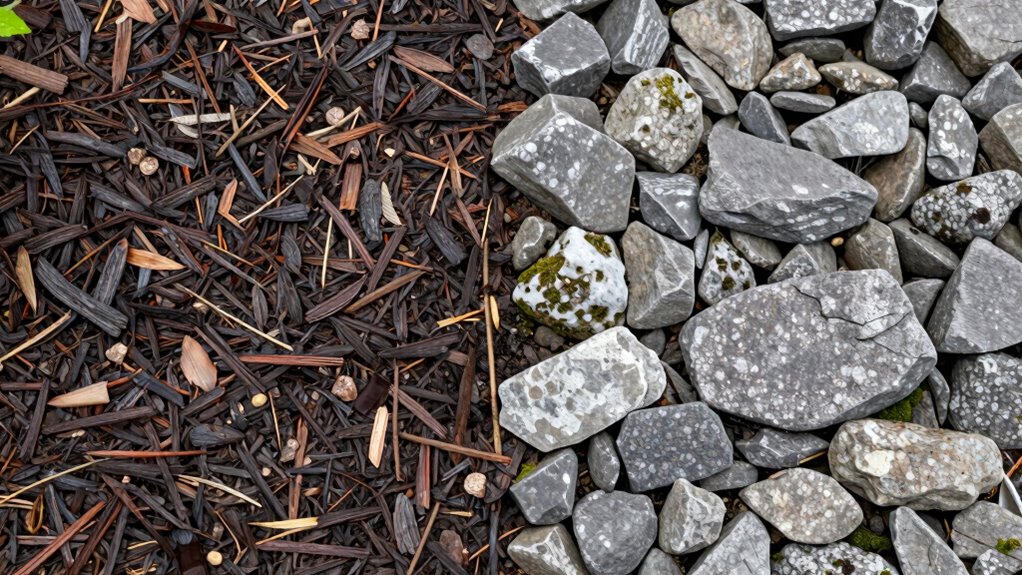

If you choose organic mulch, you’ll see soil gradually improve as it decomposes, adding nutrients and boosting beneficial microbes, which enhances soil health and fertility over time. It also makes the soil richer and more textured. On the other hand, stone mulch stays the same, offering durability but no nutrient benefits. Want to understand how these options affect your landscape in the long run? Keep exploring to find out more.

Get garden gear delivered free with Prime
- Fast, free delivery on millions of items
- Prime Video, Amazon Music and more included
- Member-only deals all year
Key Takeaways
- Organic mulch decomposes, enriching soil with nutrients and improving soil structure over time.
- Stone mulch remains inert, offering little to no nutrient contribution or soil development.
- Organic mulch encourages beneficial microorganisms, promoting long-term soil health; stone mulch does not.
- Organic mulch requires regular replacement due to decomposition; stone mulch is more durable with minimal maintenance.
- Soils under organic mulch become richer and more fertile, while those under stone mulch stay unchanged.
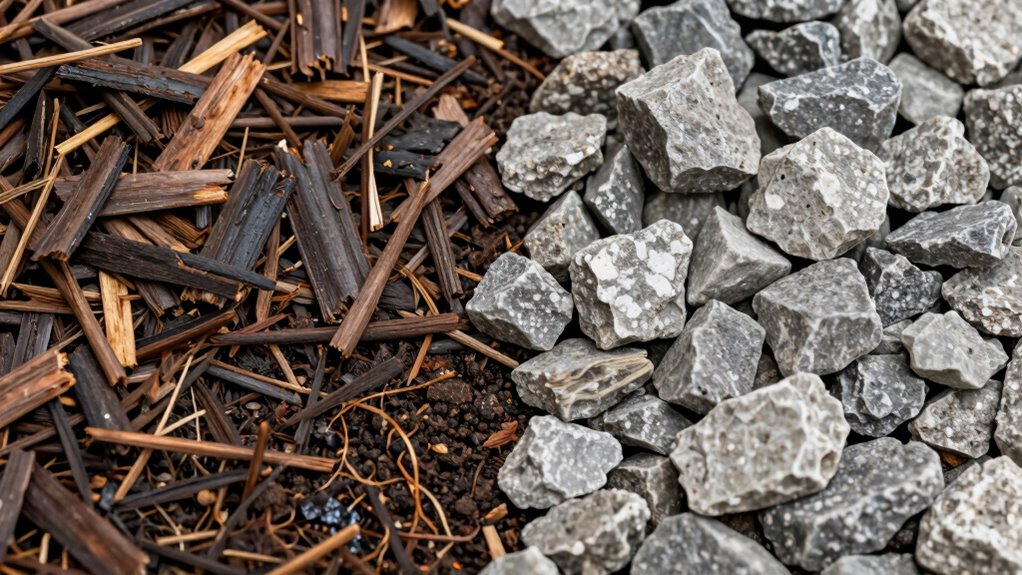
Are you torn between choosing organic mulch or stone mulch for your landscaping project? Both options have their advantages, but understanding how each interacts with your soil over time can help you make a more informed decision. Organic mulch, like bark or compost, is known for enriching the soil as it decomposes. Over time, it adds nutrients, improves soil structure, and promotes healthy plant growth. This natural process is beneficial if you want your garden to stay vibrant and fertile. However, organic mulch also attracts pests, which can compromise pest control efforts and threaten your plants. Decomposing organic matter might encourage insects or rodents that could become problematic. On the other hand, stone mulch offers a different set of benefits. It doesn’t decompose, so it doesn’t require frequent replacement, making it a low-maintenance choice. Its durability helps maintain the aesthetic appeal of your landscape for years. Plus, stone mulch can act as a pest deterrent, since it doesn’t provide organic material that pests feed on, aiding in pest control efforts. But stones don’t improve soil fertility like organic mulch does; instead, they can sometimes hinder water penetration, potentially affecting plant roots if not properly installed or chosen.
Over time, the soil beneath organic mulch tends to become richer and more textured because of ongoing decomposition. This process enriches the soil with organic matter, encouraging beneficial microorganisms and fostering a healthy root environment. Additionally, soil health can be significantly enhanced by the natural breakdown of organic mulches, contributing to a more sustainable garden ecosystem. However, if organic mulch isn’t managed properly, it can lead to issues like mold, rot, or excessive moisture retention, which might harm your plants. Conversely, soil beneath stone mulch remains relatively unchanged because stones don’t break down or release nutrients. While this stability can be advantageous, it also means your soil needs additional amendments or fertilization to stay healthy. Additionally, because stone mulch doesn’t decompose, it doesn’t contribute to soil organic content, which can limit long-term soil development. Understanding the long-term soil effects of each mulch type helps you select the best option for your garden’s health and sustainability.
Ultimately, your choice depends on your priorities. If you want to improve soil health, attract beneficial insects, and boost the aesthetic appeal through a natural look, organic mulch is likely the better option. If you prefer a low-maintenance, durable covering that controls weeds and deters pests, stone mulch could be the right fit. Just remember that over time, organic mulch will enhance your soil’s quality, while stone mulch will keep your landscape looking neat without adding nutrients. Understanding these long-term effects helps you plan better and ensures your landscape remains healthy and attractive.
As an affiliate, we earn on qualifying purchases.
Frequently Asked Questions
How Does Mulch Affect Soil Temperature Fluctuations?
Mulch helps stabilize soil temperature fluctuations by acting as an insulator. Organic mulch, like bark or straw, keeps soil cooler in summer and warmer in winter, maintaining consistent soil moisture and supporting microbial activity. Stone mulch offers similar benefits but tends to be less effective at regulating temperature. Both types protect soil from extreme changes, promoting healthier plant roots and overall soil conditions over time.
Can Mulch Improve Soil Nutrient Levels Long-Term?
Mulch can definitely boost your soil’s nutrients over time. It acts like a slow-release fertilizer, preventing soil nutrient depletion and encouraging organic matter build-up. As mulch breaks down, it adds essential nutrients, improves soil structure, and fosters healthy root growth. Think of it as a nutrient bank; with consistent mulching, your soil stays rich and fertile, supporting lush plants while saving you from constant fertilizer fixes.
What Pests Are Attracted to Organic Versus Stone Mulch?
Organic mulch attracts pests like ants, termites, and beetles because they feed on decomposing material, creating pest attraction issues. Organic pests such as snails and slugs also thrive in moist, organic mulch areas. Conversely, stone mulch is less likely to attract pests since it doesn’t decompose or provide food sources. You can reduce pest attraction by maintaining proper mulch depth and avoiding overly moist conditions.
How Often Should Mulch Be Replaced or Replenished?
They say, “A stitch in time saves nine,” and this applies to mulch too. You should replace or replenish organic mulch every 6 to 12 months to combat mulch decay and maintain weed suppression. Stone mulch lasts much longer but still benefits from occasional replenishment to keep your landscape looking fresh. Regular upkeep guarantees your soil stays healthy, and your garden remains weed-free and vibrant.
Does Mulch Influence Soil pH Over Time?
Mulch can influence soil pH over time, especially organic types that break down. As organic mulch decomposes, it releases acids, which can increase soil acidity. Stone mulch, on the other hand, doesn’t break down or affect soil pH. So, if you’re concerned about soil acidity, consider how organic mulch’s breakdown might gradually alter your soil’s pH levels, potentially requiring pH adjustments for ideal plant growth.
As an affiliate, we earn on qualifying purchases.
Conclusion
Choosing between organic and stone mulch is like picking a path in a forest—each has its unique journey. Organic mulch enriches your soil, nurturing life and decay in a dance of renewal. Stone mulch, on the other hand, stands firm, resisting change but offering persistent protection. Your choice shapes your garden’s story—will it be a flourishing saga or a resilient fortress? Ultimately, the path you choose determines your soil’s future, so pick wisely and enjoy the journey.
As an affiliate, we earn on qualifying purchases.
As an affiliate, we earn on qualifying purchases.
Columbus Day / Indigenous Peoples' Day Picks
long weekend sales
As an affiliate, we earn on qualifying purchases.