
TL;DR

Get garden gear delivered free with Prime
- Fast, free delivery on millions of items
- Prime Video, Amazon Music and more included
- Member-only deals all year
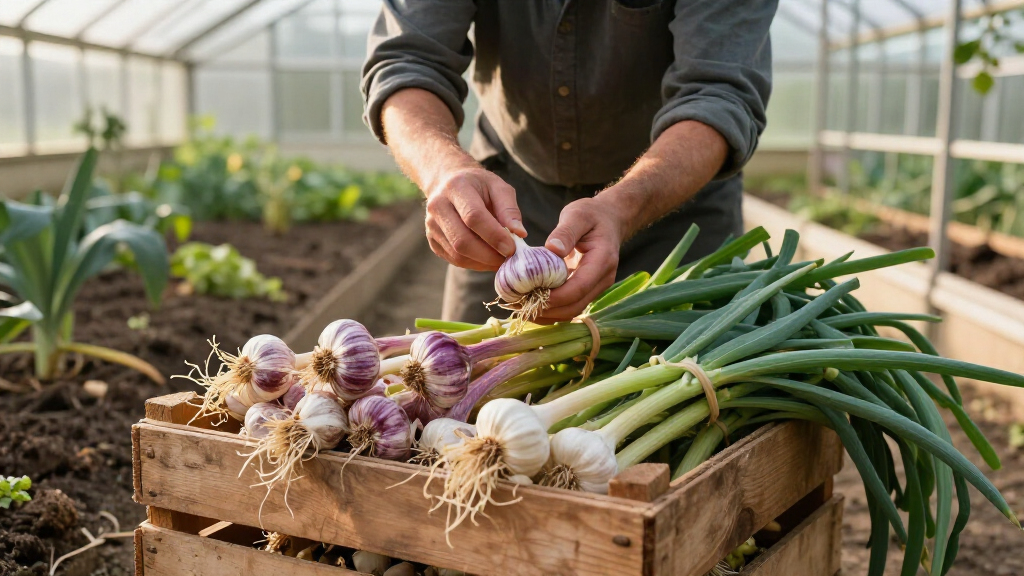
Hardneck garlic generally suits colder regions and produces a firm central stalk, fewer larger cloves and edible scapes. Softneck garlic generally suits milder climates, has more cloves per bulb and stores longer when properly cured. These are broad patterns: local conditions and individual varieties matter.
A Grow Organic guide outlines how gardeners can choose between hardneck and softneck garlic by considering local climate, bulb structure, cooking preferences and storage needs. The guide says hardneck types generally perform better where winters are cold, while softneck types are often better suited to milder regions and typically keep longer after proper curing.
According to the Grow Organic guide, the clearest way to identify the types is to inspect a bulb’s center and clove arrangement. Hardneck garlic has a firm central stalk and often one ring of relatively large cloves. Softneck garlic usually lacks a rigid central stalk and has several layers of cloves, with smaller ones often nearer the center. The guide notes that outer wrappers may be white or purple on either type, so color alone is not a dependable identifier.
The guide says hardneck plants usually produce scapes, the tender flowering stalks that can be harvested and eaten. Their stems become stiff as they dry, making them difficult to braid. Softneck stems remain flexible after drying and can be braided. Softneck bulbs often contain more cloves, while hardneck cloves are commonly larger and easier to peel. These are general tendencies, not guarantees for every cultivar.
For planting, the guide recommends choosing named varieties suited to local conditions rather than relying only on a broad label or color. It lists Porcelain, Rocambole and Purple Stripe among hardneck groups, and Artichoke and Silverskin among softneck groups. Examples include Music, a Porcelain hardneck, and Early Purple Italian, a softneck despite its name.
Matching Garlic to Garden Needs
The Grow Organic guide explains that the distinction affects more than appearance: it can shape which garlic is likely to grow well, how many cloves a harvest provides and how long bulbs may remain usable in storage. Gardeners in cold-winter areas may start by comparing hardneck cultivars, while those in milder regions may find softneck varieties a better starting point.
Storage and kitchen use can also guide the decision. The guide says softneck garlic generally stores longer than hardneck garlic when both are properly cured, although the actual duration depends on the variety and storage conditions. Hardneck’s larger cloves may be convenient to peel, and its scapes offer an additional edible harvest. The guide cautions that neither group is automatically stronger in flavor: taste varies among varieties and can change with preparation.
The advice matters to new growers because, as the guide indicates, a type-level description is not a substitute for local experience. A small trial of named cultivars, with labels kept through harvest and storage, can help a gardener compare results under the same conditions rather than assume one variety will perform uniformly across regions.
Products Worth Considering

Traeger Woodridge Wood Pellet Grill and Smoker, 860 sq. in., WiFIRE

EGO Power+ HT2601 26-Inch Cordless Hedge Trimmer with 56V 2.5Ah Battery and Charger

EGO POWER+ CS1613 16-Inch Cordless Chainsaw with 56V 4.0Ah Battery and Charger
As an affiliate, we earn on qualifying purchases.
Climate, Cultivars and Seasonal Care
The Grow Organic guide says garlic’s response to growing conditions is not determined by a hardiness-zone label alone. It identifies winter cold, spring temperatures and day length as influences on bulb formation, and recommends checking local growing advice. It suggests asking nearby growers which named cultivars have performed well over several seasons and starting with a small order.
The guide says garlic is usually planted in fall so roots can develop before winter, but planting dates should follow regional guidance. It recommends planting healthy cloves pointed-end up in sunny, well-drained soil. Depth recommendations can vary: the guide cites Minnesota Extension’s advice to place the clove base two to three inches deep while noting that local recommendations may differ. “Seed garlic” commonly means cloves for planting, not botanical seeds.
For harvest, the guide advises checking bulbs when lower leaves have browned but several upper leaves remain green; a sample bulb can help show whether cloves are formed and wrappers intact. It recommends lifting bulbs carefully, then curing them in a dry, shaded place with airflow for several weeks. Store cured bulbs in a dry, ventilated location and use damaged bulbs first.
Where General Rules Fall Short
The Grow Organic guide presents climate and storage differences as general patterns, not fixed outcomes. It does not establish a guaranteed storage life for either type, and says duration varies with cultivar and conditions. Individual varieties also differ in flavor, size and climate tolerance.
No specific garden location, growing conditions or preferred cultivars are provided for an individual reader, so the guide cannot determine which variety will perform best in a particular plot. It also offers no comparative trial data or quantified yield figures. Local advice and results from labeled test plantings remain necessary to make a site-specific choice.
Testing Varieties in Your Region
Based on the Grow Organic guide’s recommendations, gardeners choosing what to plant can compare named hardneck and softneck cultivars recommended for their area, buy a modest amount and keep each variety labeled through the season. Record planting and harvest timing, bulb size, clove arrangement and how well the cured bulbs store. Follow regional planting and harvest guidance, since dates and depth recommendations vary.
That comparison can inform the next season’s selection. The supplied guide does not announce a scheduled follow-up or a new research milestone; its practical next step is to use local growing advice and observe how specific varieties perform over time.
Key Questions
Which garlic type is better for cold winters?
Hardneck garlic is generally better adapted to colder regions, according to the Grow Organic guide. Local conditions and individual cultivar tolerance still matter, so check recommendations from nearby growers or extension services.
Which type usually stores longer?
The Grow Organic guide says softneck garlic typically stores longer than hardneck garlic when both are properly cured. It gives no fixed storage duration; variety and storage conditions affect how long bulbs keep.
How can I tell hardneck from softneck garlic?
The Grow Organic guide recommends looking at the center of the bulb. Hardneck usually has a firm central stalk and a ring of larger cloves; softneck generally lacks that rigid stalk and has several layers of cloves. Wrapper color alone does not reliably identify the type.
Can softneck garlic be braided?
Usually, yes. The Grow Organic guide says softneck stems tend to remain flexible after drying, which makes them suitable for braiding. Hardneck stems dry stiff and are difficult to braid.
Does hardneck garlic always taste stronger?
No. The Grow Organic guide says flavor differs among varieties and can change with preparation. Neither type is always stronger; comparing cultivars prepared the same way is a more reliable guide to personal preference.
Source: rss