
TL;DR

Get garden gear delivered free with Prime
- Fast, free delivery on millions of items
- Prime Video, Amazon Music and more included
- Member-only deals all year
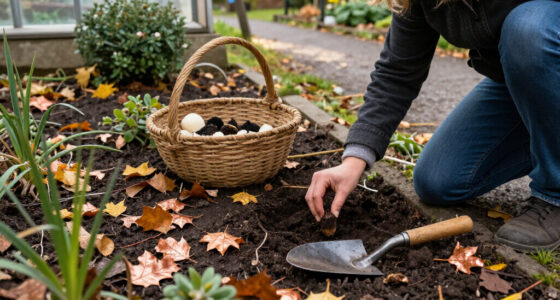
A Country Living report outlines four fall planting mistakes that can leave trees and shrubs struggling: untreated circling roots, planting too deeply, inadequate watering during establishment and mulch piled against the trunk. The advice focuses on keeping the root flare visible, checking soil moisture and spreading mulch away from bark.
A Country Living report identifies four fall planting mistakes that can leave trees and shrubs struggling after planting: leaving circling roots untreated, setting a plant too deeply, failing to provide enough water while roots establish, and piling mulch against the trunk. The advice matters to gardeners planting in autumn, when mistakes made at installation can affect a plant’s growth well beyond its first season.
The report says roots that circle inside a nursery pot can keep growing in that pattern after planting. Over time, this may contribute to stunted growth, limited nutrient uptake or roots that girdle the trunk. It recommends inspecting the root ball, loosening circling roots and spreading healthy roots outward. Large, tight roots may need to be cut, according to the report.
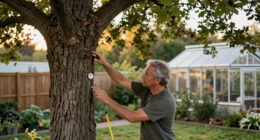
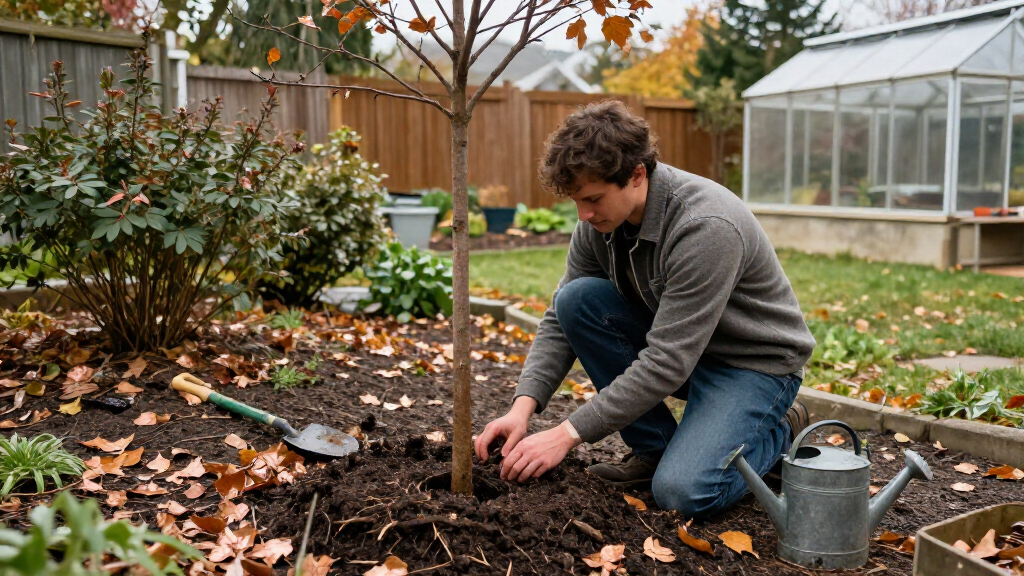
Planting depth is another concern. The report advises locating the root flare—the point where the trunk widens into the roots—and keeping it visible at or slightly above the soil. It recommends digging a hole about twice as wide as the root ball, but no deeper, and placing the plant on firm soil so it does not sink; for more fall planting advice, see this tip about planting shrubs and perennials.
Newly planted trees and shrubs need a thorough initial watering and continued moisture as their roots establish, as explained in this guide to watering newly planted shrubs and trees. Rather than assuming rainfall is sufficient or following a rigid schedule, gardeners should check the soil near the root ball and water slowly and deeply when it is drying. Soil should be moist, not waterlogged. For mulch, the report recommends a layer about two to three inches deep over the root zone, with a gap around the trunk so the bark remains uncovered.
How Planting Errors Affect Establishment
These recommendations address problems that may not be obvious immediately after planting. A tree can appear healthy above ground while roots remain poorly positioned, the root flare is buried, or moisture conditions are unsuitable. The report says these issues can contribute to longer-term stress, including restricted growth and trunk damage from girdling roots.
For gardeners, the practical point is that fall planting involves more than getting a plant into the ground before winter. Root placement, planting depth, moisture and mulch placement all shape the conditions in which a new tree or shrub begins to establish. Checking these details at planting can help prevent problems that are harder to address later.
Products Worth Considering

AMERLIFE 34 x 10 x 7 ft Walk-In Tunnel Greenhouse with Watering System

Weber Searwood 600 Wood Pellet Smoker Grill, Black

Husqvarna Power Axe 350i 18-Inch Cordless Chainsaw Kit
As an affiliate, we earn on qualifying purchases.
Why Fall Planting Can Work
The report describes fall as a potentially favorable time to plant because cooler air can make outdoor work more comfortable, while soil may remain warm enough for roots to settle before winter. Those conditions do not remove the need for careful planting or follow-up watering.
Its guidance is practical advice from Country Living, not a report of a new scientific study or a change in official planting rules. The source does not specify a particular climate, tree species or local planting calendar, so gardeners may need to adapt the general instructions to their plant and conditions.
“The goal is moist soil, not waterlogged soil.”
— Country Living report
Where Local Conditions Matter
The supplied report does not provide a publication date, identify the experts behind each recommendation, or cite research comparing outcomes across species and climates. It also does not set a universal watering frequency. How often a newly planted tree needs water depends on conditions such as soil moisture, weather and the plant; the report’s instruction is to check soil near the root ball and respond to whether it is drying or still wet.
The source also does not say that every circling root must be cut. It advises loosening roots and says large, tight, problematic roots may need cutting, but it offers no species-specific guidance on how much to remove. The appropriate response may differ with the size and condition of the root system.
Checks to Make After Planting
Gardeners following the report’s advice can check the root flare after planting to confirm it remains visible, then inspect soil near the root ball as the plant establishes. Water when that soil is drying rather than relying on rainfall alone or a fixed timetable. Keep mulch in a thin, even layer over the root zone and away from the trunk.
The report gives no further scheduled updates or follow-up study. For site-specific decisions, readers may need guidance from a local nursery, arborist or extension service, particularly when dealing with large, tightly circling roots or uncertain soil and weather conditions.
Key Questions
What four fall planting mistakes does the report identify?
It lists untreated circling roots, planting too deeply, inadequate watering during establishment and piling mulch against the trunk.
How can I tell if a tree is planted too deeply?
Find the root flare, where the trunk widens into the roots. The report says it should remain visible at or slightly above the soil line.
How should I water a newly planted tree or shrub?
Water thoroughly at planting, then check the soil near the root ball. Water slowly and deeply if it is drying; wait if it is still wet. The target is moist soil, not waterlogged soil.
How should mulch be placed around a new tree?
The report recommends about two to three inches of mulch over the root zone, spread evenly and kept a few inches away from the trunk. The root flare should remain visible.
Source: rss