
When selecting a greenhouse site, you need to balance sunlight, wind, and drainage to create the best environment for your plants. Aim for a location with enough sunlight during the growing season while minimizing heat stress in summer. Choose a site with natural windbreaks or plan to install artificial ones to reduce damage and heat loss. Good drainage prevents root problems, and weighing these factors helps you avoid costly tradeoffs. Keep exploring to discover how to optimize your site for long-term success.

Get garden gear delivered free with Prime
- Fast, free delivery on millions of items
- Prime Video, Amazon Music and more included
- Member-only deals all year
Key Takeaways
- Assess sunlight patterns throughout the year to optimize greenhouse placement and prevent overheating or insufficient light.
- Analyze soil drainage, pH, and nutrients to ensure a stable, healthy foundation for plant growth.
- Consider natural windbreaks or install artificial barriers to protect structures and reduce heat loss.
- Balance site conditions by weighing sunlight, wind exposure, and drainage needs for energy efficiency and crop health.
- Recognize tradeoffs, such as high sunlight with poor drainage, and plan for necessary mitigation measures accordingly.
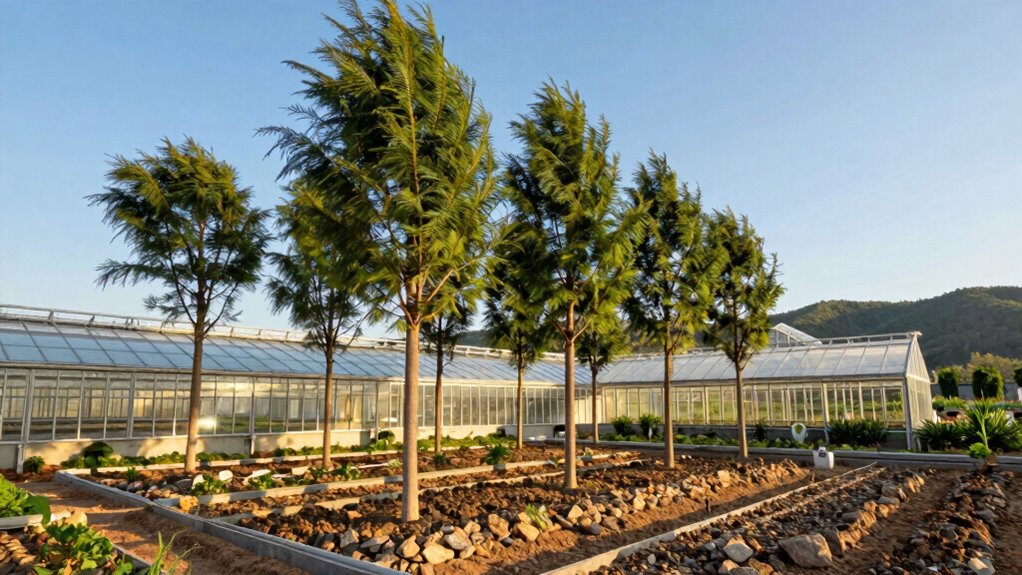
Choosing the right location is essential when setting up a greenhouse, as it directly impacts plant growth, energy efficiency, and overall success. Before you start building, you need to evaluate how the site interacts with natural elements like sunlight, wind, and water drainage. One of the first steps is understanding how solar shading will affect your setup. Too much exposure to direct sunlight can cause overheating, leading you to need additional cooling measures, while too little sunlight hampers plant growth. By assessing the solar shading patterns throughout the year, you can position your greenhouse to maximize light during the growing season and minimize heat stress during summer months. This might involve selecting a site with natural shading from nearby trees or structures or planting shade cloths to control solar gain.
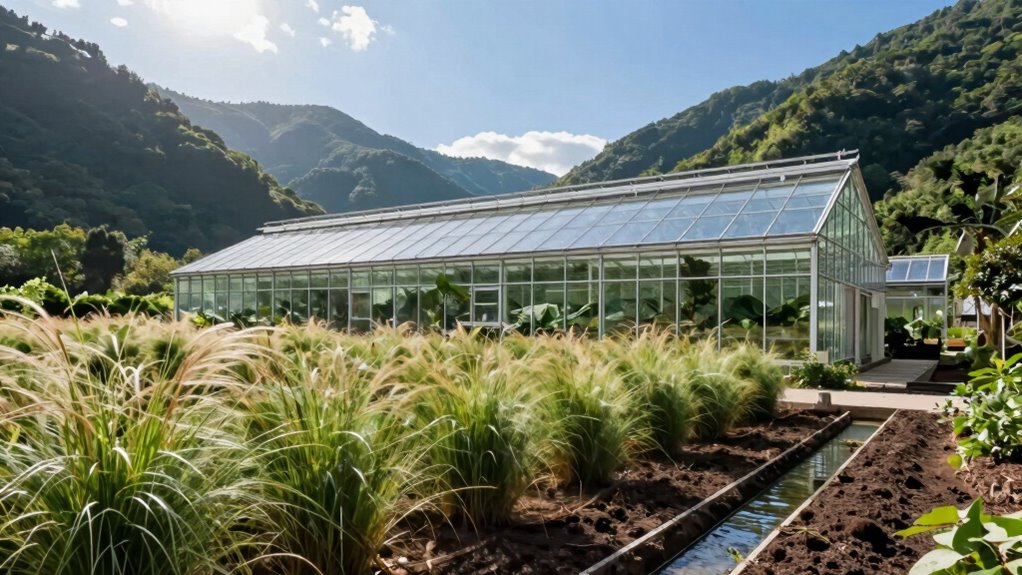
Optimal site selection balances sunlight, wind, and drainage for a thriving, energy-efficient greenhouse environment.
Another critical factor is soil testing. Before installing your greenhouse, you need to analyze the soil’s composition, drainage capacity, pH level, and nutrient content. Soil testing gives you a clear picture of whether the ground can support your structure without extensive modification. Good drainage is vital because standing water leads to root rot and other plant diseases, hampering your crops’ health. If your soil tests reveal poor drainage or nutrient deficiencies, you can amend the soil or consider elevating your greenhouse on a foundation or raised beds. This proactive approach ensures your plants have a stable environment and reduces future maintenance. Understanding how soil properties influence plant health can help you make more informed decisions about site preparation. Additionally, considering the soil’s organic matter content can improve your soil management practices and boost plant resilience. Proper soil management can also enhance water retention and nutrient availability, which are essential for healthy plant growth. Incorporating soil testing results into your planning process allows for tailored amendments that optimize conditions for your crops.
Location also matters in terms of wind exposure. While a gentle breeze can help with air circulation, strong or persistent winds can damage your greenhouse or cause heat loss. Ideally, you should choose a site that offers some natural windbreaks like trees or hills, or plan to install windbreaks yourself. Keep in mind that wind can influence your heating and cooling needs, impacting the greenhouse’s overall energy efficiency. Proper site selection minimizes energy consumption and operating costs, especially in colder months, where warmth retention becomes a priority. Additionally, understanding the local climate**** and its variability can help you design a more resilient and energy-efficient greenhouse setup.
In addition to environmental factors, consider real-world tradeoffs. For example, a site with excellent sunlight might also be prone to high winds or poor drainage, requiring extra investment in solar shading techniques or drainage solutions. Conversely, a location with ideal drainage and wind protection might have limited sunlight, necessitating supplemental lighting or strategic plant placement. Balancing these factors involves weighing the importance of each element based on your climate, budget, and crop needs. Ultimately, thorough site analysis—covering solar shading, soil testing, wind patterns, and drainage—sets a solid foundation for a successful greenhouse. It saves you time and money down the line and helps create an environment where your plants can thrive. Recognizing each site’s unique tradeoffs allows you to develop a more tailored and effective greenhouse design.
As an affiliate, we earn on qualifying purchases.
Frequently Asked Questions
How Do Local Zoning Laws Impact Greenhouse Site Choices?
You might find yourself steering through some zoning restrictions that gently guide your options, making site choices a bit more complex. Permitting challenges can slow your progress and limit where you can build. Local zoning laws shape your decision, often favoring certain areas or structures, so understanding these rules helps you avoid surprises and guarantees your greenhouse fits smoothly within the community’s framework. Being informed makes the process more manageable and less stressful.
What Are the Cost Differences Between Various Site Options?
You’ll find that cost differences between site options vary greatly based on factors like land prices, infrastructure needs, and site accessibility. Conducting a thorough cost analysis helps you identify the most economical choice, accounting for initial setup and ongoing expenses. Sites with better accessibility often reduce transportation and labor costs, but may come with higher land prices. Weigh these tradeoffs carefully to select a site that balances costs and operational efficiency.
How Does Proximity to Water Sources Influence Site Selection?
Proximity to water sources greatly influences your site choice because water accessibility makes irrigation easier and more efficient. It also helps with humidity control, which is essential for maintaining ideal growing conditions inside your greenhouse. If you’re close to water, you save on transportation costs and reduce water stress during dry periods. However, be cautious of potential flooding risks, which could harm your plants and infrastructure.
What Are the Long-Term Maintenance Considerations for Different Sites?
You need to ensure long-term maintenance by evaluating soil stability and pest management strategies. Stable soil reduces foundation issues and minimizes ongoing repairs, while regular pest control prevents infestations that can damage crops and infrastructure. Choose a site with good drainage and minimal pest risks, and plan for ongoing soil monitoring and pest treatments. This proactive approach helps guarantee your greenhouse remains productive and cost-effective over years.
How Does Climate Change Affect Future Site Viability?
Climate change impacts your future site viability by increasing risks like extreme weather, droughts, and flooding. To guarantee resilience, you should prioritize adaptive planning, choosing locations with natural protection and flexibility for future conditions. Incorporating climate resilience strategies helps your greenhouse withstand unpredictable climate shifts, safeguarding your investment and ensuring consistent productivity. Staying informed on climate forecasts allows you to adjust your site plans proactively, securing long-term success.
As an affiliate, we earn on qualifying purchases.
Conclusion
Choosing the perfect greenhouse site balances sun and wind, drainage and shade—each factor pulling you in different directions. While a sunny spot promises the best growth conditions, it may expose you to harsh winds. Good drainage prevents waterlogging but might limit available land. Ultimately, your ideal site is a careful compromise, where nature’s tradeoffs become your plant’s advantages. Embrace these contrasts, and you’ll craft a greenhouse that thrives amidst the delicate dance of environmental influences.
As an affiliate, we earn on qualifying purchases.
raised bed greenhouse foundation
As an affiliate, we earn on qualifying purchases.
As an affiliate, we earn on qualifying purchases.
Halloween Picks
halloween
As an affiliate, we earn on qualifying purchases.