TL;DR

Get garden gear delivered free with Prime
- Fast, free delivery on millions of items
- Prime Video, Amazon Music and more included
- Member-only deals all year
An October 2 report from Amateur Gardening explains how gardeners can make new thyme, sage and rosemary plants from semi-ripe cuttings taken before mid-autumn. The method uses short stem sections, peat-free compost and a warm, humid setting; waterlogging can cause cuttings to rot.
Amateur Gardening published a guide on October 2 explaining how gardeners can propagate thyme, sage and rosemary from semi-ripe cuttings taken from plants in their gardens. The method offers a way to produce additional plants without buying new ones, with the guide recommending that cuttings be taken before suitable stems disappear around mid-autumn.
Chris Collins, writing for Amateur Gardening, describes semi-ripe cuttings as pieces of the current year’s growth that retain a portion of older growth at the base, known as a heel. He recommends choosing healthy shoots and avoiding material that is damaged, unhealthy, unusually vigorous or unrepresentative of the plant. Shoots that grow more horizontally and have short gaps between leaves may be suitable, according to the report.
Collins advises trimming each cutting to 10 to 15 centimetres (4 to 6 inches), with the cut made just below a leaf node. Gardeners should remove roughly one-third to one-half of the foliage, then set the cuttings in containers filled with peat-free cutting compost. His suggested mix is equal parts peat-free potting compost and silver sand. Water the container thoroughly and let it drain.
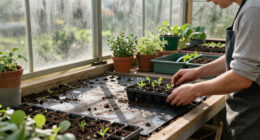
The guide recommends placing the pots in a greenhouse or propagator, where some warmth can support rooting. A clear plastic bag over a pot can serve as a small humid enclosure if a propagator is unavailable; sticks can keep the bag from touching the stems. Collins advises positioning the covered pot somewhere warm and bright but out of direct sunlight, and opening the bag occasionally to release excess moisture.
More Plants From Existing Herbs
For gardeners already growing thyme, sage or rosemary, taking cuttings can turn a few established plants into additional garden stock without purchasing more plants. The same approach may help people expand a herb bed or keep replacements on hand, though the source does not provide a success rate or guarantee that every cutting will root.
The advice also highlights a timing constraint: the report says suitable semi-ripe material can be found until mid-autumn. Gardeners interested in trying this method may need to act while stems still include both fresh growth and the older base described in the guide.
As an affiliate, we earn on qualifying purchases.
The Semi-Ripe Cutting Method
The report is a seasonal gardening guide, not a study comparing propagation methods. It focuses on woody herbs including thyme, sage and rosemary, whose stems can provide the mix of newer and older growth required for semi-ripe cuttings. The key practical steps are selecting healthy stems, reducing foliage, using a draining medium and maintaining warmth and humidity without leaving the compost waterlogged.
In a reader question included with the article, Collins says poor drainage or overwatering can cause cuttings to rot. He also notes that a larger heel may help because it contains cambium, the cells associated with root production. For herbs such as basil, coriander and parsley, the article describes a separate option: placing leftover sprigs in water until roots form, then potting them into peat-free compost. It says roots may appear after a week or two, but gives no comparative results for this approach.
““These kinds of cuttings are called ‘semi-ripe’ as they are taken from this year’s growth with a portion of the previous season’s growth at the base.””
— Chris Collins, writing in Amateur Gardening
peat-free potting compost for cuttings
As an affiliate, we earn on qualifying purchases.
As an affiliate, we earn on qualifying purchases.
Rooting Results Vary
The article does not report how many cuttings typically take root, how long semi-ripe cuttings of each herb need to establish, or whether the suggested compost mix performs better than other media. Results may depend on conditions and plant health, but the source provides no trial data or quantified comparison.
It is also unclear whether the method will work equally well across all varieties of the named herbs. The guide offers practical instructions and troubleshooting, rather than controlled evidence about success rates. Its water-rooting suggestion for basil, coriander and parsley is presented as an option, not as a tested comparison with planting directly in compost.
herb propagator with humidity cover
As an affiliate, we earn on qualifying purchases.
As an affiliate, we earn on qualifying purchases.
Take Cuttings Before Mid-Autumn
Gardeners following the report’s advice can inspect established herb plants for healthy semi-ripe shoots while that material remains available, which Collins says is until mid-autumn. The next steps are to prepare and pot the cuttings, provide warmth and humidity, and monitor the compost so it stays moist without becoming waterlogged.
The report does not give a specific date for when roots should form or when the young plants should be moved on. For herbs rooted in water, it suggests looking for roots after a week or two before potting them into peat-free compost. No further result or follow-up from Collins is included in the supplied source.
As an affiliate, we earn on qualifying purchases.
Key Questions
Which herbs does the guide recommend propagating from semi-ripe cuttings?
The report recommends thyme, sage and rosemary. It says to choose healthy shoots with current-season growth and a portion of older growth at the base.
How long should the cuttings be?
Chris Collins recommends cuttings measuring 10 to 15 centimetres (4 to 6 inches), cut just below a leaf node. He advises removing about one-third to one-half of the foliage.
Can I propagate cuttings without a propagator?
Yes. The article suggests covering the pot with a clear plastic bag, secured around the container, and using sticks to keep the bag off the cuttings. Place it in a warm, bright location out of direct sunlight and open it occasionally to release excess moisture.
Why might herb cuttings rot?
Collins says poor drainage or overwatering can cause rot. Water the container and let it drain, then keep the growing medium moist but not waterlogged.
Can herbs be rooted in water instead?
The guide says leftover sprigs of basil, coriander and parsley can be placed in water, with roots potentially forming after a week or two. It recommends potting rooted sprigs into peat-free compost, or changing the water regularly if continuing to grow them in water.
Source: rss
Halloween Picks
halloween
As an affiliate, we earn on qualifying purchases.