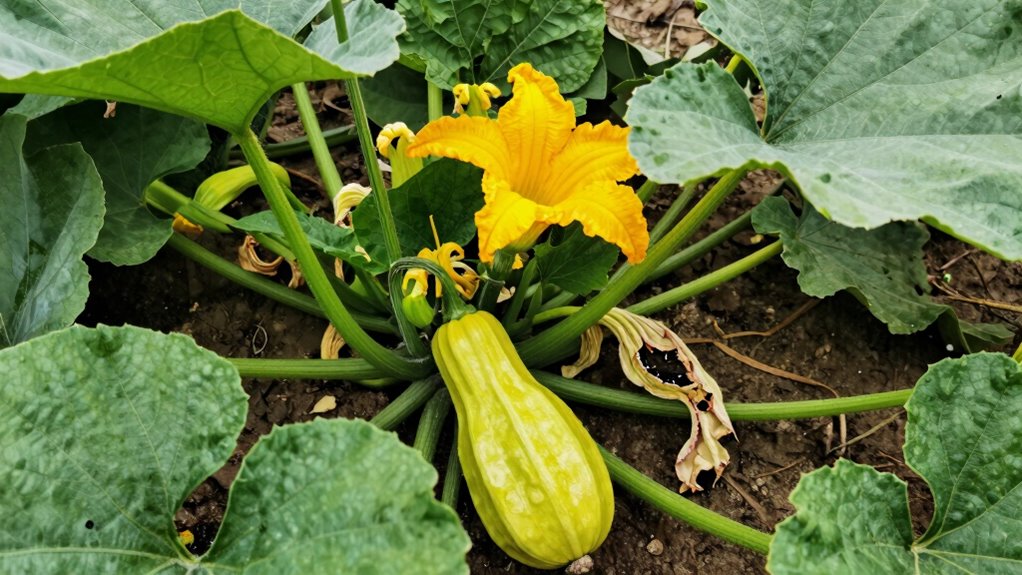

If your squash plants look healthy at first, it’s likely because vine borers hide inside the stems, causing damage from within before any outside signs show. They lay eggs on the plant stems, and once larvae hatch, they burrow deep, disrupting water and nutrient flow. This internal damage causes sudden wilting and death later on, often catching you off guard. To get ahead of these pests, it’s helpful to understand their lifecycle and early warning signs—keep exploring to learn more.

Get garden gear delivered free with Prime
- Fast, free delivery on millions of items
- Prime Video, Amazon Music and more included
- Member-only deals all year
Key Takeaways
- Vine borers burrow inside stems, causing internal damage before external symptoms appear.
- Early signs like holes and frass are often hidden, making plants seem healthy initially.
- The plant’s above-ground parts may remain lush until internal damage causes sudden wilting.
- Larvae disrupt water and nutrient flow, leading to rapid decline despite healthy foliage.
- Lack of visible pests initially delays detection, allowing damage to develop unnoticed.
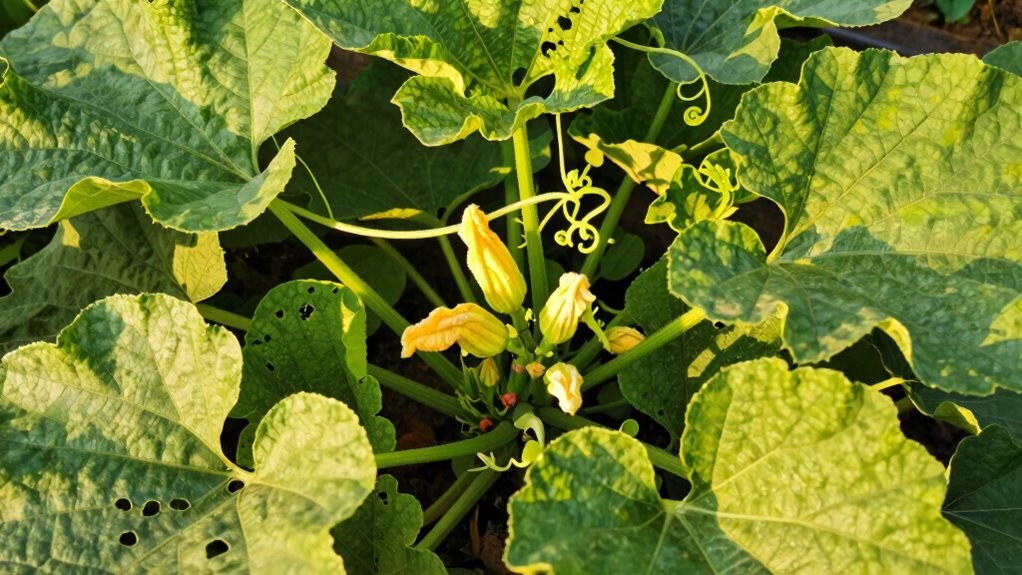
Vine borers are a common pest that can quickly devastate squash plants if left unchecked. You might notice your squash plants looking healthy and vigorous one day, only to find them suddenly wilted or dying the next. The reason for this sudden decline often ties back to vine borer activity, which is tricky to spot early because the pests are hidden inside the plant stems. To protect your crops, it’s essential to understand pest identification—knowing what signs to look for can help you catch an infestation before it causes irreversible damage. Typically, you might see small holes at the base of the plant or some frass (a sawdust-like material) around the stem, which are telltale signs of vine borer presence. Sometimes, you might notice the plant wilting suddenly, despite the soil being moist and the plant appearing healthy above ground. That’s because the borer larvae burrow into the stems, disrupting water and nutrient flow, which causes the plant to decline rapidly. Regularly monitoring your plants and understanding pest lifecycles can further improve your chances of early detection. Learning about pest behavior can help you anticipate and prevent infestations more effectively. Additionally, understanding pest signs can help you identify an early infestation before significant damage occurs. Implementing integrated pest management strategies, such as combining cultural, biological, and physical controls, can also enhance your efforts in managing vine borer problems. Preventing vine borer infestations starts with a strategic approach like crop rotation. When you rotate your squash crops with non-host plants, you interrupt the pest’s lifecycle, making it harder for vine borers to establish themselves year after year. This practice reduces the chances of larvae overwintering in the soil and emerging the following season to attack your plants anew. It’s especially effective if you alternate squash with crops that aren’t susceptible to vine borers, such as beans or corn, giving your garden a break from the pest’s preferred hosts. In addition to crop rotation, you can take other steps like physically inspecting the plants early in the season, especially at the base of the stems where the borers typically enter. Covering the stems with row covers or using organic barriers can also prevent adult moths from laying eggs on your plants. Proper garden sanitation—removing plant debris and infested stems—can further reduce the likelihood of overwintering larvae.
As an affiliate, we earn on qualifying purchases.
Frequently Asked Questions
How Can I Prevent Vine Borers From Attacking My Squash Plants?
To prevent vine borers from attacking your squash plants, you should use a combination of companion planting and organic sprays. Plant resistant crops or herbs like marigolds nearby to deter borers. Apply organic sprays such as neem oil or insecticidal soap regularly, especially during peak borer activity. These methods create a natural barrier and discourage the pests, helping your squash plants stay healthy and productive throughout the season.
Are There Natural Remedies to Control Vine Borer Infestations?
You can try natural remedies like companion planting with herbs such as marigolds or nasturtiums, which repel vine borers. Additionally, applying organic sprays like neem oil or insecticidal soap can help control infestations. Regularly inspecting your plants and removing any borer galleries also minimizes damage. Combining these methods creates a supportive environment, reducing the likelihood of severe vine borer attacks and keeping your squash plants healthier naturally.
What Signs Indicate Vine Borer Presence Before Damage Appears?
Vine borer detection starts with watching for early pest signs, like wilting or yellowing leaves near the base of your squash plants. You might also notice small holes or sawdust-like frass around the stems. These early signs indicate vine borers are present before severe damage occurs. Regular inspection helps you catch infestations early, giving you a better chance to control or prevent extensive damage to your plants.
Can Infected Plants Recover or Should They Be Removed?
Infected squash plants generally can’t recover once vine borers have caused significant damage, so removal is your best option. The vine borer lifecycle involves larvae tunneling into stems, weakening the plant’s resilience. If you catch early signs, you might save the plant, but often, the damage is too extensive. Removing infected plants helps prevent further infestation and encourages healthy growth for your remaining squash plants.
Which Squash Varieties Are Most Resistant to Vine Borers?
You should choose resistant squash varieties like ‘Yellow Crookneck,’ ‘Patty Pan,’ or ‘Six Weeks Yellow’ for organic gardening and squash pest management. These varieties have natural defenses against vine borers, making them less vulnerable. To protect your plants, practice crop rotation, remove infested vines promptly, and use physical barriers like row covers. Combining resistant varieties with good organic pest management techniques helps keep vine borer damage at bay.
As an affiliate, we earn on qualifying purchases.
Conclusion
When vine borers strike, your squash plants can suddenly look like they’ve been through a storm, even if they appeared healthy just days before. These pests sneak in quietly, turning vibrant vines into brittle, dying stems—much like a slow leak that eventually sinks a boat. To keep your plants thriving, stay vigilant, inspect regularly, and act quickly at the first sign of trouble. With prompt attention, you can outsmart these sneaky invaders and enjoy a bountiful harvest.
As an affiliate, we earn on qualifying purchases.
As an affiliate, we earn on qualifying purchases.
Halloween Picks
halloween
As an affiliate, we earn on qualifying purchases.