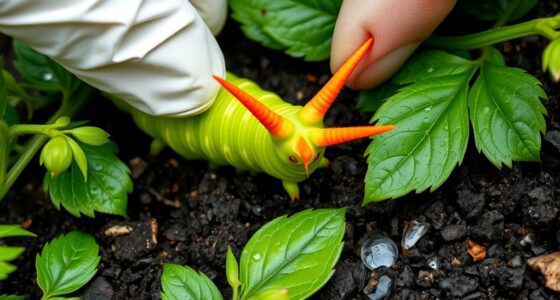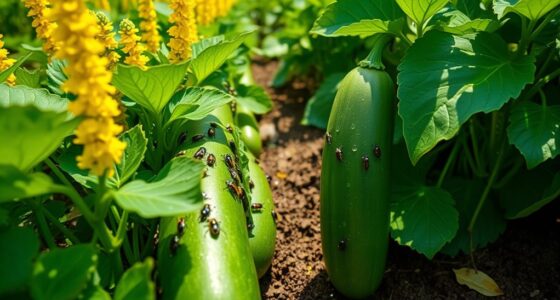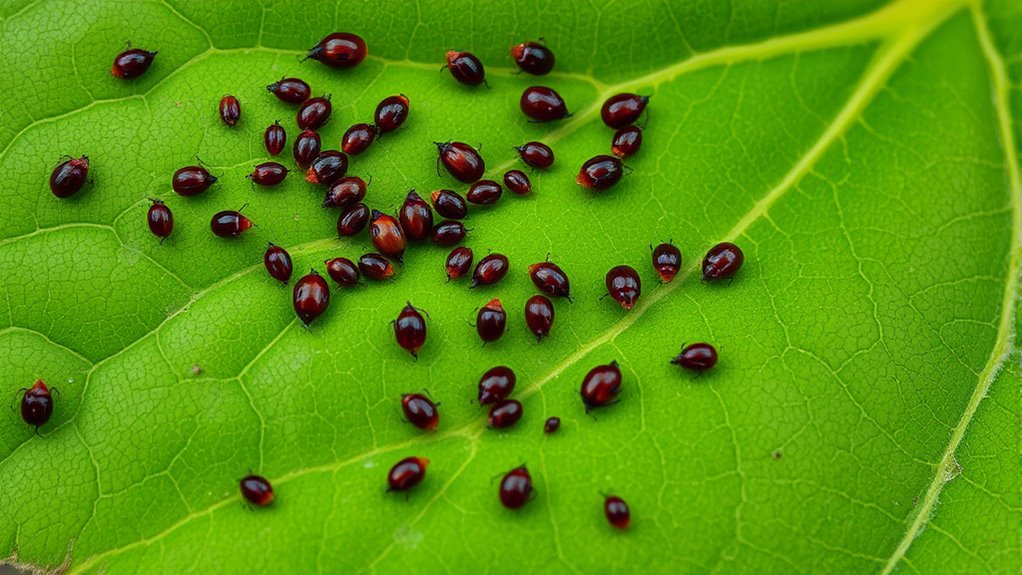
Bean beetles leave telltale signs on leaves, such as ragged, skeletonized edges and irregular chew patterns that resemble holes or notches. Their activity often causes leaves to look shredded or torn, warning you of their presence. Spotting these patterns early helps you take action before the infestation worsens. If you keep watching, you’ll discover effective ways to control these pests and protect your bean plants from further damage.
Key Takeaways
- Bean beetles cause ragged, skeletonized leaf patterns indicating their feeding activity.
- Chewing damage typically appears as irregular holes and skeletonized leaf tissue on bean plants.
- Early detection of leaf chew patterns helps identify beetle presence and guides pest control efforts.
- Not all leaf chew marks are harmful; some may be caused by beneficial insects or environmental factors.
- Monitoring leaf damage assists in implementing effective integrated pest management strategies.
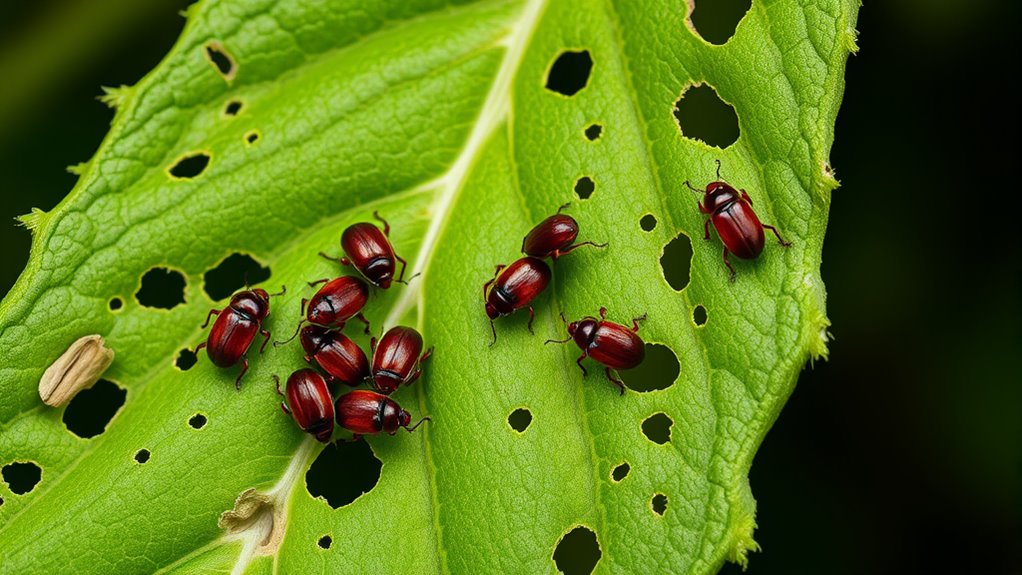
If you’ve ever noticed odd holes or patterns on your bean plant leaves, chances are bean beetles are at work. These tiny pests are notorious for their distinctive chewing damage, which can quickly turn healthy foliage into ragged, skeletonized leaves. Recognizing these patterns early helps you understand what you’re dealing with and take appropriate action. Bean beetles don’t just cause aesthetic damage; they can also hinder plant growth and reduce your bean harvest. But before jumping into pest control methods, it’s helpful to understand their role in the garden ecosystem, especially their pollinator relationships. While bean beetles primarily feed on beans, some beetle species can inadvertently assist in pollination by moving between flowers. However, their destructive feeding habits usually outweigh any benefits, making pest control necessary.
When it comes to managing bean beetles, a variety of pest control methods exist, and choosing the right one depends on your garden size and preferences. Manual removal is a straightforward approach—simply pick off beetles and larvae by hand and drop them into soapy water. This method works well for small gardens and minimizes chemical use. For larger plots, introducing natural predators like parasitic wasps can help keep beetle populations in check. These tiny allies lay their eggs inside beetle larvae, effectively reducing their numbers without harming your plants or beneficial pollinators. Additionally, crop rotation and proper garden hygiene can disrupt the beetles’ life cycle, preventing infestations from becoming severe. Covering your plants with row covers or insect netting can serve as physical barriers, blocking beetles from reaching the leaves altogether.
Chemical control options are available but should be used cautiously. Select insecticides labeled for bean pests and follow all application instructions carefully to minimize impact on pollinator relationships. Overusing chemicals can harm bees, butterflies, and other pollinators essential for your garden’s health. Incorporating integrated pest management strategies that combine cultural, biological, and mechanical controls is often the most sustainable approach. Regularly inspecting your plants, removing infected foliage, and encouraging biodiversity in your garden creates a resilient environment that naturally suppresses beetle populations. Keep in mind that healthy, vigorous plants are less vulnerable to pest damage, so maintaining proper watering, fertilization, and spacing is *crucial*.
Ultimately, staying vigilant and adopting a holistic approach can help you control bean beetles effectively while preserving the pollinator relationships *essential* for a productive garden. Recognizing the patterns of leaf damage and understanding the beetles’ role in the ecosystem allows you to make informed decisions and protect your bean plants without unnecessary chemical interventions. With patience and the right strategies, you can enjoy a thriving bean crop free from the destructive chew marks that once threatened your garden’s success.
Top picks for "bean beetl leaf"
Open Amazon search results for this keyword.
As an affiliate, we earn on qualifying purchases.
Frequently Asked Questions
How Do Bean Beetles Impact Crop Yields Long-Term?
Bean beetles can cause long-term crop yield reduction if you don’t implement effective pest management strategies. They feed on your plants, weakening them and reducing overall productivity. Over time, infestations may lead to significant decreases in harvests, impacting your income and food supply. To minimize these effects, you should monitor your crops regularly, use insecticides responsibly, and encourage natural predators to control beetle populations and protect your yields.
Are Leaf Chew Patterns Unique to Bean Beetles?
You’ll find that leaf chew patterns aren’t unique to bean beetles; many insects cause similar plant damage. These patterns help you with insect identification, but don’t rely solely on them—they can be deceiving. For instance, some pests leave ragged holes or skeletonized leaves. You need to look closely at the damage and consider other signs to accurately identify the culprit, ensuring effective pest management.
Can Leaf Damage Indicate Specific Beetle Species?
Yes, leaf damage can help with species identification because specific damage indicators often point to certain beetle species. You should look for patterns, chew marks, and damage size, as these clues can distinguish between pests. By carefully examining these damage indicators, you can better identify the beetle species responsible, which helps in choosing the most effective control methods and prevents further crop damage.
What Natural Predators Control Bean Beetle Populations?
You might think natural predators can control bean beetle populations effectively. Predator identification shows that parasitic wasps, such as Pediobius foveolatus, are key biological control agents, attacking beetle larvae. Ladybugs and certain predatory beetles also feed on eggs and adults. Introducing these predators helps keep beetle numbers down naturally. This method is eco-friendly and reduces reliance on chemical pesticides, making it a sustainable solution for protecting your bean crops.
How Quickly Do Bean Beetles Reproduce?
You’ll find that bean beetles reproduce quite rapidly, with a reproduction rate that can lead to multiple generations in a single growing season. Their lifecycle duration is typically around 4 to 6 weeks, depending on environmental conditions. During this time, females lay numerous eggs on bean plants, and the larvae quickly develop into adults. This swift reproduction cycle makes it important to monitor and manage their populations early.
Conclusion
You’ve learned how bean beetles create distinct chew patterns on leaves, helping identify their presence. Did you know that a single bean beetle can consume up to 10% of a plant’s leaves in just a few days? This fascinating fact highlights how rapidly they can affect your plants. By recognizing their unique feeding signs, you can take quick action to protect your garden. Stay observant, and you’ll keep your plants healthy and beetle-free.