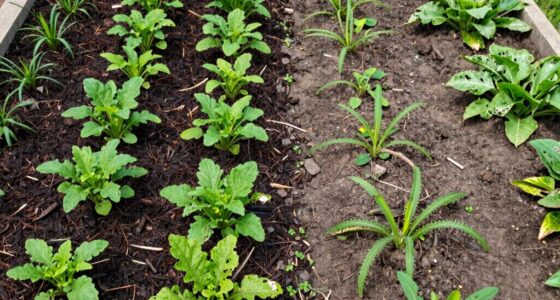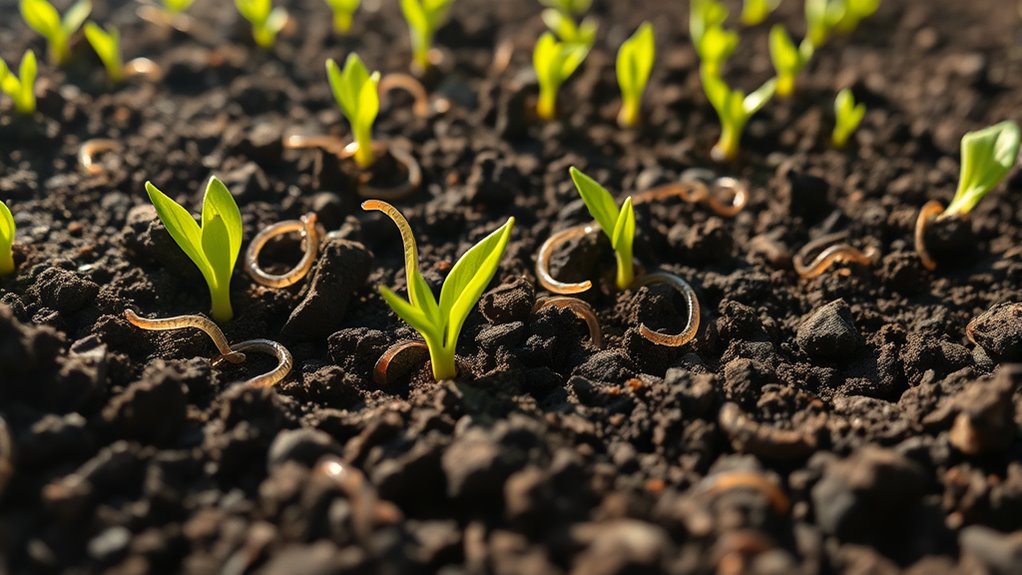

To prevent wireworms in your new vegetable beds, focus on building healthy soil by adding organic matter, ensuring proper drainage, and avoiding soil compaction. Rotate crops each season and incorporate cover crops like clover to disturb wireworm life cycles and attract beneficial predators. Use baiting methods to detect early signs and consider biological controls like nematodes. Keep soil well-maintained, and you’ll create an environment less inviting to pests—discover more effective strategies as you continue to explore this issue.

Get garden gear delivered free — and shop member deals
- Fast, free delivery on millions of items
- Access to Prime Big Deal Days deals on October 6–7
- Prime Video, Amazon Music and more included
Key Takeaways
- Test soil with bait crops like potatoes or carrots to detect wireworm presence early.
- Rotate susceptible vegetables annually and use cover crops to disrupt wireworm life cycles.
- Improve soil health through organic matter addition and proper drainage to make it less attractive to wireworms.
- Apply beneficial nematodes or physical barriers during planting to control wireworm populations naturally.
- Maintain optimal watering and avoid soil compaction to promote healthy, pest-resistant soil conditions.

When you start planting new vegetable beds, wireworms might become a hidden threat to your crops. These tiny, hard-bodied larvae can cause significant damage before you even realize they’re present. The key to preventing wireworm problems begins with understanding the importance of soil health and effective pest management. Healthy soil isn’t just about nutrient levels; it also involves maintaining a balanced ecosystem that discourages pests like wireworms from thriving. When your soil is rich in organic matter, well-drained, and properly aerated, it creates an environment less hospitable to these pests. Conversely, overworked or poorly managed soil can become an ideal habitat for wireworms, making pest management more challenging.
To minimize their impact, you should start with proactive soil management practices. Rotate your crops regularly, especially avoiding planting susceptible vegetables like potatoes, carrots, and corn in the same spot year after year. Crop rotation helps break the wireworm life cycle by depriving them of their preferred food sources. Incorporate cover crops such as clover or legumes, which can improve soil structure, boost soil health, and reduce pest populations naturally. These plants also attract beneficial insects that prey on wireworms, adding an extra layer of pest management. Additionally, avoid incorporating excessive organic matter that’s not fully composted, as this can sometimes attract wireworms by providing a food source. Soil ecosystem balance plays a crucial role in sustainable pest control.
Monitoring your soil for signs of wireworm presence is another essential step. You can do this by baiting a few pieces of potato or carrot in the soil and checking regularly. If you find larvae feeding on these baits, it’s a clear sign you need to take action before planting your vegetables. When pests are detected early, you can implement targeted pest management strategies—such as applying beneficial nematodes, which are microscopic worms that naturally control wireworm populations. These biological controls are safe, effective, and promote overall soil health without the need for chemical insecticides.
Lastly, keep your soil healthy through proper watering and avoiding soil compaction. Healthy, well-maintained soil resists pest invasions better and supports robust plant growth, making your crops less vulnerable. If you’re dealing with a serious wireworm problem, consider removing and destroying infested soil or using physical barriers like row covers during early planting stages. By emphasizing soil health and employing strategic pest management, you can protect your new vegetable beds from wireworm damage and enjoy a bountiful harvest.
beneficial nematodes for soil pest control
As an affiliate, we earn on qualifying purchases.
As an affiliate, we earn on qualifying purchases.
Frequently Asked Questions
How Can I Prevent Wireworms From Infesting New Beds?
To prevent wireworms from infesting your new beds, start with crop rotation by avoiding planting susceptible crops in the same spot annually. Use organic barriers like crushed eggshells or diatomaceous earth around your beds to deter wireworms. Keep soil healthy and free of debris, and consider planting resistant varieties. These steps help disrupt their life cycle and create an inhospitable environment, giving your vegetables a better chance to thrive.
Are Wireworms Harmful to All Vegetable Types?
Think of wireworms as sneaky invaders; they can harm many vegetable types, but not all equally. You can protect your garden by practicing crop rotation and using soil fumigation when necessary. These methods help break the wireworm lifecycle, reducing their impact. While some vegetables are more resistant, it’s best to stay vigilant and diversify your planting strategies to keep your garden healthy and wireworm-free.
What Natural Methods Effectively Control Wireworms?
You can effectively control wireworms naturally by encouraging beneficial insects like ground beetles and parasitic nematodes to prey on them. Practice crop rotation to disrupt their life cycle and reduce infestations. Keep the soil healthy and free of debris to attract these helpful insects, making your garden less attractive to wireworms. These methods work together to protect your vegetables without the need for chemical treatments.
How Long Do Wireworms Remain Active in Soil?
Imagine a silent guest that lingers quietly in your garden. Wireworms remain active in soil for 3 to 5 years, following their lifecycle. Their activity peaks when soil temperatures range between 50°F and 85°F, making warm seasons ideal for their activity. To reduce their presence, regularly disturb and monitor your soil, and consider crop rotation. Patience and consistent management are key to keeping these elusive pests at bay.
Can I Reuse Soil After Wireworm Infestation?
You shouldn’t reuse soil after a wireworm infestation without proper treatment. First, conduct soil testing to assess wireworm presence and activity levels. If they’re still active, consider crop rotation with non-host plants to break their lifecycle. Additionally, solarize the soil by covering it with clear plastic during hot weather to kill wireworms. These steps help guarantee your soil is safe for future planting and reduces the risk of recurring infestations.
As an affiliate, we earn on qualifying purchases.
Conclusion
To keep wireworms from turning your new vegetable beds into a battleground, stay vigilant and act quickly. Use crop rotation, beneficial nematodes, or bait traps to outsmart these relentless pests. Remember, if you ignore them, they can cause more destruction than a tornado in your garden. Stay proactive, and your veggies will thrive like a lush, green paradise, not a wireworm nightmare. Your garden’s future depends on your quick action—don’t let those tiny villains win!
As an affiliate, we earn on qualifying purchases.
As an affiliate, we earn on qualifying purchases.
Fall Picks
fall essentials
As an affiliate, we earn on qualifying purchases.