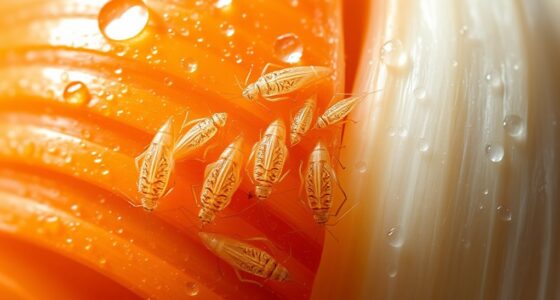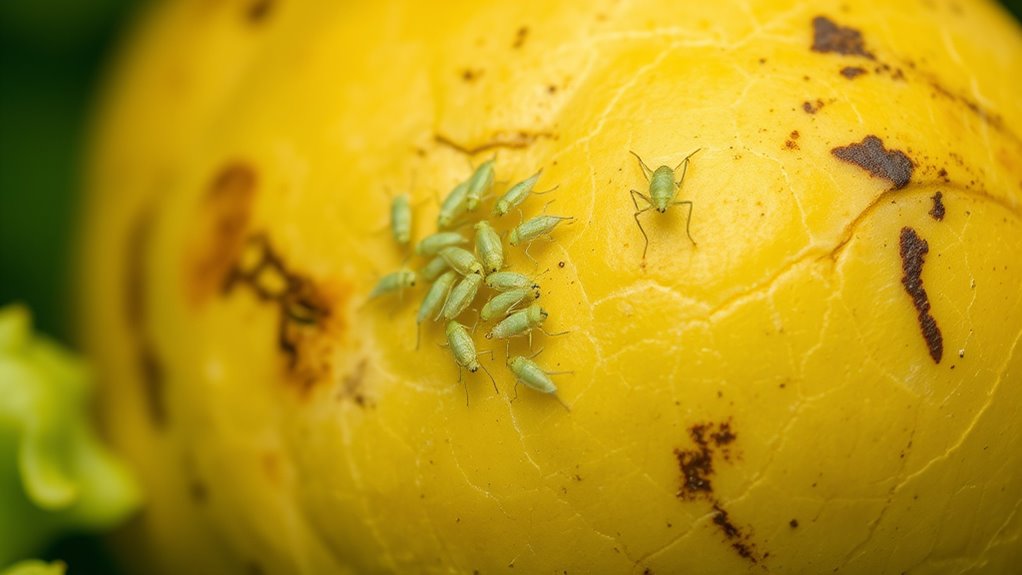

Potato psyllids are a major concern for your crops because they spread zebra chip disease, which can severely damage potato yields and cause economic losses. Early detection and management are essential; monitor plants regularly, use targeted insecticides, and remove weeds or volunteer potatoes that serve as hosts. Incorporating biological controls and resistant varieties can help lower risks. To protect your harvest effectively, understanding the pest’s life cycle and implementing integrated strategies is vital—keep exploring to learn more.
Key Takeaways
- Potato psyllid transmits bacteria that cause zebra chip disease, increasing crop damage risk.
- Early detection and control of psyllids are crucial to prevent bacterial spread.
- Monitoring psyllid populations helps predict and mitigate zebra chip outbreaks.
- Implementing integrated pest management reduces reliance on chemicals and limits disease transmission.
- Healthy, resistant varieties and field hygiene lower the likelihood of zebra chip development.

The potato psyllid is a tiny insect that poses a significant threat to potato crops because it can transmit the bacteria responsible for zebra chip disease. This pest has become a major concern for growers because once it feeds on potato plants, it can spread the bacteria quickly, leading to severe crop damage and economic losses. To protect your fields, effective pest management strategies are essential. You need to stay vigilant, regularly scout your crops for early signs of psyllid activity, and implement control measures promptly. Using targeted insecticides can be effective, especially when applied early in the season, but it’s equally important to rotate chemicals and avoid resistance buildup. Biological controls, like introducing natural predators, can also help keep psyllid populations in check without relying solely on chemicals. Combining these approaches creates a comprehensive pest management plan that minimizes the risk of zebra chip disease spreading.
Prevention is the cornerstone of safeguarding your potato crops from this destructive pest. Start by planting resistant or tolerant varieties if available, as they can drastically reduce the likelihood of infestation. Keep your fields clean by removing volunteer potatoes and weeds, which can serve as hosts for the psyllids and bacteria. Proper irrigation and fertilization practices ensure healthy plants that are better equipped to resist pest attacks and disease development. Additionally, timely harvests can limit the window of opportunity for psyllids to infect your crop. Monitoring weather conditions is also essential; warm, humid environments favor psyllid populations, so adjusting your management practices accordingly can help mitigate risks. Understanding the life cycle of the potato psyllid allows you to anticipate and target critical periods for intervention.
Educating yourself on the life cycle of the potato psyllid helps you predict and interrupt its breeding patterns. Understanding when adults emerge and lay eggs allows you to target control measures more precisely. Implementing an integrated pest management (IPM) approach combines pest management and disease prevention tactics, reducing reliance on chemical controls and promoting sustainable farming practices. Regular scouting, combined with timely interventions, ensures you catch infestations early before they escalate. Maintaining field hygiene, choosing resistant varieties, and employing biological controls are all key components of an effective disease prevention strategy.
As an affiliate, we earn on qualifying purchases.
Frequently Asked Questions
How Can Farmers Detect Potato Psyllid Presence Early?
You can detect potato psyllid presence early by regularly inspecting your plants, especially new growth, for tiny insects or their signs. Using crop rotation helps reduce their populations, making detection easier. Incorporate biological control agents like beneficial insects to keep psyllid numbers low. Monitoring with yellow sticky traps also aids early detection, so you can act promptly and prevent infestations from escalating.
What Are the Economic Impacts of Zebra Chip Outbreaks?
You might notice zebra chip outbreaks causing significant economic damage, leading to costly crop losses and reduced quality. These outbreaks can trigger market fluctuations, as supply drops and prices shift unexpectedly. Farmers face financial strain, and regional economies suffer when large quantities of affected potatoes can’t reach consumers. The ripple effect impacts processing plants, retailers, and consumers alike, highlighting how disease outbreaks can destabilize markets and threaten livelihoods.
Are There Natural Predators to Control Potato Psyllids?
Yes, there are beneficial insects that help control potato psyllids naturally. You can encourage biological control by promoting these predators, such as certain lady beetles, lacewing larvae, and parasitic wasps. These beneficial insects prey on potato psyllids, reducing their populations without chemical interventions. To support this, avoid broad-spectrum insecticides and create a habitat that attracts and sustains these natural enemies, helping keep pest levels in check effectively.
How Does Climate Change Affect Psyllid Populations?
Climate change accelerates pest migration and disrupts climate adaptation efforts, leading to increased psyllid populations. Warmer temperatures expand their habitats, allowing them to thrive in new areas where they previously couldn’t survive. You might notice more frequent and severe infestations, making pest management harder. To stay ahead, you need to monitor changing conditions closely and adapt your strategies quickly, ensuring effective control despite shifting climates.
What Are the Best Integrated Pest Management Strategies?
You should implement integrated pest management strategies by combining chemical controls with cultural practices like crop rotation. Use targeted insecticides carefully to minimize resistance, and rotate crops to disrupt pest life cycles. Monitoring pest populations helps you decide when treatments are necessary. This approach reduces reliance on chemicals alone, promotes sustainable farming, and effectively manages pest risks while protecting your crops and environment.
biological controls for potato pests
As an affiliate, we earn on qualifying purchases.
As an affiliate, we earn on qualifying purchases.
Conclusion
By staying vigilant, by monitoring pests, by applying timely interventions, you protect your crops from potato psyllid and zebra chip risks. Recognize the signs, understand the threats, and act promptly to prevent damage. Stay informed, stay prepared, and stay resilient. Your proactive approach safeguards your harvest, preserves your investment, and ensures your success. In the battle against pests, awareness, action, and persistence are your best tools to keep your fields healthy and thriving.
As an affiliate, we earn on qualifying purchases.
As an affiliate, we earn on qualifying purchases.