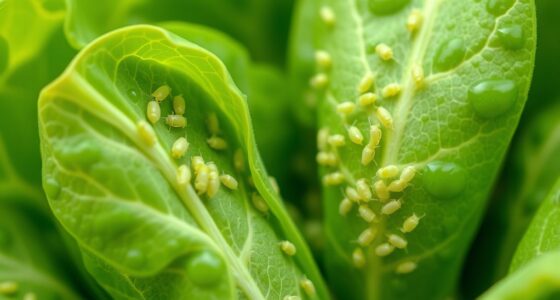
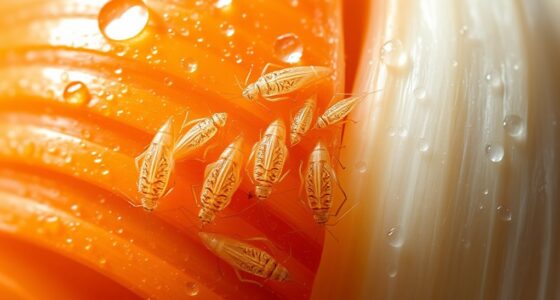
The imported cabbageworm and diamondback moth are two common pests of cruciferous crops, but you can tell them apart easily. The imported cabbageworm is bright green with a yellow stripe and feeds on leaves and heads, while the diamondback moth is smaller with delicate wings and causes skeletonized leaf damage. The cabbageworm has a slower life cycle, whereas the moth reproduces rapidly. To protect your crops effectively, understanding these differences is key—there’s more to learn if you keep going.
Key Takeaways
- Imported cabbageworm is larger, bright green with a yellow stripe, while diamondback moth larvae are smaller and skeletonize leaves.
- Cabbageworms feed on heads and leaves, whereas diamondback moth larvae mainly skeletonize leaf tissue.
- Imported cabbageworm has a slower reproductive cycle with fewer generations annually; diamondback moth reproduces rapidly with multiple generations.
- Biological controls like Trichogramma wasps target cabbageworm eggs, while Bt sprays are effective against diamondback larvae.
- Both pests thrive under similar conditions but differ in appearance, feeding behavior, and life cycle, guiding targeted management strategies.

When managing cabbage pests, understanding the differences between the imported cabbageworm and the diamondback moth is essential. Both pests can cause significant damage to your crops, but they behave differently and require distinct management strategies. Recognizing their unique characteristics helps you choose effective controls and avoid unnecessary pesticide use, especially as resistance issues become more prevalent. Biological control offers a sustainable approach, using natural enemies like parasitic wasps and predators to keep pest populations in check. This method reduces reliance on chemical pesticides, which pests can develop resistance to over time, rendering many traditional treatments ineffective.
Effective cabbage pest management relies on understanding pest differences and using biological control methods.
The imported cabbageworm, with its bright green body and distinctive yellow stripe, usually enters your fields as a small caterpillar that feeds on the leaves and heads of cabbage, broccoli, and other crucifers. It’s a prolific pest, but it tends to have a slower reproductive cycle compared to the diamondback moth. To control it naturally, releasing beneficial insects like Trichogramma wasps can be effective, as they parasitize the eggs before caterpillars hatch. You can also employ crop rotation and row covers to physically block adult moths from laying eggs on your plants. When chemical intervention is necessary, choosing pesticides with different modes of action helps prevent resistance buildup. Integrated pest management strategies further enhance control efforts by combining multiple tactics.
The diamondback moth is smaller, with a more delicate appearance and a quicker life cycle, often completing multiple generations within a single growing season. Its larvae are usually more active, feeding on the undersides of leaves, creating characteristic skeletonized patterns. Because of its rapid reproduction, the diamondback moth can quickly develop pesticide resistance if you’re not careful. This makes integrated pest management (IPM) crucial. Biological control agents like Bacillus thuringiensis (Bt) sprays are effective against diamondback moth larvae, especially when applied early in the infestation. Combining biological controls with cultural practices—such as removing crop debris and practicing proper sanitation—can help suppress populations naturally. When pesticides are necessary, rotating products with different active ingredients prevents or delays resistance development.
Both pests thrive under similar conditions, but their response to control methods varies. Relying solely on chemical pesticides can lead to resistance issues, especially with the diamondback moth. To sustain your pest management efforts, integrating biological control methods and cultural practices is your best strategy. This approach not only minimizes chemical use but also preserves beneficial insects that naturally keep pest populations low. Understanding these pests’ biology and behavior helps you make smarter decisions, ensuring healthier crops and reducing economic losses. Staying vigilant and implementing diverse management tactics will help you stay ahead of these pests and protect your cabbage crop effectively.
Frequently Asked Questions
How Can I Prevent These Pests From Infesting My Entire Garden?
To prevent these pests from infesting your garden, start by practicing crop rotation each season to disrupt their life cycle. Incorporate companion planting with herbs like dill or cilantro, which repel them naturally. Keep your garden clean by removing debris and infested leaves. You can also use row covers to block pests physically. Regular monitoring and early intervention are key to keeping your garden healthy and pest-free.
Are There Natural Predators That Effectively Control Both Pests?
Yes, natural predator relationships can effectively control both pests. You can encourage beneficial insects like lady beetles, lacewings, and parasitic wasps, which prey on cabbageworms and diamondback moths. Incorporate biological control methods by planting diverse flowering plants that attract these predators, and avoid broad-spectrum pesticides that harm them. By fostering a healthy ecosystem, you create a natural defense against these pests, reducing the need for chemical treatments and protecting your garden’s health.
What Are the Long-Term Environmental Impacts of Chemical Treatments?
Chemical treatments are like storms that leave scars on your environment. Long-term, they threaten to seep into the soil, causing contamination that persists like a shadow. Chemical runoff can harm aquatic life and disrupt ecosystems, turning vibrant fields into barren wastelands over time. You risk gradually eroding soil health and biodiversity, making it harder for your crops to thrive naturally. Think carefully about sustainable options to protect both your harvest and the planet.
Can These Pests Develop Resistance to Common Pesticides Over Time?
Yes, these pests can develop resistance to common pesticides over time. Pest adaptation occurs when they survive treatments and pass on resistant genes, making future control more difficult. To manage this, you should rotate pesticides with different modes of action, use integrated pest management practices, and monitor pest populations closely. This approach helps slow down pesticide resistance and keeps pest control effective in the long run.
Are There Specific Crop Varieties More Resistant to Imported Cabbageworm and Diamondback Moth?
Think of pest-resistant crop varieties as your fortress against pests. You’ll find certain crop variety resistance and pest tolerant cultivars that stand strong against imported cabbageworms and diamondback moths. These specially bred cultivars are designed to reduce pest damage, making your plants less appealing or accessible to these pests. Choosing these resistant varieties gives you a strategic edge, cutting down on pesticide use and boosting your crop’s resilience naturally.
Conclusion
As you watch the lush green leaves, you can almost see the tiny, greenish-white imported cabbageworm slipping between the veins, while the diamondback moth flutters with delicate, diamond-shaped wings. Both pests silently threaten your garden’s bounty, but recognizing their differences helps you act swiftly. Picture yourself confidently inspecting your plants, catching these intruders before they cause real damage. With sharp eyes and quick action, you can protect your crops and keep your garden thriving, vibrant, and pest-free.