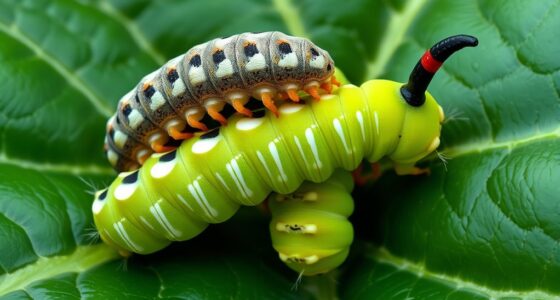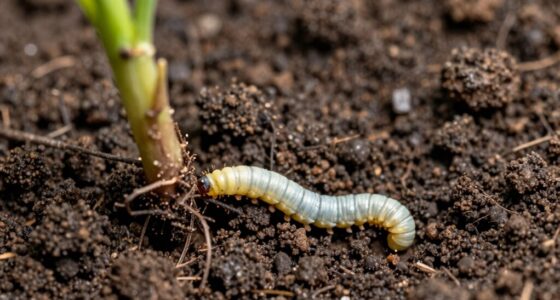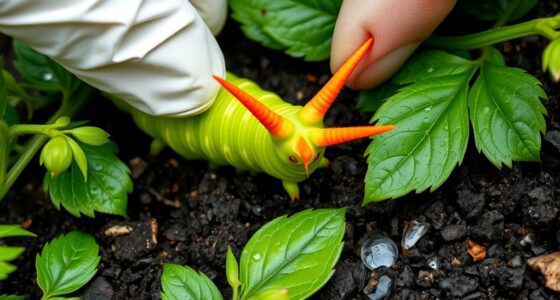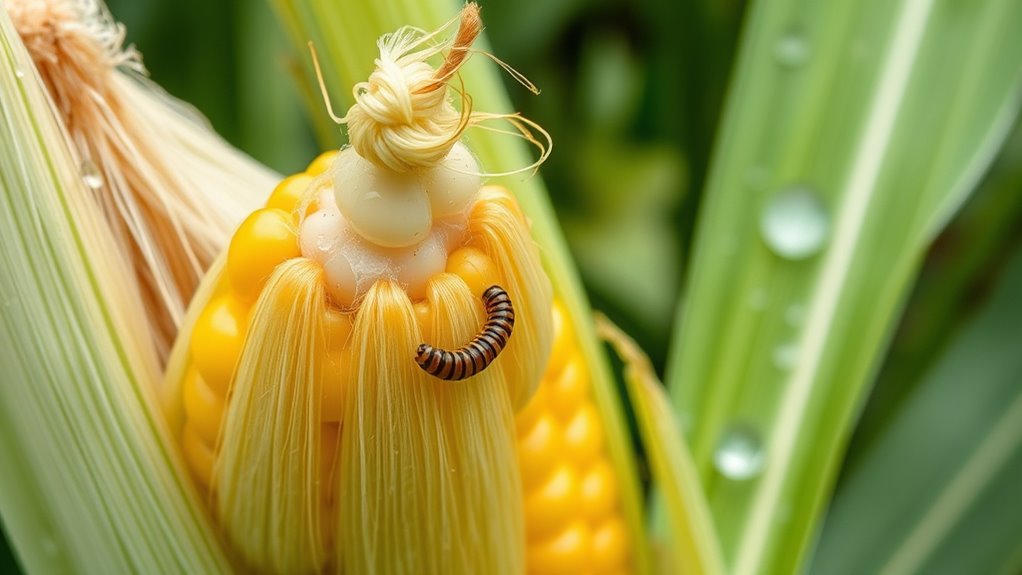

If you notice holes or chewed kernels on your vegetables or ears of corn, you may have a corn earworm problem. These pests leave silken webbing and tiny green caterpillars in your crops. To control them, handpick caterpillars, use row covers early in the season, and encourage beneficial insects like ladybugs and lacewings. Biological control methods, such as releasing Trichogramma wasps, can also help. Keep watching for signs—more tips will guide you to protect your garden effectively.

Get garden gear delivered free — and shop member deals
- Fast, free delivery on millions of items
- Access to Prime Big Deal Days deals on October 6–7
- Prime Video, Amazon Music and more included
Key Takeaways
- Regularly inspect corn and vegetables for chewed kernels, webbing, and small caterpillars to catch infestations early.
- Use physical barriers like row covers or fine mesh to prevent moths from laying eggs on plants.
- Handpick and remove caterpillars daily, dropping them into soapy water to reduce pest populations naturally.
- Encourage beneficial insects such as ladybugs, lacewings, and release Trichogramma wasps to parasitize earworm eggs.
- Implement integrated organic controls combining manual removal, physical barriers, and natural predators for effective pest management.

Have you noticed holes or chewed kernels in your corn or other garden vegetables? If so, you’re likely dealing with a common pest: the corn earworm. These caterpillars can quickly turn your thriving garden into a damaged mess if left unchecked. The good news is that managing them doesn’t always mean turning to harsh chemicals. Instead, you can focus on pest management strategies that include organic controls. This approach not only protects your plants but also keeps your garden safe for kids, pets, and beneficial insects.
To start, it’s essential to identify the presence of corn earworms early. Look for chewed kernels, silken webbing, or small, greenish caterpillars hiding in the ears of corn. Once you recognize the signs, you can take targeted action. One effective method is handpicking the caterpillars. Simply inspect your corn daily, especially during peak moth activity in late summer, and remove any pests you find. Dropping them into soapy water ensures they won’t cause further damage. This low-tech approach works well for small gardens and can be surprisingly effective when combined with other pest management tactics.
Inspect your corn daily and handpick caterpillars during peak moth season for effective control.
Another key aspect of organic controls is encouraging natural predators. Beneficial insects like Trichogramma wasps lay their eggs inside earworm eggs, preventing them from hatching. You can purchase and release these tiny wasps in your garden as a biological control method. Additionally, planting flowers such as dill, fennel, or marigolds attracts predatory insects like ladybugs and lacewings, which feed on earworm larvae and eggs, helping keep their populations in check naturally. Incorporating these plants into your garden creates a balanced ecosystem that discourages pest outbreaks.
Covering your corn with row covers or fine mesh is another effective organic control. These physical barriers prevent adult moths from laying eggs on your plants. Make sure to install the covers early in the season before the moths begin to appear. Once the ears start to develop, carefully remove the covers to prevent damage and allow for harvesting. Combining these physical barriers with regular monitoring and manual removal makes a detailed pest management approach that minimizes chemical use. Utilizing integrated pest management methods can further optimize your efforts for a healthier garden.
Frequently Asked Questions
How Can I Prevent Corn Earworm Infestations Before They Start?
To prevent corn earworm infestations, you should start by planting resistant varieties and practicing crop rotation each season. This disrupts the earworm’s life cycle and reduces their presence. Additionally, monitor your garden regularly for signs of infestation and remove any affected plant parts promptly. Using row covers during the early stages of growth can also provide a physical barrier, helping keep these pests out of your garden.
Are Organic Methods Effective Against Corn Earworm Control?
Yes, organic methods can effectively combat corn earworm infestations if you act quickly. Organic pest management relies on biological control, like introducing natural predators such as Trichogramma wasps, which target eggs before they hatch. Combining these strategies with proper cultural practices keeps your garden healthy. Stay vigilant, and you’ll see that organic controls not only work but also protect your garden’s balance and your peace of mind.
When Is the Best Time to Apply Insecticides for Earworms?
You should apply insecticides when earworm activity is high, typically during silking and early ear development. Timing considerations are essential; spray in the evening or early morning when moths are active. Weather impact matters too—avoid applying before rain, as it washes away the insecticide. Regular monitoring helps you identify peak activity, ensuring your application is effective and minimizes unnecessary use.
Can Companion Planting Deter Corn Earworms Naturally?
Think of companion planting as your garden’s secret handshake. It can help deter corn earworms naturally by attracting beneficial insects that prey on pests. Plant trap crops like sorghum or millet nearby to lure earworms away from your corn. These strategies create a garden ecosystem where beneficial insects flourish, acting as natural pest control, so you can enjoy a healthier, more resilient harvest without relying solely on chemicals.
What Are the Signs of Earworm Damage in Early Stages?
In early stages, you’ll notice signs of earworm damage like irregular leaf feeding and small holes in the leaves. Watch for chewed edges or ragged patches, especially near the tips of leaves. Sometimes, you might see tiny frass or droppings inside the damaged areas. If you catch these early signs, you can take action to control the infestation before it causes significant harm to your plants.
Conclusion
By staying vigilant and regularly inspecting your plants, you can keep the corn earworm at bay. Think of it as a battle where prevention is your strongest weapon—like a fortress guarding your garden. With a little effort, you’ll protect your crops and enjoy a bountiful harvest. Remember, the key to victory is consistency, so stay proactive. Your garden’s health depends on your watchful eye—together, you can outsmart these pesky invaders.
Fall Picks
fall essentials
As an affiliate, we earn on qualifying purchases.