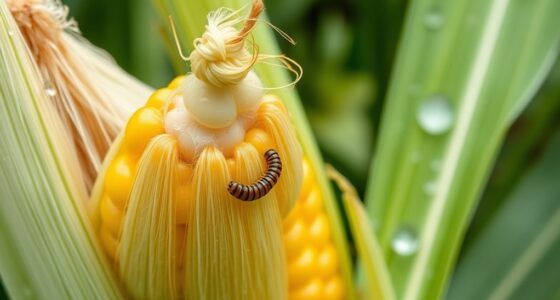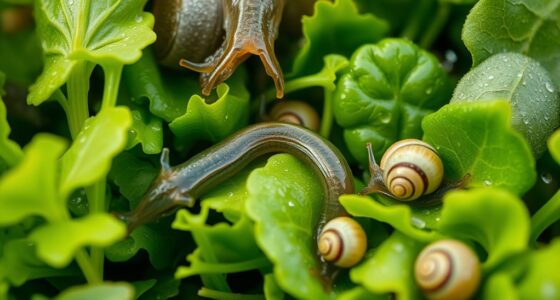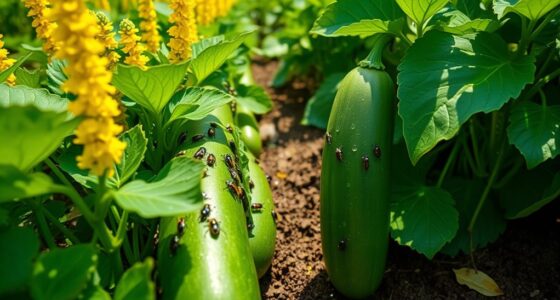
Birds and rodents can quickly cause serious damage to your vegetable beds by gnawing on stems, eating seeds, or pecking at leaves. They often act fast, ruining crops before you notice the problem. To protect your plants, you should modify nearby habitats by removing clutter, using physical barriers like fencing, and keeping the area tidy. Keep going to discover more effective strategies to keep these pests at bay and safeguard your garden.

Get garden gear delivered free — and shop member deals
- Fast, free delivery on millions of items
- Access to Prime Big Deal Days deals on October 6–7
- Prime Video, Amazon Music and more included
Key Takeaways
- Birds and rodents can quickly damage vegetable crops by gnawing stems, eating seeds, and pecking leaves, reducing yield and quality.
- Habitat modification, such as removing clutter and trimming vegetation, makes gardens less attractive and less accessible to pests.
- Installing physical barriers like fine-mesh fencing, buried underground, and extending above ground prevents pest entry.
- Removing fallen fruit, harvesting ripe produce promptly, and using coarser ground covers reduce food sources and hiding spots.
- Combining habitat disruption with deterrents like scare devices and regular fence maintenance enhances overall pest prevention.
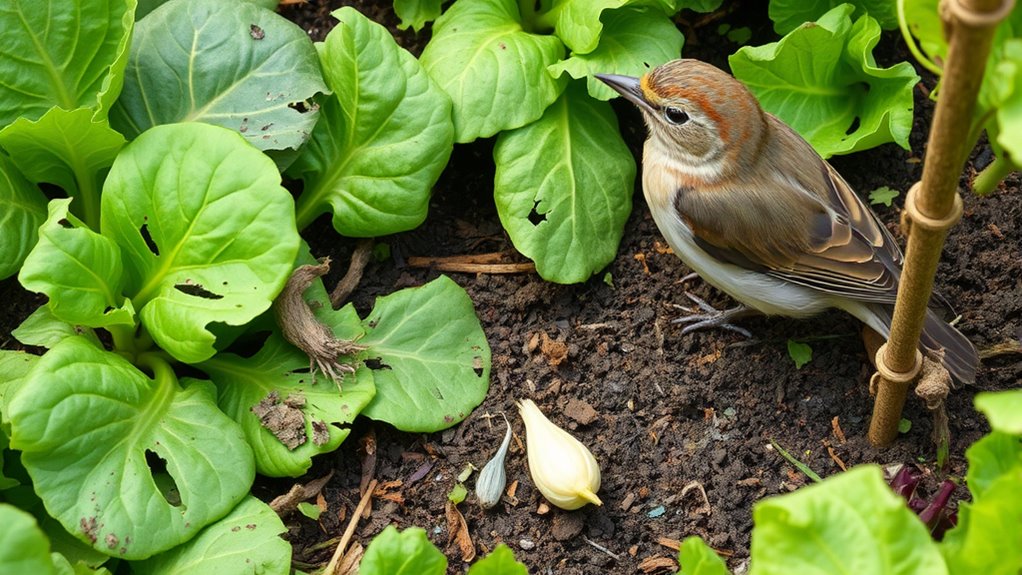
Birds and rodents can quickly become your vegetable bed’s biggest pests, often causing significant damage before you even notice. Their swift actions can devastate your crops, gnawing on stems, eating seeds, or pecking at leaves. To protect your garden, pest prevention needs to be a top priority, and one effective approach is habitat modification. By changing the environment around your vegetable beds, you can make it less inviting for pests, reducing their presence and the potential for damage.
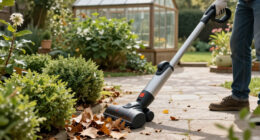
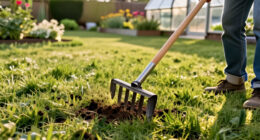
Start by removing clutter and debris around your garden. Piles of wood, brush, or weeds create ideal hiding spots and nesting sites for rodents and birds. Clearing these areas not only reduces shelter but also discourages pests from settling nearby. Additionally, trim back overgrown vegetation and prune trees that hang over your beds. Dense canopies provide easy access for birds and rodents, so thinning them out makes your garden less attractive as a habitat. Adjusting the landscape helps create a less hospitable environment, making it harder for pests to establish themselves.
Remove clutter and trim trees to make your garden less inviting for pests.
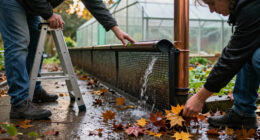
Fencing is another vital element of pest prevention through habitat modification. Installing a sturdy, fine-mesh fence around your vegetable beds acts as a physical barrier, preventing rodents from burrowing in and birds from pecking at your plants. Ensure the fence is buried a few inches underground to deter digging rodents, and extend it at least 2-3 feet above ground to keep out birds. Regularly inspecting and maintaining the fence ensures its effectiveness over time.
You can also modify the ground cover to discourage pests. Replace dense mulch with coarser materials or gravel, which rodents find less comfortable to burrow through. Keep the soil surface clear of seeds and fallen fruit, as these attract rodents and birds alike. Harvest ripe produce promptly to eliminate easy food sources that draw pests in.
Furthermore, consider installing deterrents like reflective objects, scare devices, or motion-activated lights. These additions disrupt the habitat preferences of birds and rodents, making your garden less appealing. Combining habitat modification with pest prevention strategies creates a holistic approach to safeguarding your vegetable crops.
Finally, understanding the habitat preferences of pests can help you better tailor your prevention efforts and protect your garden more effectively.
fine mesh garden fencing for pests
As an affiliate, we earn on qualifying purchases.
As an affiliate, we earn on qualifying purchases.
Frequently Asked Questions
What Are the Most Effective Natural Repellents for Birds and Rodents?
To keep birds and rodents away, use natural barriers like scarecrows, reflective tape, or predator decoys. For seed protection, sprinkle crushed garlic or chili powder around your plants, which deters pests naturally. You can also plant strong-smelling herbs like mint or lavender near your beds, making the area less appealing. Combining these methods creates an effective natural repellent system that helps protect your vegetable garden.
How Can I Identify Specific Bird or Rodent Species Damaging My Vegetables?
Picture your garden as a crime scene—each species leaves unique clues. To identify who’s responsible, examine damage signs like gnaw marks, droppings, and nesting materials. Look closely at your plants and compare damage patterns with species profiles for birds and rodents. Use trail cameras or set up observation points. By focusing on species identification, you’ll better understand the culprits and tailor your protection strategies effectively.
Are There Any Eco-Friendly Deterrent Methods for Protecting Vegetable Beds?
You can protect your vegetable beds eco-friendly by using physical barriers like row covers or netting to keep birds and rodents out. Additionally, try companion planting with herbs like basil or marigolds, which naturally repel pests. These methods are safe for the environment and effective, creating a barrier and natural deterrent without chemicals, helping your garden thrive while safeguarding your vegetables from damage.
What Time of Day Are Birds and Rodents Most Likely to Cause Damage?
Think of dawn activity and evening foraging as the opening and closing scenes of a wildlife show—these are prime times for birds and rodents to cause damage. You’re most vulnerable at dawn and dusk when they’re actively searching for food. To protect your vegetable beds, keep an eye out during these hours and consider eco-friendly deterrents. Staying vigilant during these peak times helps safeguard your garden’s bounty.
How Does Soil Type Influence Pest Activity in Vegetable Gardens?
Soil type greatly influences pest activity in your vegetable garden. If you have compacted soil, pests like rodents find it easier to burrow and hide, increasing damage. Looser, well-drained soils promote healthy plant growth, making them less attractive to pests. Additionally, nutrient-rich soils support strong plants that resist pest attacks better, while nutrient-poor soils can weaken plants, making them more vulnerable. Improving soil structure and fertility helps reduce pest problems effectively.
rodent and bird deterrent scare devices
As an affiliate, we earn on qualifying purchases.
As an affiliate, we earn on qualifying purchases.
Conclusion
So, next time you marvel at a perfectly ripe vegetable, remember the feathered thieves and tiny tunnels lurking beneath. Your garden’s little bandits thrive on your kindness, turning your hard work into their personal buffet. Perhaps it’s time to build that fancy scarecrow or lay down traps—after all, who else will defend your veggies from these adorable, yet utterly ruthless, predators? Protect your harvest now, or enjoy the surprise of a half-eaten masterpiece tomorrow!
garden habitat modification tools
As an affiliate, we earn on qualifying purchases.
As an affiliate, we earn on qualifying purchases.
ground cover gravel for vegetable beds
As an affiliate, we earn on qualifying purchases.
As an affiliate, we earn on qualifying purchases.
Fall yard work Picks
leaf blowers
As an affiliate, we earn on qualifying purchases.