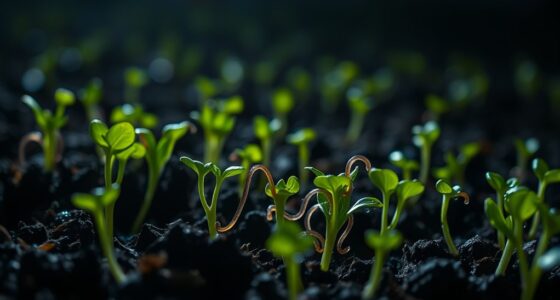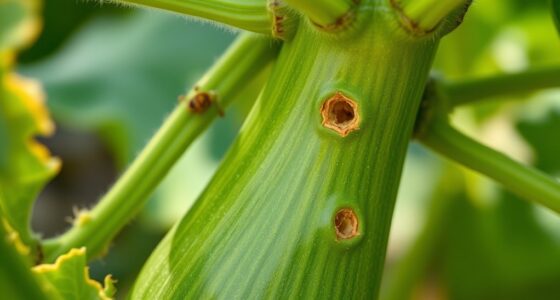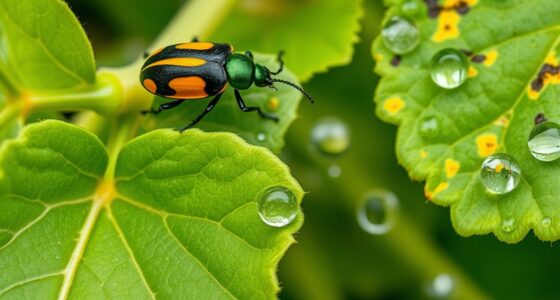
If your pepper plants show spots, wilting, or discoloration, it might look like disease but could actually be environmental stress, pest infestation, or nutrient deficiencies. Common signs include distorted leaves from pests like aphids or whiteflies, or dark spots caused by calcium deficiency. Sometimes, weather extremes or watering issues mimic disease symptoms. By carefully inspecting your plants and considering these factors, you can prevent unnecessary treatments—and there’s more to uncover to help keep your peppers healthy.
Key Takeaways
- Environmental stress like temperature fluctuations or wind damage can cause symptoms resembling disease on pepper plants.
- Pest infestations such as aphids or spider mites often mimic disease signs like leaf distortion or stippling.
- Nutrient deficiencies, especially calcium or magnesium, can create spots or chlorosis that look like disease lesions.
- Damage from weather extremes may cause leaf scorch or cracking, mistaken for disease symptoms.
- Proper diagnosis involves checking for pests, soil health, and environmental factors before applying treatments.
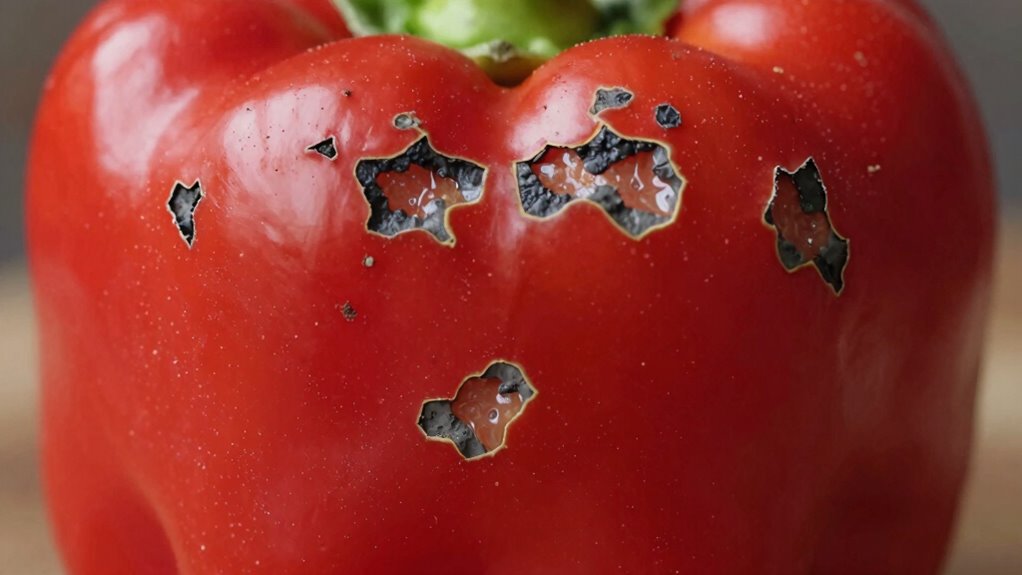
Many gardeners are surprised to find that some damage on their pepper plants resembles disease, but often, it’s simply a result of environmental stress or pests. When your peppers show unusual spots, wilting, or discoloration, it’s easy to assume a plant disease is to blame. However, before rushing to apply fungicides or pesticides, it’s important to observe the symptoms carefully. Sometimes, what looks like a serious illness is just a pest infestation or a nutrient deficiency.
Gardeners often mistake environmental stress or pests for plant diseases—careful observation is key to proper diagnosis.
Pest infestation can cause damage that mimics disease symptoms. Insects like aphids, whiteflies, or spider mites suck sap from your plants, leading to distorted leaves, stippling, or a sticky residue called honeydew. These pests often hide on the undersides of leaves or within the plant’s canopy, making them tricky to spot at first. If you notice fine webbing or small moving insects, you’re likely dealing with a pest problem rather than a disease. Such infestations weaken your plant, cause leaf yellowing, and hinder fruit development, all of which can be mistaken for disease symptoms. Addressing pests quickly with appropriate insecticidal soap, neem oil, or manual removal helps prevent further damage.
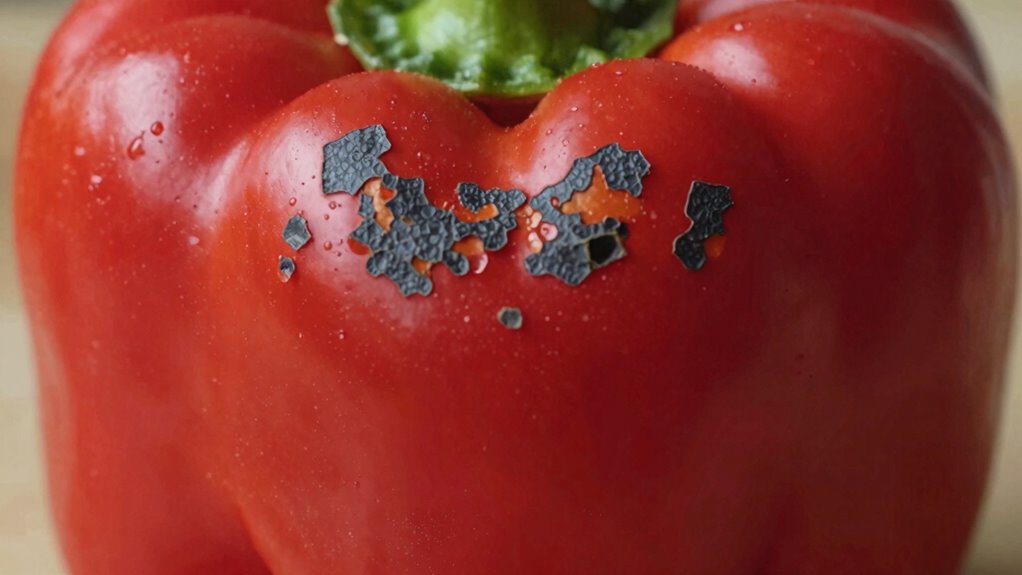
Nutrient deficiency is another common *vital* behind pepper damage that looks like disease. If your plants are lacking essential nutrients like nitrogen, calcium, or magnesium, they’ll show telltale signs. For example, a calcium deficiency often results in blossom end rot, causing dark, sunken spots on the fruit that resemble disease lesions. Nitrogen deficiency can cause pale, yellowing leaves, while magnesium deficiency leads to interveinal chlorosis—yellowing between the veins of the leaves. These deficiencies typically result from poor soil quality, pH imbalance, or inconsistent watering, rather than actual infections. To fix this, you should perform a soil test and amend the soil with the appropriate fertilizers or supplements. Proper watering and soil management can prevent deficiencies from occurring again. Recognizing the importance of soil health is key to preventing these issues in the future. Additionally, understanding the specific symptoms of deficiencies can help you diagnose problems more accurately.
In many cases, the damage isn’t caused by disease at all but by environmental factors. Temperature fluctuations, inconsistent watering, or wind damage can create symptoms that mimic serious disease. It’s *imperative* to diagnose correctly before taking any action. Start by examining your plants closely for pests, checking soil conditions, and considering recent weather patterns. Sometimes, environmental stress can cause leaf scorch, cracking, or other damage that looks like a disease but is actually a response to weather extremes. Often, a combination of pest control and nutritional adjustments can restore your peppers without the need for chemical disease treatments. Remember, taking a step back to properly identify the cause saves you time, money, and unnecessary chemical use, ensuring your pepper plants stay healthy and productive.

Bonide Systemic Houseplant Insect Control, 8 oz Ready-to-Use Granules for Indoors and Outdoors, Protects Plants from Insects
- Protection Duration: Lasts up to 8 weeks
- Application Type: Ready-to-use granular formula
- Odor Level: Low odor
As an affiliate, we earn on qualifying purchases.
As an affiliate, we earn on qualifying purchases.
Frequently Asked Questions
Can Pepper Damage Be Caused by Pests Instead of Disease?
Yes, pepper damage can be caused by pests instead of disease. You should focus on pest identification to determine if insects are responsible. Look for signs like holes, chew marks, or visible insects. Proper insect control methods, such as manual removal or applying suitable insecticides, can help manage pest damage effectively. Recognizing pest damage early allows you to take swift action and protect your pepper plants from further harm.
How Can I Prevent Pepper Damage From Environmental Stress?
To prevent pepper damage from environmental stress, focus on maintaining balanced soil nutrition and proper watering techniques. Guarantee your soil has the right nutrients by testing and amending it as needed. Water your peppers deeply and consistently, avoiding both drought and waterlogging. Mulching helps retain moisture and regulate soil temperature. By managing these factors, you reduce stress on your plants, promoting healthy growth and minimizing damage caused by environmental extremes.
Are Certain Pepper Varieties More Resistant to Damage?
Yes, some pepper varieties are more resistant to damage due to genetic resilience. When you’re choosing cultivars, look for those specifically bred for toughness and stress tolerance. These cultivars can better withstand environmental stressors like extreme weather, pests, and physical injury. By selecting resilient cultivars, you reduce the risk of damage that mimics disease, ensuring healthier plants and better yields. Always research and choose varieties suited to your growing conditions.
What Natural Remedies Help Repair Pepper Plant Damage?
To help repair pepper plant damage naturally, you can use organic sprays like neem oil or insecticidal soap to promote healing and ward off pests. Additionally, practicing companion planting with herbs like basil or marigolds can deter harmful insects and support plant recovery. Keep the soil healthy with compost, and make sure your plants receive proper watering and sunlight, boosting their resilience and encouraging natural repair from within.
How Long Does It Take for Pepper Plants to Recover From Damage?
Did you know that healthy pepper plants can recover from damage in as little as 2 to 4 weeks? Your plant’s resilience plays a key role here. To speed up damage recovery, make sure you provide proper watering, avoid further stress, and give it nutrients. With good care, your pepper plant should bounce back quickly, restoring its vigor and productivity in just a few weeks.

MySoil Soil Test Kit, Unlock Your Lawn & Garden Potential, Complete & Accurate Nutrient and pH Analysis with Recommendations Tailored to Your Soil and Plant Needs
- Professional Soil Testing Kit: Accurately measures nutrients and pH
- Fast Results: Receive analysis in 6-8 days
- Versatile Compatibility: Suitable for all soil types and plants
As an affiliate, we earn on qualifying purchases.
As an affiliate, we earn on qualifying purchases.
Conclusion
So, next time you see those pepper plants with odd spots or blemishes, remember they might just be damage, not disease. Surprisingly, studies show that up to 60% of plant issues are misdiagnosed, leading to unnecessary treatments. By understanding the difference, you can save time, money, and your plants’ health. Keep a close eye on your peppers, and don’t jump to conclusions—sometimes, what looks bad isn’t actually harmful at all.

Garden Safe Insecticidal Soap Insect Killer Spray, 32 Oz
- Ready-to-Use Spray: No mixing needed, spray directly
- Versatile Use: Suitable for indoor, outdoor, greenhouse
- Safe for Edibles: Use up to harvest day
As an affiliate, we earn on qualifying purchases.
As an affiliate, we earn on qualifying purchases.

Rapitest Soil Test Kit for Gardens, Vegetables, Flowers and Lawns. USA designed and assembled soil tester completely, quickly and accurately measures/analyzes soil pH acidity and garden nutrients.
- Quick at-home soil pH testing: Measures soil pH, Nitrogen, Phosphorous, Potash
- Easy-to-use capsule system: Innovative and inexpensive testing method
- Includes 20 tests: 5 tests each for pH, N, P, K
As an affiliate, we earn on qualifying purchases.
As an affiliate, we earn on qualifying purchases.