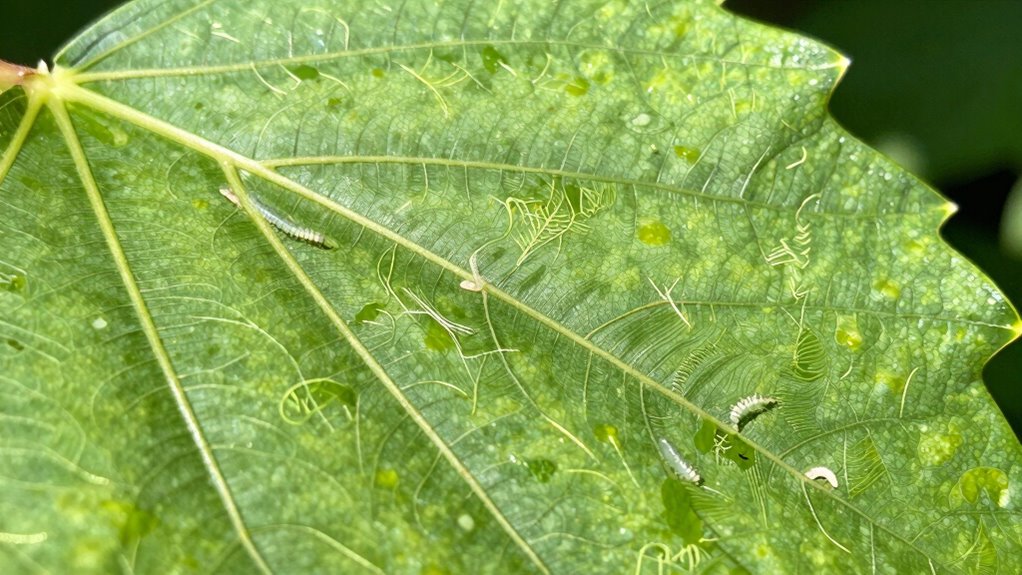
Leafminers often fool gardeners by hiding inside leaves, creating winding trails that look like fungal spots or surface pests. Their internal damage mimics other issues, leading you to misidentify the problem and spray unnecessary chemicals. Since they’re concealed, external pests like aphids seem unlikely suspects, and surface treatments won’t reach them. Recognizing these subtle signs helps prevent mistaking leafminers for other pests—if you keep watching closely, you’ll uncover more about their tricky tactics.

Get garden gear delivered free with Prime
- Fast, free delivery on millions of items
- Prime Video, Amazon Music and more included
- Member-only deals all year
Key Takeaways
- Leafminers create internal trails that mimic symptoms of fungal or surface pests, leading to misdiagnosis.
- External signs like winding lines can be mistaken for surface-chewing pests, causing unnecessary treatments.
- Damage symptoms resemble fungal spots, confusing gardeners and prompting incorrect chemical applications.
- Because pests live inside leaves, surface sprays are ineffective, yet gardeners often treat as if pests are on the surface.
- Misidentification results in unnecessary pesticide use, which wastes resources and can harm beneficial insects.

Have you ever noticed strange trails or blotches on your plants and wondered what’s causing them? It can be frustrating because these markings often look like signs of common pests or diseases, leading you to jump to conclusions. But sometimes, what appears to be a pest infestation isn’t what it seems. This is especially true with leafminers, tiny insects that can fool gardeners into treating the wrong problem. To avoid unnecessary pesticide use and to protect your plants effectively, you need to understand pest identification and damage symptoms thoroughly.
Leafminers are minuscule insects whose larvae tunnel inside leaves, creating distinctive trails and blotches. These damage symptoms often look like the work of other pests or even fungal infections, making it tricky to identify the true culprit. When you see winding, serpentine lines or blotchy patches on your foliage, it’s tempting to assume a common pest like aphids or caterpillars. However, these symptoms are actually the work of leafminer larvae burrowing inside the leaf tissue, not external pests you can see crawling around. Recognizing these specific damage symptoms is vital because it guides you toward the right treatment. Understanding pest behavior can help you distinguish between internal and external pest damage more accurately.
Leafminer damage appears as winding trails and blotches, indicating internal larvae rather than external pests.
Misidentifying pests can lead to unnecessary or ineffective treatments. Applying broad-spectrum insecticides for what you think is an aphid problem won’t eliminate leafminers since they live inside the leaves, shielded from surface sprays. This mistake wastes resources and can harm beneficial insects or your plant’s health. Instead, focus on accurate pest identification by inspecting leaves closely—look for the signature trails, which are often winding and narrow, or for the presence of tiny pupae and adult leafminers fluttering around. Knowing what to look for helps you differentiate leafminer damage from other issues like fungal spots or other pests that chew on the leaf surface. Understanding pest identification is crucial for effective management and avoiding unnecessary treatments. Recognizing that diagnosing plant problems involves careful observation prevents misapplication of treatments and promotes healthier plants.
Once you’ve correctly identified leafminers, you can choose targeted control methods. These might include removing and destroying infested leaves, introducing natural predators like parasitic wasps, or using specific insecticides designed for internal pests. The key is to act early before the larvae cause extensive damage. Recognizing the difference between leafminer damage symptoms and other problems guarantees you don’t waste time fighting the wrong enemy and helps keep your garden healthy and thriving. Being attentive to pest identification and damage symptoms is your best strategy to manage leafminers effectively and avoid unnecessary treatments.
As an affiliate, we earn on qualifying purchases.
Frequently Asked Questions
Are Leafminers Harmful to Edible Crops?
Yes, leafminers can be harmful to edible crops as they damage leaves, affecting photosynthesis and crop yield. To control them, you might consider chemical control for quick results, but organic methods like introducing natural predators or using neem oil are safer and eco-friendly options. Be sure to monitor your plants regularly to catch infestations early, and avoid overusing chemicals that could harm beneficial insects or compromise your crop’s safety.
How Can I Distinguish Leafminer Damage From Other Pests?
To distinguish leafminer damage from other pests, focus on leafminer identification by looking for winding, serpentine tunnels inside the leaves, which are unique to their activity. Damage differentiation is key—leafminers create fine, winding trails, unlike the irregular holes or chewed edges caused by other pests. Carefully inspect leaves for these distinctive trails, and remember, healthy-looking leaves with internal mines signal leafminer presence, guiding you to targeted and effective treatment.
Do Natural Predators Effectively Control Leafminers?
Natural predators can effectively control leafminers through biological control, reducing the need for chemical treatments. Beneficial insects like parasitic wasps target leafminer larvae, helping keep populations in check. Accurate pest identification is essential—you need to recognize leafminer damage early to introduce the right predators. When you use biological control properly, you promote a healthy garden ecosystem and minimize harm to beneficial insects and the environment.
What’s the Best Time to Treat for Leafminers?
You should treat leafminers when you notice fresh, winding mines on leaves or early larvae stages, typically in spring or early summer. Monitoring timing is essential; check your plants regularly for signs of activity. Understanding the pest lifecycle helps you target treatments effectively, ideally before larvae mature and cause more damage. Acting early guarantees you interrupt their development and prevent widespread infestation, making your control efforts more successful.
Can Leafminers Infect Multiple Plant Species?
Yes, leafminers can infect multiple plant species, especially if those plants are susceptible. Your garden’s plant susceptibility varies, making some more vulnerable to cross infestation risks. When leafminers target one plant, they might easily spread to nearby species, spreading damage across your garden. To prevent this, monitor all susceptible plants closely, and consider managing them together to reduce cross infestation risks and protect your entire garden ecosystem.
As an affiliate, we earn on qualifying purchases.
Conclusion
So, next time you spot those tiny tunnels, remember leafminers might be disguising themselves. Don’t rush to treat without proper identification—mistakes can harm your plants more than the pests. Patience and careful observation save you money and stress. Sometimes, the best action is to let nature take its course. Trust your knowledge and avoid unnecessary chemicals; in the long run, a balanced approach keeps your garden healthier and more resilient.
garden insect identification kit
As an affiliate, we earn on qualifying purchases.
As an affiliate, we earn on qualifying purchases.
targeted insecticides for leafminers
As an affiliate, we earn on qualifying purchases.
As an affiliate, we earn on qualifying purchases.
Fall Picks
fall essentials
As an affiliate, we earn on qualifying purchases.