
You might think that mason bee houses only need occasional cleaning, but they actually require regular maintenance to keep your pollinators healthy. Without cleaning, debris, old cocoons, and pests can build up, increasing the risk of disease and parasites that can weaken or kill the bees. Proper cleaning, especially in fall or early spring, helps prevent these issues and promotes thriving, productive bees. Keep going to discover how to do this effectively and guarantee your bees’ safety.

Get garden gear delivered free — and shop member deals
- Fast, free delivery on millions of items
- Access to Prime Big Deal Days deals on October 6–7
- Prime Video, Amazon Music and more included
Key Takeaways
- Mason bee houses accumulate debris, mold, and pests that can harm bee health if not regularly cleaned.
- Neglecting cleaning increases risks of disease spread and parasite infestations among solitary bees.
- Proper maintenance prevents infections that weaken or kill bee populations, especially in urban environments.
- Regular cleaning during fall or early spring ensures healthy, productive bees and supports pollinator conservation.
- Using gentle methods like brushes or water, without harsh chemicals, keeps houses safe for new bee generations.
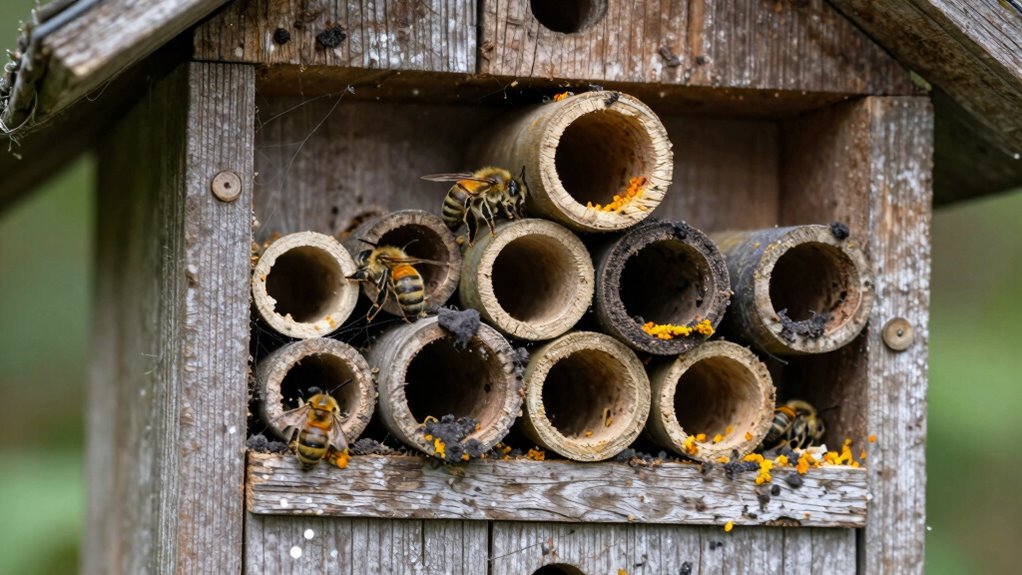
As the seasons change, it’s essential to clean your mason bee houses to guarantee the health and safety of your pollinators. Many people overlook this step, but proper cleaning plays a critical role in pollinator conservation. If you’re passionate about urban gardening, maintaining clean bee houses ensures your pollinators remain healthy and productive. Mason bees are excellent for pollinating flowers, vegetables, and fruit trees, but neglecting their homes can lead to disease, parasites, and reduced bee populations. Cleaning isn’t just about hygiene; it’s about creating a safe environment that encourages bees to thrive year after year.
Regularly cleaning mason bee houses ensures healthy, thriving pollinators and supports sustainable urban gardening efforts.
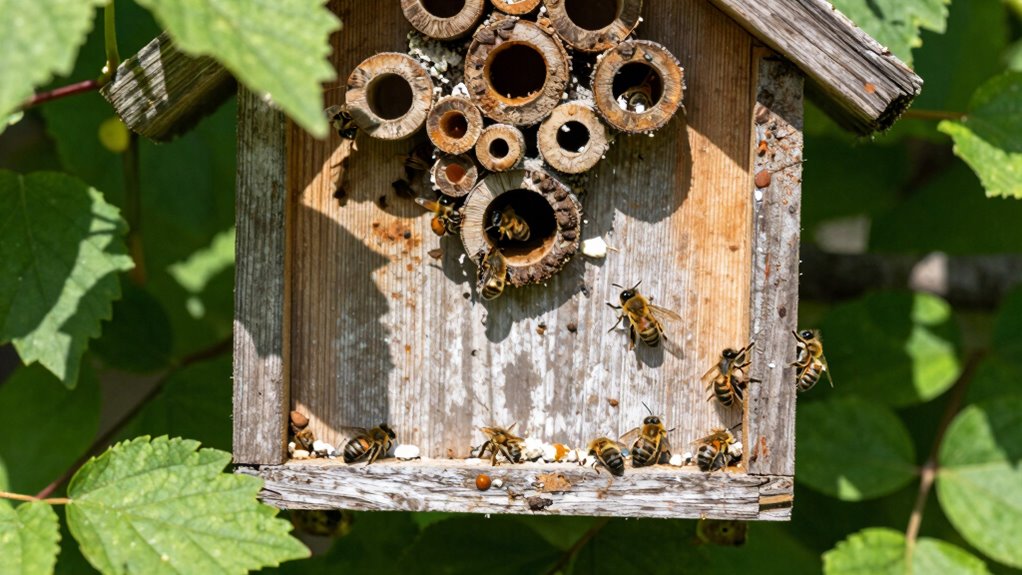
You might think that since mason bees are solitary creatures, they don’t need as much attention as honeybees or other social bees. That’s a misconception. Even though they don’t live in colonies, they still face threats from mold, bacteria, and pests that can quickly spread if their homes aren’t cleaned regularly. During the off-season, debris, old cocoons, and pests can accumulate inside the nesting tubes or cavities. If left unaddressed, this buildup can cause infections or infestations that weaken or kill the bees. Cleaning your mason bee houses thoroughly after each season helps prevent these issues, promoting healthy pollinator populations essential for pollinator conservation efforts. Recognizing the importance of biodiversity in supporting resilient ecosystems highlights how vital these small actions are for broader environmental health. Regular maintenance also helps prevent the buildup of harmful pathogens, ensuring a healthier environment for your bees. Moreover, understanding the natural behaviors of solitary bees can help inform better habitat management practices that support their survival. Maintaining clean habitats also reduces the chance of disease transmission, which is crucial for the longevity of local bee populations.
In urban gardening settings, where space is limited and natural habitats are scarce, mason bees become even more indispensable. These bees are effective pollinators and can greatly boost your garden’s productivity. However, because urban environments often expose bees to pollutants and pathogens, maintaining their homes becomes an essential responsibility. Regular cleaning reduces the risk of disease spread and keeps the bees’ environment clean and safe. This simple act supports local pollinator populations and contributes to the broader goal of pollinator conservation, which is key for sustainable urban gardening.
Cleaning your mason bee houses isn’t complicated, but it does require a bit of effort. During fall or early spring, remove all old nesting material, dead bees, and debris. Use a brush or a gentle stream of water to clear out any remaining dirt. Avoid harsh chemicals that could harm the bees or leave residues that might affect new generations. Instead, opt for natural cleaning methods. Once cleaned, allow the houses to dry thoroughly before reassembling and placing them back in your garden. This routine maintenance not only protects your current pollinators but encourages new bees to occupy the space, supporting ongoing pollinator conservation and the health of your urban garden.
As an affiliate, we earn on qualifying purchases.
Frequently Asked Questions
How Often Should I Replace the Bee House Entirely?
You should replace your Mason bee habitat entirely every 2-3 years. Regular cleaning helps maintain a healthy bee house design, preventing disease and parasites. If you notice signs of damage, mold, or pest infestation, consider replacing it sooner. Proper maintenance, including cleaning and guaranteeing good airflow, extends the life of your bee house. Changing it periodically ensures your mason bees stay healthy and continue to thrive in their habitat.
Can Cleaning Harm the Mason Bees?
Cleaning your mason bee house carefully won’t harm the bees if you avoid harsh chemicals and pesticides. You should clean it gently to remove debris and parasites, helping habitat preservation. Regular cleaning also reduces pesticide concerns, keeping your bees healthy. Always wait until the bees are gone before cleaning, and use natural solutions if needed. This way, you protect the bees while maintaining a safe, clean habitat for their continued nesting.
What Tools Are Safest for Cleaning Bee Houses?
Picture yourself gently scrubbing a mason bee house with a soft brush, sunlight filtering through. For natural cleaning, use a small, stiff-bristled brush or a plastic scraper, avoiding metal tools that could damage the delicate structures. Tool safety is key; opt for gentle, non-abrasive items to prevent harming bees or their homes. This careful approach keeps your bee house clean without risking harm to these essential pollinators.
Should I Use Soap or Chemicals During Cleaning?
You should avoid soap or harsh chemicals when cleaning your mason bee house. Instead, opt for natural cleaning methods, like scrubbing with warm water and a brush. You can also use chemical alternatives like vinegar or baking soda, which are safe for bees and effective at removing dirt and debris. These options keep the environment healthy for your mason bees while ensuring their nesting site stays clean and safe.
How Do I Know if My Bee House Is Infested?
You’ll know your bee house is infested if you see mold, excess debris, or dead bees inside. Regular inspections help with pest prevention and habitat restoration, keeping your mason bees healthy. If you notice holes or pests like beetles or mites, it’s time to clean thoroughly. Use gentle cleaning methods without harsh chemicals to protect the bees. Prompt action guarantees a safe, thriving environment for your mason bees.
solitary bee habitat maintenance kit
As an affiliate, we earn on qualifying purchases.
As an affiliate, we earn on qualifying purchases.
Conclusion
So, the next time you’re cleaning your mason bee house, remember it’s more than just tidying up — it’s helping these tiny pollinators thrive. Funny enough, the very act of cleaning might be what keeps your garden buzzing with life. Coincidentally, just as you clear out old cocoons, new bees are waiting to hatch, ready to pollinate. Your effort directly influences their success, making cleaning more than a chore — it’s a small act of nature’s renewal.
As an affiliate, we earn on qualifying purchases.
As an affiliate, we earn on qualifying purchases.
Fall yard work Picks
leaf blowers
As an affiliate, we earn on qualifying purchases.