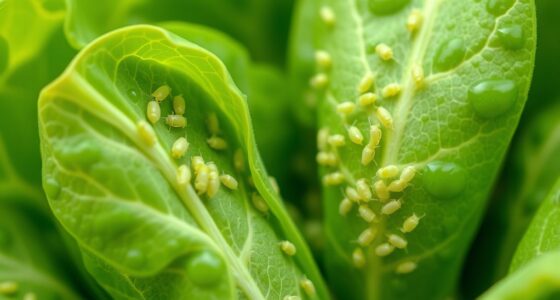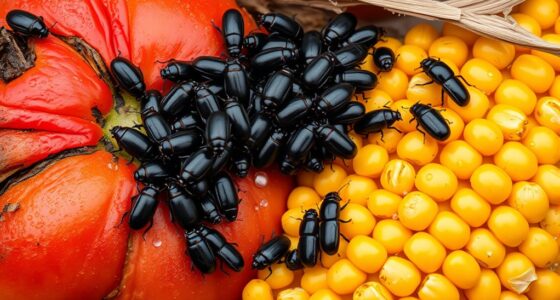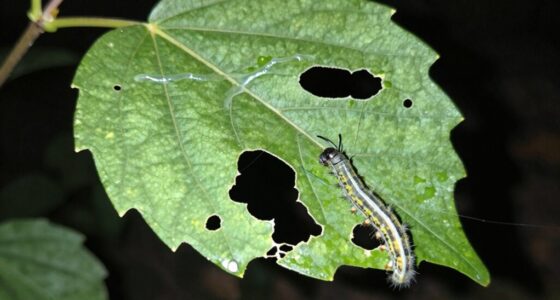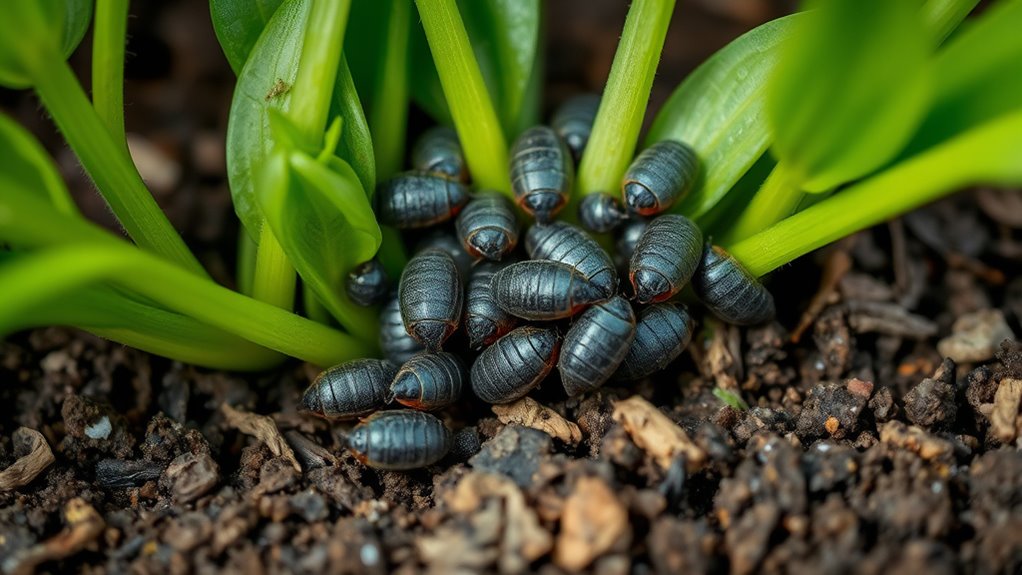
If pillbugs and sowbugs are feeding on your seedlings, you’ll notice chewed or decayed plant tissue, especially in dark, moist areas. These pests prefer hiding under mulch, leaf litter, or around soil surfaces. To control them, hand-pick pests, remove decaying debris, and reduce excess moisture to make conditions less inviting. Attracting natural predators like ground beetles and birds can also help. Keep exploring for more effective tips to protect your plants from these tiny intruders.

Get garden gear delivered free with Prime
- Fast, free delivery on millions of items
- Prime Video, Amazon Music and more included
- Member-only deals all year
Key Takeaways
- Pillbugs and sowbugs feed on decayed plant material but can damage seedlings by chewing on tender tissues.
- They thrive in dark, moist environments around seedlings, increasing the risk of feeding damage.
- Early identification involves inspecting seedlings for chewed or decayed tissue and spotting tiny bugs.
- Natural predators like ground beetles and birds can help control pillbug and sowbug populations.
- Physical removal methods, such as hand-picking and water sprays, are effective for small infestations.
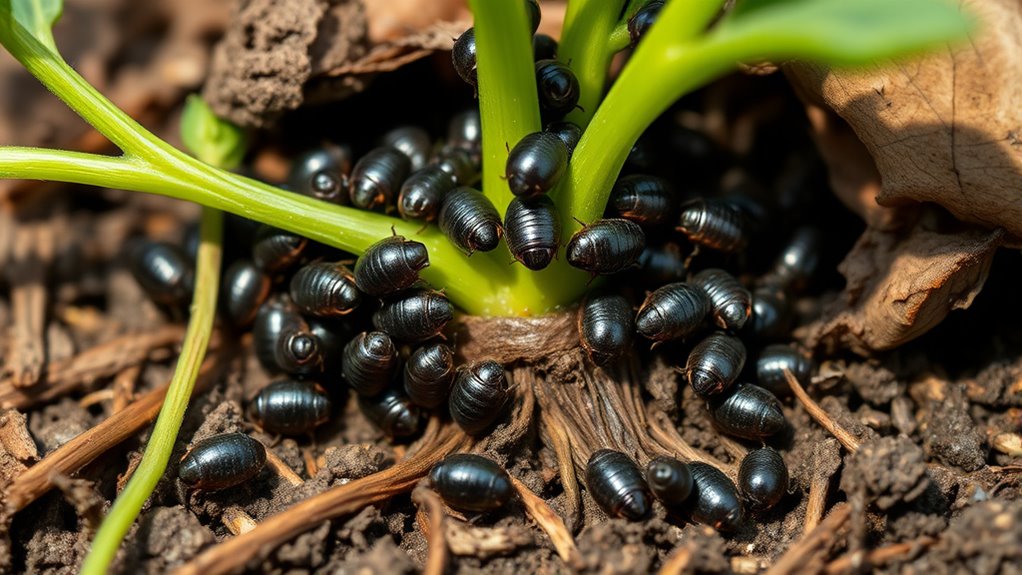
Have you noticed tiny bugs damaging your seedlings? If so, you’re likely dealing with pillbugs or sowbugs munching on your young plants. These small crustaceans often go unnoticed until you see the damage they cause. The key to protecting your seedlings is understanding pest control methods that are effective and environmentally friendly. While chemical pesticides might seem tempting, they’re not always the best choice for delicate seedlings or in organic gardening. Instead, consider natural predators that can help keep pillbugs and sowbugs in check without harming your plants or the surrounding ecosystem.
One of the most effective pest control methods involves encouraging natural predators to take care of these pests. Certain beetles, like ground beetles, prey on pillbugs and sowbugs, naturally reducing their populations. By creating a welcoming environment for these beneficial insects, you can establish a natural balance in your garden. You might leave some leaf litter or mulch around your seedlings, as it provides shelter for these predators. Additionally, some bird species feed on pillbugs and sowbugs, so attracting birds by installing bird feeders or nesting boxes can also help keep pest numbers down.
Another helpful pest control method is physical removal. If you notice a small infestation, simply hand-picking the bugs from your seedlings can make a significant difference. Be sure to check the undersides of leaves and around the base of your plants, where pillbugs and sowbugs like to hide. Using a gentle spray of water can also dislodge these pests, making it easier to collect and dispose of them. Regularly inspecting your seedlings and removing pests early prevents them from causing extensive damage.
Creating a less hospitable environment for pillbugs and sowbugs can further protect your seedlings. These pests thrive in moist, dark conditions, so reducing excess moisture around your plants is essential. Improve drainage in your soil, avoid overwatering, and remove any decaying plant material that might attract them. Keeping the area tidy and dry discourages these pests from settling in your garden. Additionally, knowledge of store hours can help gardeners plan their shopping trips for gardening supplies to maintain proper garden care routines and pest control products.
natural pest control for pillbugs and sowbugs
As an affiliate, we earn on qualifying purchases.
As an affiliate, we earn on qualifying purchases.
Frequently Asked Questions
Do Pillbugs and Sowbugs Prefer Specific Seedling Types?
Yes, pillbugs and sowbugs tend to prefer certain seedling types based on vulnerability and pest preference. They usually go after seedlings with softer, more tender tissue, which makes them more attractive targets. You might notice they favor seedlings with high moisture levels or those growing in damp, shady areas. To protect your plants, monitor vulnerable seedlings closely and consider reducing moisture around them, as this can help deter these pests.
Are There Natural Predators to Control These Pests?
Did you know natural predators can reduce pillbug and sowbug populations by up to 60%? You can encourage beneficial insects like ground beetles and spiders in your garden as part of organic pest control. Incorporate companion planting, such as marigolds or garlic, to deter these pests naturally. By fostering a healthy ecosystem, you make it easier to keep pillbugs and sowbugs away from your seedlings without chemicals.
How Can I Prevent Infestations in My Garden?
To prevent infestations, you should manage your compost properly by turning it regularly and avoiding excess moisture, which attracts pillbugs and sowbugs. Select mulch that’s dry and coarse, like straw or wood chips, instead of overly damp or organic mulches that provide shelter. Keep garden beds free of debris and avoid overwatering. These steps create an environment less inviting for pests, helping protect your seedlings naturally.
Do Environmental Conditions Affect Their Feeding Habits?
Like a playwright shaping a scene, environmental conditions influence pillbugs and sowbugs’ feeding. High humidity impacts their activity, making them more likely to forage on seedlings. Similarly, soil temperature plays a role; warmer conditions can increase their movement and feeding habits. You’ll notice more damage during moist, warm periods. To protect your plants, monitor humidity levels and soil temperature, adjusting watering practices to create less inviting conditions for these pests.
Can They Cause Long-Term Damage to My Plants?
Yes, pillbugs and sowbugs can cause long-term damage to your plants if pest identification isn’t made early. They thrive in moist soil conditions, so high soil moisture can lead to widespread infestations. Their feeding habits can weaken seedlings over time, potentially stunting growth or killing young plants. Regularly check your soil and plants, and address infestations promptly to protect your garden’s health and prevent lasting damage.
garden beneficial insect attractants
As an affiliate, we earn on qualifying purchases.
As an affiliate, we earn on qualifying purchases.
Conclusion
If you notice pillbugs and sowbugs feasting on your seedlings, don’t let them turn your garden into a buffet. Think of these pests as uninvited guests at your plant party—eating away without permission. Act quickly by removing debris, dampening the soil, or introducing natural predators. With a little effort, you can protect your young plants and keep your garden thriving. Remember, a vigilant gardener is like a shepherd guarding their flock—steadfast and ready.
garden mulch with pest deterrent
As an affiliate, we earn on qualifying purchases.
As an affiliate, we earn on qualifying purchases.
hand-pick pest removal tools for seedlings
As an affiliate, we earn on qualifying purchases.
As an affiliate, we earn on qualifying purchases.
Fall Picks
fall essentials
As an affiliate, we earn on qualifying purchases.