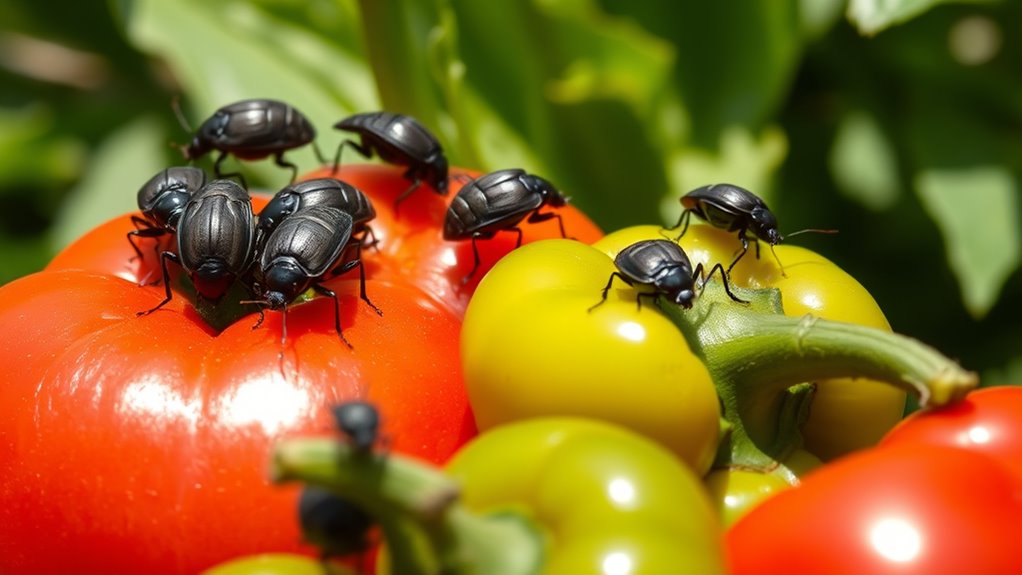
If you notice holes, blemishes, or scars on your tomatoes and peppers, stink bugs might be the culprit. These pests feed on fruits and leaves, reducing your harvest. To control them, attract natural predators like parasitic wasps and beneficial beetles by planting marigolds or sunflowers, or use targeted organic sprays like neem oil. Avoid broad pesticides to protect helpful insects. For effective, eco-friendly pest management, there’s more to discover, so keep going.

Get garden gear delivered free with Prime
- Fast, free delivery on millions of items
- Prime Video, Amazon Music and more included
- Member-only deals all year
Key Takeaways
- Look for holes, blemishes, and visible stink bugs on tomato and pepper plants as signs of infestation.
- Release parasitic wasps and encourage beneficial insects like assassin bugs to naturally control stink bug populations.
- Plant flowering plants such as marigolds and sunflowers to attract natural predators and promote a balanced ecosystem.
- Use targeted organic pesticides like insecticidal soap or neem oil, avoiding broad-spectrum chemicals that harm beneficial insects.
- Combine natural predators with selective pesticide application and maintain garden health for integrated stink bug management.
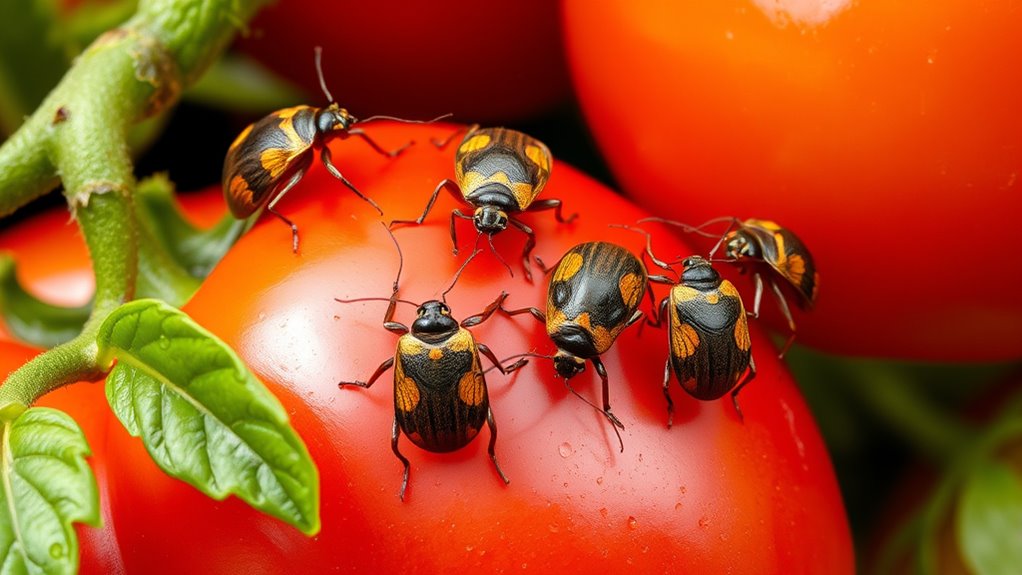
If you’ve noticed unusual holes or blemishes on your tomatoes and peppers, stink bugs might be the culprits. These pests can cause significant damage to your garden crops, leaving behind unsightly marks and reducing your harvest. Understanding how to manage them effectively begins with knowing about natural predators and pesticide options.
Natural predators are a safe and eco-friendly way to control stink bug populations. Beneficial insects like parasitic wasps, assassin bugs, and certain species of predatory beetles feed on stink bugs and can help keep their numbers in check. Introducing or encouraging these natural predators in your garden creates a balanced ecosystem, reducing the need for chemical interventions. For instance, planting flowering plants like marigolds or sunflowers attracts beneficial insects, creating a habitat that supports their presence. Additionally, releasing commercially available parasitic wasps can target stink bug eggs directly, lowering future infestations without harming other beneficial insects or your plants.
Encourage natural predators like parasitic wasps and beneficial insects to control stink bugs sustainably.
When it comes to pesticide options, it’s crucial to choose carefully. Many chemical pesticides are broad-spectrum and can harm beneficial insects, pollinators, and your garden’s overall health. If you decide to use pesticides, opt for those specifically formulated for stink bugs and follow the label instructions meticulously. Products containing insecticidal soaps or neem oil are often effective against stink bugs and are considered less harmful to the environment. These organic options can be applied directly to affected plants, targeting the pests while minimizing collateral damage. Remember, timing is critical; applying pesticides early in the morning or late in the evening when stink bugs are less active can improve their effectiveness and reduce the impact on beneficial insects. Incorporating targeted control methods can further enhance your stink bug management strategy.
parasitic wasps for stink bug control
As an affiliate, we earn on qualifying purchases.
As an affiliate, we earn on qualifying purchases.
Frequently Asked Questions
Are There Natural Predators That Control Stink Bug Populations?
Yes, natural predators play a key role in controlling stink bug populations through biological control. You might find parasitic wasps, such as Trissolcus japonicus, which specifically target stink bugs and help keep their numbers in check. Lady beetles and certain birds also feed on stink bugs. By encouraging these natural predators in your garden, you can reduce stink bug damage without relying heavily on chemical pesticides.
Can Stink Bugs Transmit Diseases to Tomatoes and Peppers?
No, stink bugs don’t transmit diseases to tomatoes and peppers. Their damage mainly causes cosmetic issues and plant stress, but they don’t spread pathogens like some other pests. However, if you notice significant damage, you might consider chemical treatments to control their population. While natural predators help, they don’t prevent disease transmission because stink bugs aren’t known to carry plant diseases, making chemical control a more reliable option if needed.
What Are the Best Times of Year to Monitor for Stink Bugs?
Think of stink bugs as houseguests who arrive when you least expect them. You should start seasonal monitoring in early spring and continue through fall, especially during their peak infestation periods in late summer and early fall. Keep an eye out for them when temperatures warm up and as crops mature. Regular checks during these times help catch infestations early, so you can manage them before they become a full-blown problem.
Do Certain Tomato or Pepper Varieties Resist Stink Bugs Better?
Certain tomato varieties, like resistant tomato varieties, are less attractive to stink bugs, helping you reduce infestations. Pepper cultivar differences also matter; some peppers naturally repel stink bugs better than others. By choosing resistant tomato varieties and selecting peppers with known pest-resistant traits, you can lower your chances of stink bug damage. Mixing these resistant cultivars into your garden gives you a proactive way to protect your plants naturally.
How Long Do Stink Bugs Typically Stay on Plants Before Moving On?
Stink bugs tend to linger on plants for about a week before they move on, like travelers staying at a stopover. Their lifespan varies, but generally, they stay until they’ve fed enough or environmental cues trigger seasonal movement patterns. As temperatures change, they migrate, so their stay depends on the season and food availability. Keep an eye out, and you might catch them before they leave!
organic neem oil for vegetable pests
As an affiliate, we earn on qualifying purchases.
As an affiliate, we earn on qualifying purchases.
Conclusion
Just like a small leak can sink a ship, a few stink bugs can ruin your prized tomatoes and peppers. I once watched a gardener lose half his harvest overnight, overwhelmed by these tiny invaders. But with regular checks and prompt action, you can keep them at bay. Think of each bug you spot as a tiny thief—you have the power to protect your crop before they steal your summer’s bounty. Stay vigilant!
beneficial insects for garden pest management
As an affiliate, we earn on qualifying purchases.
As an affiliate, we earn on qualifying purchases.
insecticidal soap for tomatoes and peppers
As an affiliate, we earn on qualifying purchases.
As an affiliate, we earn on qualifying purchases.
Halloween Picks
halloween
As an affiliate, we earn on qualifying purchases.