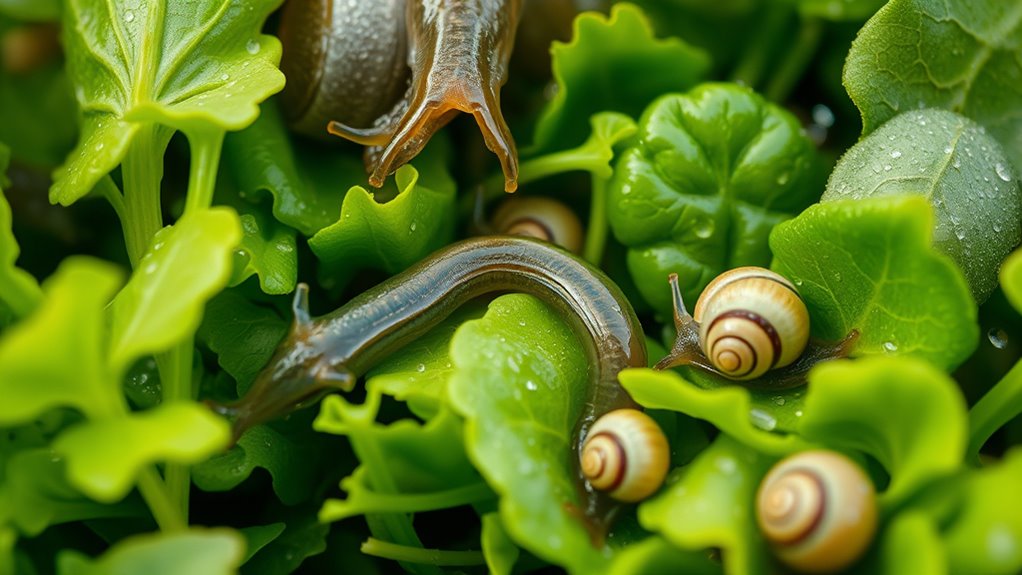
If slugs and snails invade your salad greens, you can take natural steps to protect them. Remove excess moisture, clear debris, and use physical barriers like copper tape or diatomaceous earth. Plant slug-resistant varieties or attract beneficial predators such as birds and beetles to keep pests in check. Companion plants like garlic or marigolds can also help deter these pests. To learn more effective, eco-friendly strategies, continue exploring solutions tailored to organic gardening.
Key Takeaways
- Tiny slugs and snails thrive in damp, shady salad green environments, damaging crops and reducing quality.
- Use physical barriers like copper tape or diatomaceous earth to effectively deter slugs and snails.
- Incorporate resistant crops and companion plants such as garlic or marigolds to naturally repel pests.
- Reduce moisture and clear debris to eliminate hiding spots, making the environment less hospitable for pests.
- Encourage natural predators like birds and ground beetles to control slug and snail populations organically.
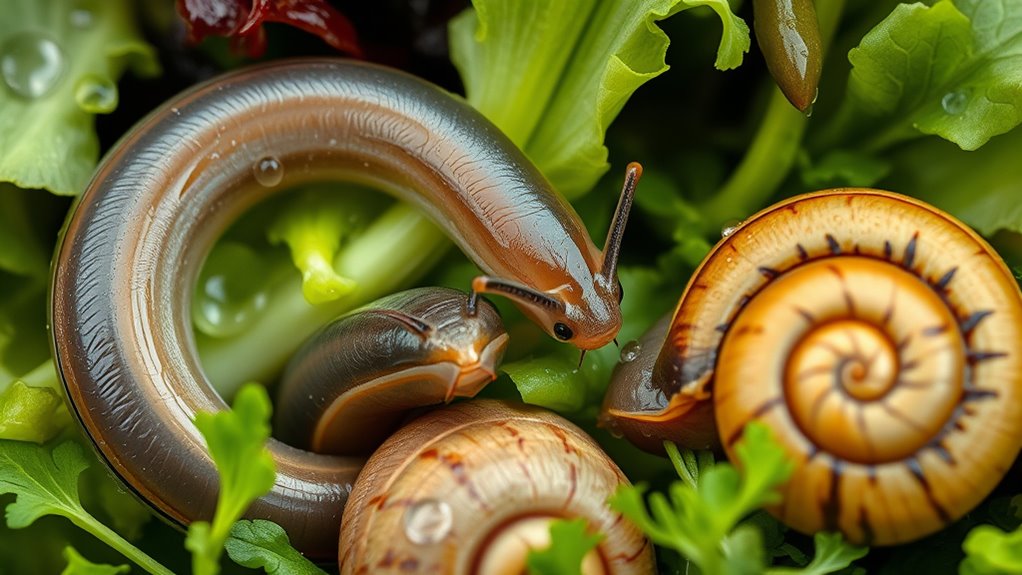
If you’ve ever noticed tiny slugs or snails in your salad greens, you’re not alone. These unwelcome visitors can quickly turn an otherwise fresh harvest into a slimy, unappetizing mess. Fortunately, there are effective ways to manage these pests without resorting to harsh chemicals. Organic pest control methods focus on natural solutions that minimize environmental impact and promote healthy crops. One of the best strategies is to grow slug-resistant crops, which are less appealing or accessible to these mollusks. Selecting plant varieties with tough leaves or coatings can markedly reduce damage. For example, some leafy greens or herbs have natural defenses that slugs find unpalatable, making them ideal choices for organic gardening. When you plan your garden, consider incorporating these resistant crops alongside other plants to create a natural barrier against invasion.
Implementing organic pest control starts with understanding the habits of slugs and snails. They thrive in damp, shady environments, often hiding under leaves or debris during the day and coming out at night to feed. To discourage them, you should reduce excess moisture and eliminate hiding spots around your garden. Regularly clearing away leaves, weeds, and organic debris deprives these pests of shelter and breeding grounds. You can also create physical barriers like copper tape or diatomaceous earth around your garden beds, which irritate or deter slugs when they attempt to cross. These methods are safe, environmentally friendly, and effective when combined with other organic controls. Additionally, vetted pest control products can provide supplementary support in managing persistent infestations.
Another approach involves encouraging natural predators, such as birds, frogs, and ground beetles, which feed on slugs and snails. Providing habitats like birdhouses, water sources, or mulch layers can attract these beneficial creatures to your garden. Additionally, you might consider planting companion plants that repel slugs, such as garlic, chives, or marigolds, which emit odors that slugs dislike. Organic bait traps made from beer or yeast solutions can also trap slugs without harming other beneficial insects. Whenever you implement these methods, consistency is key; regular maintenance and vigilance will help keep slug populations under control.
![Kraftex Copper Tape [1 Inch x 66ft] – Conductive Copper Foil Tape with Adhesive for Stained Glass, Slug Barrier, Guitar Shielding & Faraday Cage](https://m.media-amazon.com/images/I/51R1IRCouIL._SL500_.jpg)
Kraftex Copper Tape [1 Inch x 66ft] – Conductive Copper Foil Tape with Adhesive for Stained Glass, Slug Barrier, Guitar Shielding & Faraday Cage
Molluscs and More: Copper tape is a great way to keep those pesky slugs away from your garden…
As an affiliate, we earn on qualifying purchases.
As an affiliate, we earn on qualifying purchases.
Frequently Asked Questions
How Do Slugs and Snails Affect Overall Garden Health?
Slug impact and snail activity can considerably harm your garden’s health. They feed on leaves, stems, and roots, causing damage that stunts plant growth and creates entry points for diseases. Their activity often leads to unsightly holes and decayed plants, reducing overall yield. By controlling slug impact and snail activity, you protect your garden’s ecosystem, ensuring healthier plants and better harvests while preventing the spread of pests and pathogens.
Are There Natural Predators for Slugs and Snails?
Yes, you can find natural predators for slugs and snails, including birds, beetles, and ground beetles. To identify these predators, look for signs of their presence, such as bird droppings or beetle activity. Evaluating predator effectiveness helps you decide if they control pests well or need a boost. Encouraging these beneficial creatures naturally nurtures your garden’s health, helping keep pesky slugs and snails at bay without chemicals.
Can Organic Methods Effectively Control Slug and Snail Infestations?
Yes, organic methods can effectively control slug and snail infestations. You can use companion planting with plants like marigolds or nasturtiums to deter them naturally. Additionally, organic barriers such as crushed eggshells, diatomaceous earth, or copper tape create physical obstacles that discourage slugs and snails from reaching your greens. Combining these methods enhances your garden’s defense, reducing the need for chemical controls and keeping your salad greens safe and healthy.
What Are the Signs of a Severe Slug or Snail Infestation?
You’ll notice severe slug or snail infestation by extensive slug damage, such as ragged holes or slime trails on your greens. Don’t overlook snail trails, which are silvery, mucus-lined paths showing their movement. These signs indicate a serious problem, and the more you see, the greater the infestation. Acting early helps prevent crop loss, so keep an eye out for these clues and respond promptly to protect your harvest.
Do Slugs and Snails Spread Plant Diseases?
Yes, slugs and snails can spread plant diseases. They carry slug-borne pathogens and snail-transmitted viruses that infect your plants. When they crawl over leaves and greens, they deposit these harmful organisms, increasing the risk of disease spread. This can weaken your plants and reduce crop quality. To protect your garden, keep an eye out for these pests, and remove them promptly to prevent disease transmission.

HARRIS Diatomaceous Earth Food Grade, 4lb with Powder Duster Included in The Bag
Natural Product – Composed of 4lbs of 100% ground freshwater diatomaceous earth with absolutely no additives or fillers.
As an affiliate, we earn on qualifying purchases.
As an affiliate, we earn on qualifying purchases.
Conclusion
So, the next time you reach for fresh salad greens, remember the tiny intruders lurking beneath. They’re harmless in the jar, but in your salad, they can be unwelcome guests. Like hidden secrets in a peaceful garden, slugs and snails remind you that beauty often hides beneath the surface. Stay vigilant, wash thoroughly, and enjoy your greens with peace of mind—because even in freshness, surprises can still crawl in.

Qualirey 10 Pcs Beer Slug Snail Traps 3.86 x 4.41 Inch Plastic Snail Trapper Reusable Snails Catcher Slug House for Garden Farm
Package Includes: you will receive 10 snail traps, which can easily fight against snail and slug infestation, effectively…
As an affiliate, we earn on qualifying purchases.
As an affiliate, we earn on qualifying purchases.

Sereniseed Certified Organic Leafy Greens Lettuce Seeds Collection (10-Pack) – 100% Non GMO, Open Pollinated – Grow Guide
USDA Certified Organic by Oregon Tilth
As an affiliate, we earn on qualifying purchases.
As an affiliate, we earn on qualifying purchases.