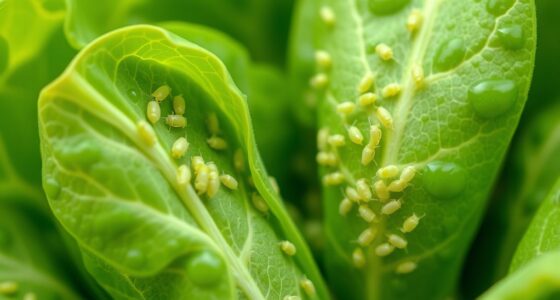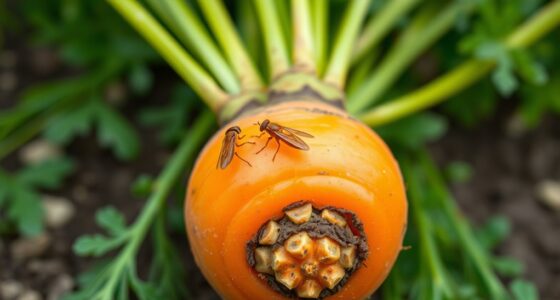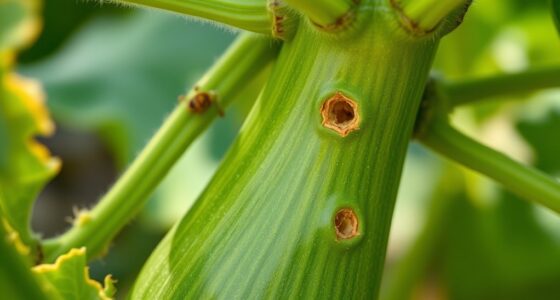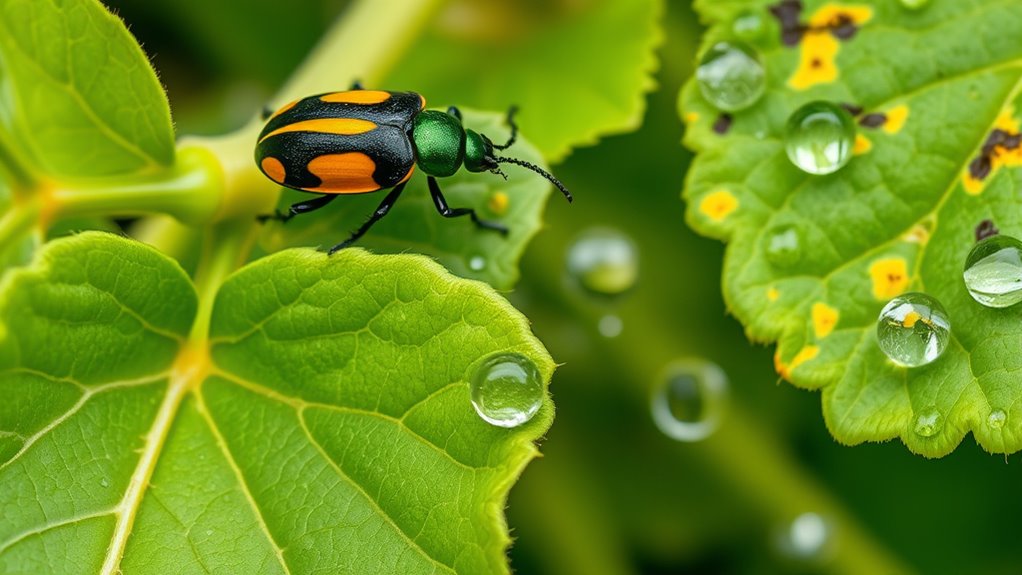
Cucumber beetles are the main way bacterial wilt spreads to your plants. When these beetles feed on cucumber and squash vines, they can inject bacteria that cause the disease. Once infected, plants wilt and often die quickly. Managing beetle populations reduces the risk of bacterial wilt and helps keep your garden healthy. If you want smarter strategies to protect your crops and understand the connection better, there’s more to discover.
Key Takeaways
- Cucumber beetles are primary vectors transmitting bacterial wilt pathogens to cucurbit plants.
- Beetle feeding creates entry points for bacterial wilt bacteria into plant tissues.
- High beetle populations increase the risk of bacterial wilt spread across crops.
- Managing beetle populations reduces the likelihood of bacterial wilt infection.
- Integrated pest control methods are essential to prevent bacterial wilt transmission by cucumber beetles.
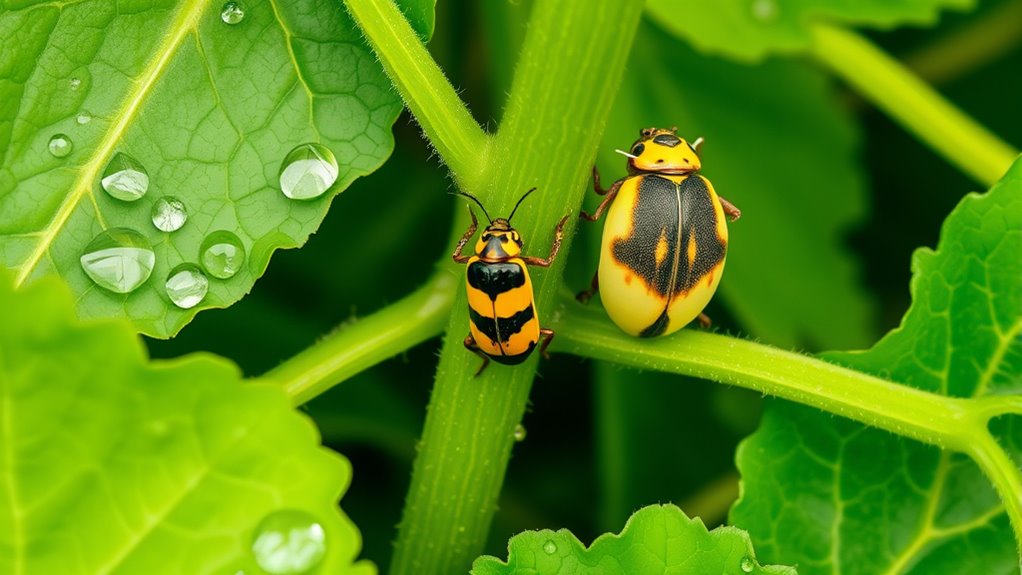
To combat this threat, implementing integrated pest management (IPM) is your best approach. IPM emphasizes combining cultural, biological, and chemical controls to reduce beetle populations while minimizing environmental impact. Start by inspecting your plants regularly, especially during peak beetle activity in late spring and summer. Handpicking beetles can be effective if populations are low, and removing plant debris or weeds around your garden can reduce beetle habitat. Using row covers can physically block beetles from reaching your plants, especially during the early stages of growth.
Implement IPM by inspecting, handpicking, and using row covers to control beetles organically.
Organic control methods also play an essential role in managing cucumber beetles and preventing bacterial wilt. Beneficial insects like lady beetles and predatory wasps can help keep beetle numbers in check naturally. Applying neem oil or insecticidal soaps can deter beetles without harming beneficial insects. Additionally, using row covers early in the season creates a physical barrier, preventing beetles from laying eggs on your plants. It’s important to remove covers during flowering to allow pollination but reapply them promptly afterward.
Crop rotation is another effective organic control method. Avoid planting cucumbers or other cucurbit crops in the same location year after year, as this can encourage beetle buildup. Instead, rotate with crops that aren’t attractive to cucumber beetles, reducing the chances of infestation. Cover cropping with plants like beans or oats can also help disrupt beetle life cycles and improve soil health. Additionally, utilizing high-quality insecticides can be a useful tool when beetle populations reach problematic levels, but they should be used judiciously within an integrated approach.
Monitoring beetle populations closely allows you to time your control measures effectively. Early intervention is key to preventing the beetles from transmitting the bacterial pathogen. When beetle numbers are high, organic insecticides like spinosad can be used sparingly, following label instructions. Combining these methods within an IPM framework ensures you’re reducing beetle populations and, consequently, the risk of bacterial wilt, safeguarding your crop and maintaining a healthy garden.

VivaTrap VT-103 Cucumber Beetle Trap & Lure (2 Pack)
Multi-Pheromone lure attracts common Male AND Female Cucumber Beetle Species: Striped cucumber beetle (Acalymma vittatum) Western striped cucumber…
As an affiliate, we earn on qualifying purchases.
As an affiliate, we earn on qualifying purchases.
Frequently Asked Questions
How Can I Prevent Cucumber Beetles Naturally?
To prevent cucumber beetles naturally, you should practice companion planting with herbs like radishes and beans, which repel them. Use biological control methods such as releasing beneficial insects like ladybugs and predatory beetles that feed on cucumber beetles. Additionally, cover your plants with row covers to block beetle access, and maintain crop rotation to disrupt their life cycle. These strategies help keep beetle populations low without chemicals.
What Damage Does Bacterial Wilt Cause to Plants?
Bacterial wilt damages your plants by blocking their vascular system, causing them to wilt and die quickly. You might notice disease symptoms like leaves fading, stems collapsing, and plants suddenly wilting even in moist conditions. This disease weakens plant immunity, making them more vulnerable to other problems. Early detection and control are essential to prevent severe damage, helping your plants stay healthy and productive.
Are There Organic Methods to Control Bacterial Wilt?
Did you know that organic methods can considerably reduce bacterial wilt? You can try companion planting, like marigolds or radishes, to deter beetles. Biological control also plays a role; introducing natural predators such as certain beneficial nematodes helps keep beetle populations in check. Together, these methods create a healthier garden environment, reducing disease spread without chemicals, making your plants stronger and more resilient.
How Quickly Does Bacterial Wilt Spread After Beetle Infestation?
After a cucumber beetle infestation, bacterial wilt can spread quickly, often within a few days to a week. You might notice infection progression starting near the point of beetle activity, with wilting and plant decline spreading rapidly. The spread timeline varies based on beetle activity levels, plant health, and environmental conditions. Acting promptly to control beetles and remove infected plants can slow down bacterial wilt’s progression.
Can Bacterial Wilt Affect Other Crops Besides Cucumbers?
Yes, bacterial wilt can affect other crops like pumpkins, melons, and squash. While cucumbers are most vulnerable, you should practice crop rotation and plant resistant varieties to minimize risks. Protect your garden by monitoring beetle activity and removing infected plants promptly. This proactive approach helps prevent the disease from spreading to neighboring crops, ensuring a healthier, more resilient garden.
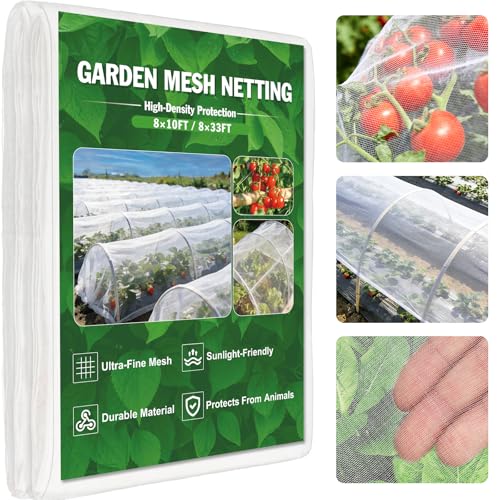
FEED GARDEN Garden Netting 8x33FT Ultra-Fine Mesh PE Cover for Vegetables Fruits Garden Row Cover Raised Bed Durable Protection from Birds Animals
【Upgraded Fine Mesh Netting】This fine mesh garden netting uses 0.7*0.8mm high-density garden insect netting to block, birds, and…
As an affiliate, we earn on qualifying purchases.
As an affiliate, we earn on qualifying purchases.
Conclusion
Now that you know how cucumber beetles spread bacterial wilt, your next move is vital. Will you act before it’s too late, or watch your crops suffer? The connection is clear, but the battle is ongoing. Each decision you make could mean the difference between a thriving garden or a devastating loss. Stay vigilant, stay prepared—your plants’ future depends on it. The clock’s ticking. Are you ready to protect what’s yours?

Live Beneficial Nematodes Hb+Sc+Sf – Kills Over 200 Different Species of Soil Dwelling and Wood Boring Insects. (5 Million_Nematodes)
Check the "Guide" under images to determine which nematodes you need
As an affiliate, we earn on qualifying purchases.
As an affiliate, we earn on qualifying purchases.
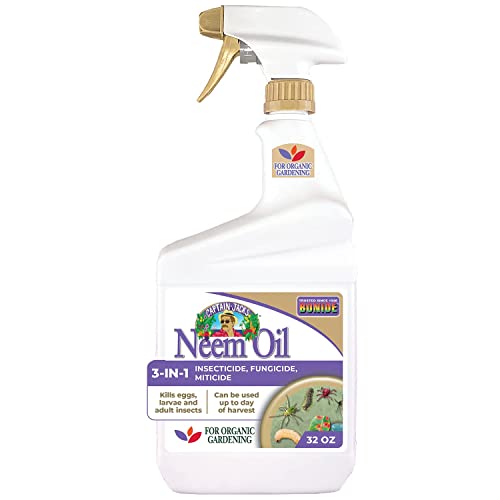
Bonide Captain Jack's Neem Oil, 32 oz Ready-to-Use Spray, Multi-Purpose Fungicide, Insecticide and Miticide for Organic Gardening
MULTI-PURPOSE BUG KILLER – Bonide Neem Oil is a perfect pest control solution for any garden dealing with…
As an affiliate, we earn on qualifying purchases.
As an affiliate, we earn on qualifying purchases.