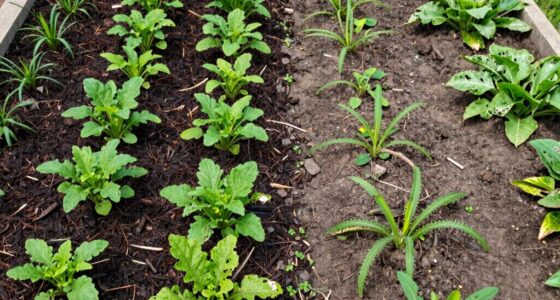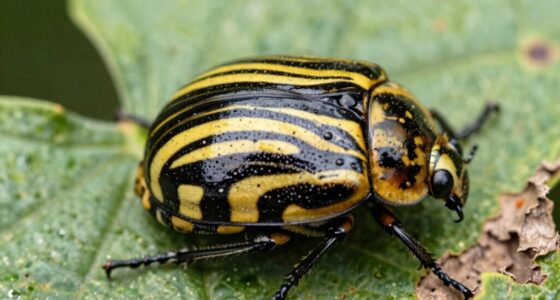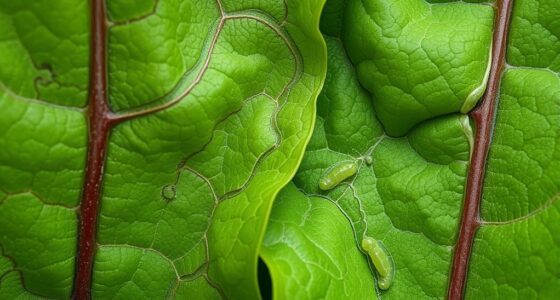
In the morning, look at the holes in your plants—irregular, jagged edges usually mean caterpillars, while smooth-edged, round holes suggest slugs. Check for slimy trails or shiny mucus on leaves, stems, or soil—that’s a clear sign of slugs. If you see frass, silk, or shredded foliage, caterpillars are likely the culprits. Observing these signs closely can help you identify the pest correctly; further tips will guide you on managing them effectively.
Key Takeaways
- Caterpillars leave jagged, torn holes with shredded foliage, while slugs create smooth-edged, round or oval holes.
- Slug damage is typically seen as shiny, mucus-covered trails on leaves and stems, unlike frass or silk from caterpillars.
- Slugs are nocturnal; damage visible in the morning suggests slug activity, whereas caterpillars may feed during day or night.
- Check underside of leaves or stems for caterpillars or silk; slugs prefer ground-level, moist, shady areas.
- Presence of frass and silk indicates caterpillars; shiny mucus trails point to slug activity overnight.
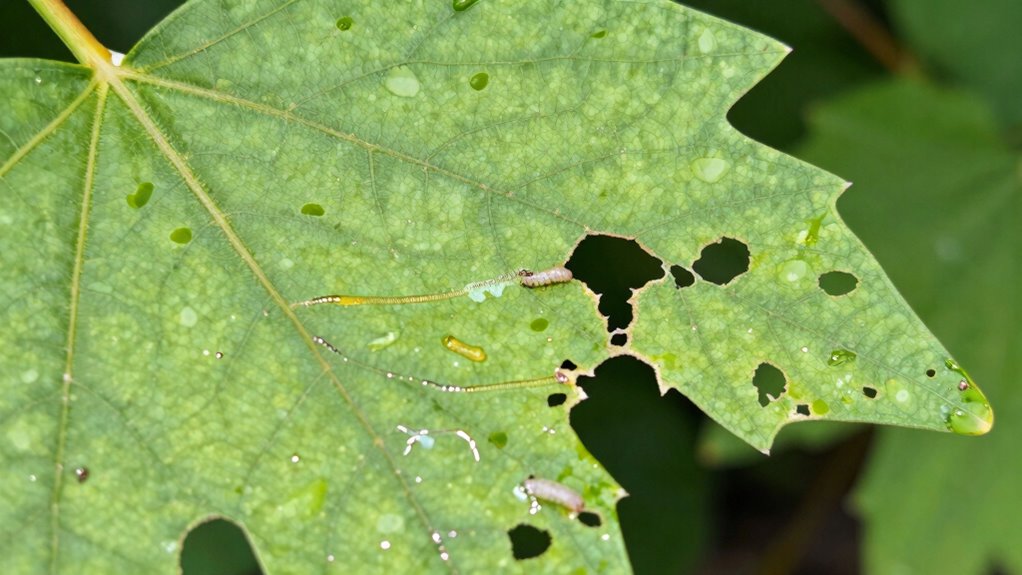
Ever wondered how to distinguish between caterpillar chewing and slug damage in your garden? Recognizing the differences is essential for effective pest management. When you look at your plants early in the morning and notice ragged holes or missing leaves, it’s tempting to assume one pest or another. To get it right, you need to pay close attention to pest identification and damage patterns. Caterpillars tend to leave behind specific signs, while slugs cause their own distinct damage, which becomes clearer once you understand what to look for.
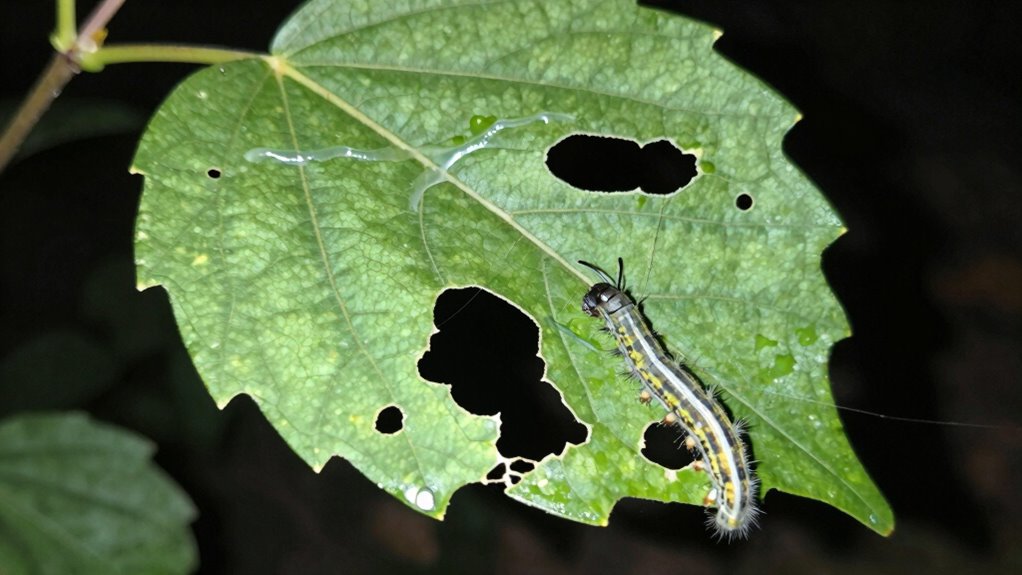
Caterpillar damage often appears as irregular, jagged holes in leaves, sometimes with the edges torn or chewed unevenly. These pests are active during the day and night, but their feeding leaves visible traces—such as frass (droppings), silk threads, or even the caterpillars themselves on the undersides of leaves or along stems. You might notice a cluster of small, green or brown larvae munching away, or just the damage they leave behind. Their feeding is usually more aggressive, resulting in a shredded appearance on foliage, especially in the early morning after a night of activity. Observing feeding patterns can also help distinguish between the pests.
Caterpillars leave jagged holes, frass, silk, and often cluster on undersides of leaves.
On the other hand, slug damage is generally more uniform and characterized by smooth, clean-edged holes. Slugs prefer moist, shady areas, so the damage is often concentrated on plants that are in damp spots or close to the ground. What makes slug damage stand out is the slimy trail you might find along the leaves, stems, or surrounding soil. These trails are a telltale sign of slug activity, especially if you see a shiny, mucus-covered trail snaking across your plants. Slugs tend to feed on softer plant parts, such as young leaves, seedlings, or new shoots, leaving behind a telltale pattern of round or oval holes with smooth edges. Additionally, understanding the behavior of these pests can help you better predict and manage their presence.
Another key point in pest identification is the timing of damage. Slugs are nocturnal feeders, so you’ll often see their handiwork first thing in the morning. Caterpillars can be active during the day but especially feast at night, so damage may be similar during different times of day, but the telltale signs—like frass or silk—help you distinguish them. Recognizing damage signs early on can significantly improve your pest control efforts. Overall, by observing damage patterns and signs like trails or residue, you can quickly identify whether caterpillars or slugs are the culprits. This knowledge allows you to choose the right control methods, making your pest management more targeted and effective.

Bonide Captain Jack's Bacillus Thuringiensis BT, 32 oz
- Effective Pest Control: Controls caterpillars and worms
- Versatile Use: Suitable for fruits, vegetables, and ornamentals
- Eco-Friendly: Safe for beneficial insects and wildlife
As an affiliate, we earn on qualifying purchases.
As an affiliate, we earn on qualifying purchases.
Frequently Asked Questions
Do Caterpillars and Slugs Prefer Different Plant Types?
Caterpillars and slugs do have different plant preferences and damage patterns. Caterpillars often target leafy greens and broad-leafed plants, creating irregular, chewed holes. Slugs prefer tender, moist plants like hostas, strawberries, and lettuce, leaving behind slimy trails and smooth, ragged edges. Recognizing these damage patterns helps you identify whether caterpillars or slugs are feasting on your garden, so you can take appropriate control measures.
Can Slug Damage Occur During the Day?
Yes, slug damage can occur during the day, especially in damp, shady areas. While slugs are nocturnal and mostly active at night, daytime slug activity isn’t impossible, particularly when moisture levels stay high. You might notice irregular holes or slime trails on your plants during daylight hours. Caterpillars, on the other hand, tend to feed mostly at night, so observing daytime damage can help you distinguish between the two pests effectively.
Are There Specific Signs to Differentiate Caterpillar and Slug Damage Visually?
Yes, you can distinguish caterpillar from slug damage by looking for specific signs. Caterpillars typically leave irregular, jagged leaf chews and may sometimes leave droppings on the plant. Slugs, on the other hand, leave smooth, clean-edged holes and are often associated with shiny slime trails on leaves and surrounding soil. These slime trails are a clear indicator of slug activity, making it easier to tell the damage apart.
How Quickly Can Caterpillars or Slugs Cause Visible Damage Overnight?
Caterpillars can cause visible damage within a few hours, especially during active feeding times, leaving irregular holes along leaves. Slugs tend to leave slime trails overnight, so if you see shiny, silvery slug trails on your plants, damage may appear suddenly after a night. By observing caterpillar feeding patterns—like chewed edges—and identifying slug trails, you can determine which pest caused the damage and act quickly to protect your garden.
What Natural Predators Help Control Caterpillars and Slugs?
You’re in luck—nature’s got your back with natural predators that keep caterpillars and slugs in check. Birds, beetles, and parasitic wasps love to snack on caterpillars, while frogs, ground beetles, and nematodes help control slugs. These pest control heroes work tirelessly, saving your garden from becoming a buffet. Embracing these natural predators means you can reduce chemicals and enjoy a healthier, more balanced garden ecosystem.

10 Pack Slug Snail Traps for Garden, Reusable Beer Bait Snail Catchers with Pentagonal Lid, Plastic Slug Houses for Outdoor Garden, Vegetable Beds, Farm(Black)
- Set of 10 reusable traps: Manage slugs and snails effectively
- Compact pentagonal lid design: Easy bait access and protection
- Weather-resistant and durable: Suitable for outdoor use in all conditions
As an affiliate, we earn on qualifying purchases.
As an affiliate, we earn on qualifying purchases.
Conclusion
Now that you’ve spotted the telltale signs, you’re like a detective uncovering a garden mystery. Remember, caterpillars leave jagged bites like tiny, sharp teeth, while slugs make smooth, slimy trails as if they’ve tiptoed through your plants. With this knowledge, you can act swiftly, becoming the gardener who outsmarts these sneaky eaters. Soon, your garden will thrive again, a lush symphony of healthy leaves, free from the silent damage of nighttime invaders.

The Vegetable Garden Pest Handbook: Identify and Solve Common Pest Problems on Edible Plants – All Natural Solutions!
As an affiliate, we earn on qualifying purchases.
As an affiliate, we earn on qualifying purchases.

Safer Brand Caterpillar Killer II Concentrate Spray, 16 fl oz
- Kills Caterpillars and Larvae: Effective against caterpillars, gypsy moth larvae, worms, and cabbage loopers
- Environmentally Safe: Eliminates pests without harming beneficial insects
- Harvest-Friendly: Use up until the day of harvest
As an affiliate, we earn on qualifying purchases.
As an affiliate, we earn on qualifying purchases.