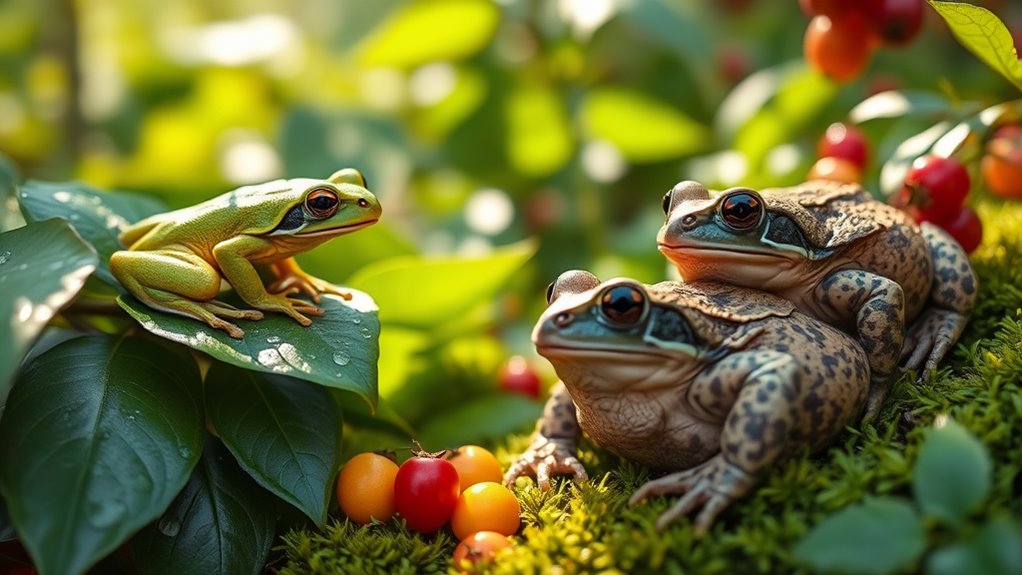

Toads and frogs are excellent natural slug control helpers in your garden. They eat a variety of pests, including slugs and beetles, reducing the need for chemicals. By creating a welcoming habitat with shallow water sources, shelter, and diverse plants, you encourage these amphibians to stay and thrive. Maintaining a chemical-free environment supports their health and effectiveness. Keep exploring to discover how to build a perfect habitat that keeps your pests in check naturally.
Key Takeaways
- Toads and frogs consume slugs and other garden pests as part of their natural diet.
- Creating a moist, sheltered environment attracts toads and frogs to control slugs effectively.
- Providing shallow water sources and hiding spots encourages amphibians to settle in your garden.
- Avoid chemical pesticides, which can harm toads and frogs and disrupt their slug-eating benefits.
- Maintaining diverse plant life supports amphibian habitats, boosting their natural slug control abilities.
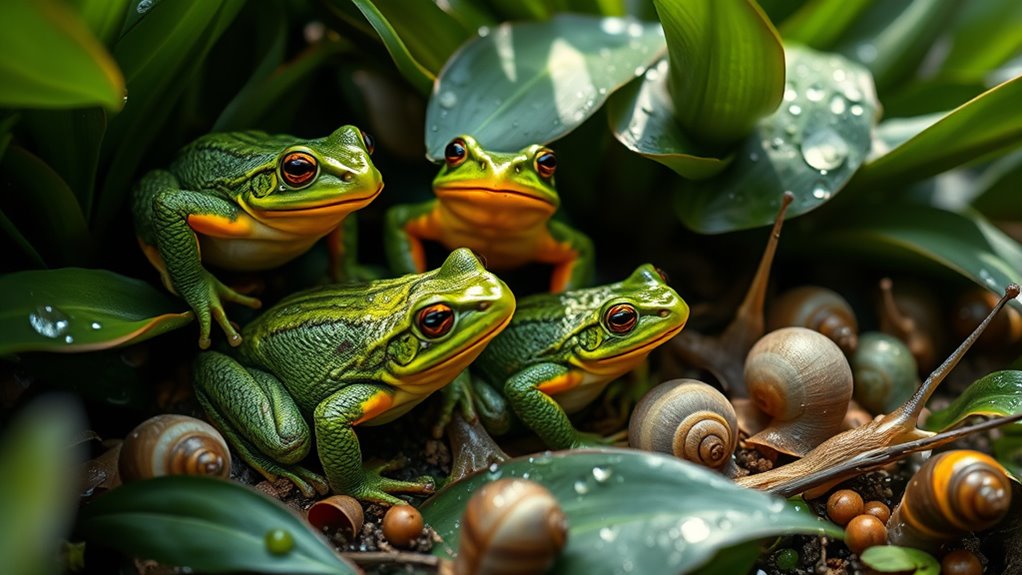
Have you ever wondered what sets toads apart from frogs? While they might look similar at first glance, their differences go beyond appearance. One of the biggest advantages to having toads in your yard is their role as natural pest controllers. Toads are voracious eaters of insects, especially beneficial insects that can sometimes become pests in your garden. By attracting toads, you’re fostering a balanced garden habitat where these creatures help keep the population of harmful bugs in check. This natural pest control means fewer chemical pesticides are needed, making your garden safer for both plants and people. Plus, toads focus their diet on a variety of insects, including pesky ones like flies, beetles, and caterpillars, but they also consume beneficial insects that help maintain a healthy ecosystem. They’re like tiny, efficient cleanup crews, working silently to reduce pest numbers without disrupting your garden’s natural harmony.
Creating an inviting garden habitat for toads is straightforward and highly beneficial. You can start by adding some shallow water sources, like a small pond or a birdbath with stones for easy access. Toads need moist environments to thrive, especially during breeding season, so providing a water source can encourage them to settle in your yard. Avoid using chemical pesticides or herbicides, which can harm these amphibians and their food sources. Instead, focus on maintaining a diverse plant life—shrubs, tall grasses, and ground cover—to offer shelter and hiding spots. This variety not only supports beneficial insects that serve as toad food but also gives toads safe places to rest and lay eggs. Incorporating natural elements like logs, rocks, and leaf piles creates additional hiding spots, making your garden a welcoming habitat for toads and their prey.
Frequently Asked Questions
Do Toads and Frogs Prefer Certain Types of Slugs?
Yes, toads and frogs do have slug preferences. They often target softer, larger, and more moist slugs, which are easier to eat. Your toad’s diet diversity means they might favor certain types based on availability, but they generally prefer slugs that are easier to digest and provide more nutrition. By encouraging a variety of slugs, you support your amphibians’ natural hunting habits and promote effective slug control.
How Quickly Can Toads and Frogs Reduce Slug Populations?
You can see toads and frogs reduce slug populations fairly quickly, often within days to weeks, depending on their slug predation rate and feeding habits. Frogs tend to eat multiple slugs daily, and toads can consume several in a single night. Their natural hunting behavior makes them effective, especially in gardens where they regularly hunt, helping control slugs efficiently without chemicals.
Are There Any Risks to Other Beneficial Garden Insects?
You don’t need to worry much about risks to beneficial garden insects when relying on toads and frogs for slug control. They mainly target slugs, reducing chemical concerns and habitat impact associated with chemical slug remedies. Since these amphibians hunt naturally, they minimize harm to other beneficial insects. Just guarantee your garden provides a healthy habitat, so they thrive without disrupting your ecosystem’s balance.
Can Toads and Frogs Survive in Urban Environments?
Yes, toads and frogs can survive in urban environments if their habitat requirements are met. They adapt well to urban areas by finding suitable shelter, water sources, and food. You can support their urban adaptation by creating moist, shaded habitats, avoiding pesticides, and providing shallow water dishes. These measures help them thrive amid city life, making them effective natural slug control and beneficial for your garden ecosystem.
Do Toads and Frogs Eat Other Garden Pests Besides Slugs?
Yes, toads and frogs eat more than just slugs; they also hunt beneficial insects, small worms, and even tiny pests. You’ll see them actively participating in predator-prey dynamics, helping you manage various garden pests naturally. By encouraging these amphibians, you support a balanced ecosystem where they hunt, feed, and thrive, ultimately reducing your pest problems without the need for chemicals. Their diverse diet benefits your garden’s health and your peace of mind.
Conclusion
So, seize the chance to support these splendid, slimy soldiers in your garden. By welcoming toads and frogs, you not only invite incredible insect control but also encourage eco-friendly, effortless pest management. Their natural knack for nixing nuisances makes them your garden’s greatest allies. Simply create cozy corners, and you’ll soon see these fantastic, frolicking friends flourish, fiercely fighting pests, and fostering a flourishing, fuss-free, and fabulous garden.