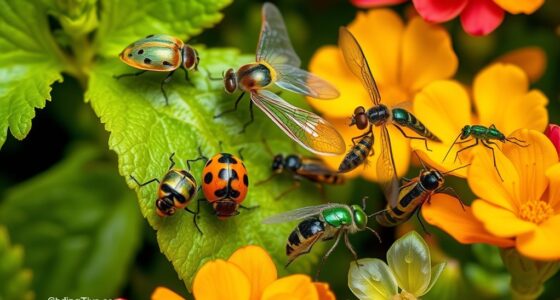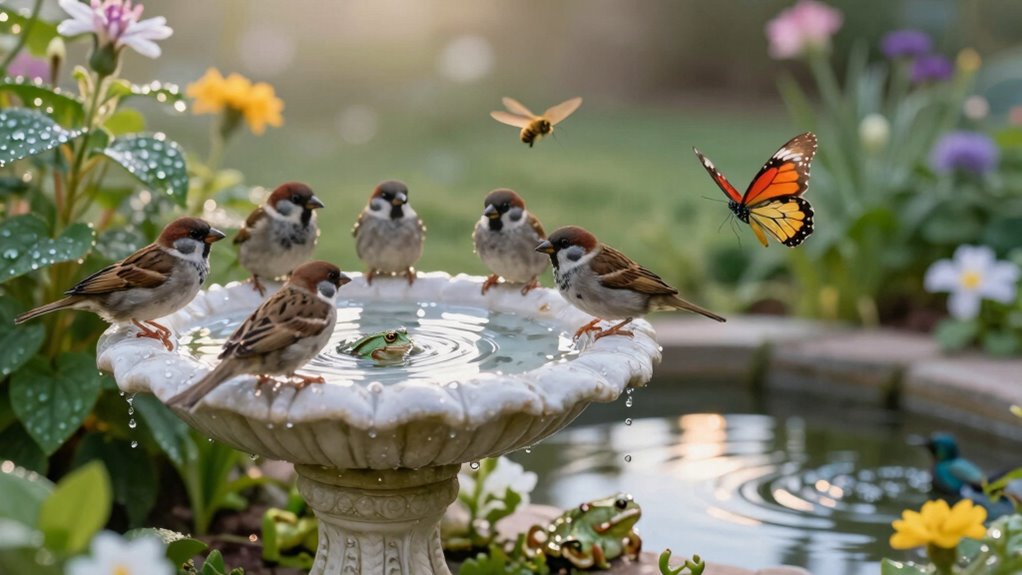
Adding water sources like bird baths and ponds in your small garden attracts more wildlife by providing essential drinking, bathing, and habitat opportunities. Birds, amphibians, and insects will visit more often and stay longer, supporting natural behaviors and encouraging diverse species to thrive. Native plants around these features further enhance shelter and nesting spots. These water features create a lively ecosystem, making your garden a vibrant wildlife haven—you’ll discover how to make it even more inviting with some simple tips.

Get garden gear delivered free with Prime
- Fast, free delivery on millions of items
- Prime Video, Amazon Music and more included
- Member-only deals all year
Key Takeaways
- Water sources attract a variety of bird species for drinking, bathing, and preening, increasing visits and activity.
- Small ponds provide habitat and breeding sites for amphibians, insects, and aquatic plants, boosting biodiversity.
- Shallow bird baths encourage frequent bird visits and longer stays, enhancing garden wildlife diversity.
- Water features support food chains by attracting insects and amphibians, which are prey for birds and predators.
- Well-designed water sources create safe, accessible environments that encourage sustained wildlife presence.
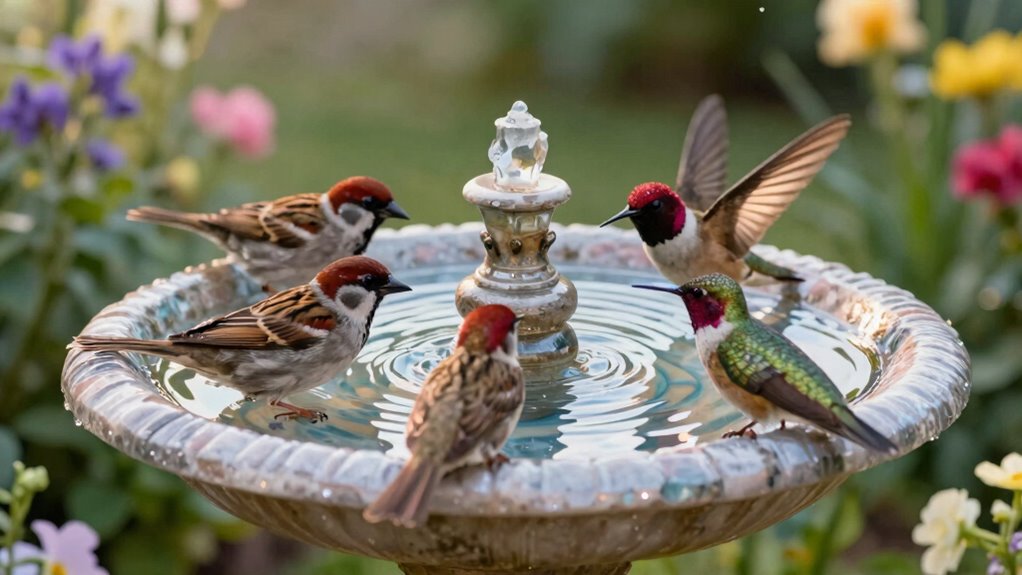
Small gardens can be vibrant habitats if you provide the right water sources to attract and support local wildlife. When you set up bird bathing areas or create a pond, you open your garden to a variety of creatures that rely on water for survival. These additions aren’t just decorative; they’re essential for fostering a lively, diverse ecosystem. Bird bathing, in particular, offers a critical resource. By placing a shallow basin filled with clean water, you give birds a safe spot to drink, preen, and cool off. As a result, you’ll notice an increase in bird visits, especially during hot or dry periods when natural water sources are scarce. Birds may also use these baths to bathe, helping them keep their feathers in top condition and reducing parasite loads. A simple bird bath can quickly become a hub of activity, attracting different species and encouraging them to stay longer in your garden.
Pond creation takes this a step further. A small pond offers more than just a drinking spot; it provides a habitat for aquatic plants, insects, and amphibians. When you develop a pond, you’re creating a mini-ecosystem that supports a broader range of wildlife. Frogs and newts might take up residence, while insects like dragonflies and damselflies lay their eggs on aquatic vegetation. These insects, in turn, attract birds and other predators, creating a thriving food chain. The presence of water also encourages pollinators like bees and butterflies, which rely on water to hydrate and stay healthy. When designing your pond, consider adding native plants along the edges to offer shelter and nesting sites; this encourages wildlife to stay and breed. *Additionally*, a pond with gently sloping sides makes it accessible for small animals to enter and exit safely. Incorporating native aquatic plants can further enhance the diversity of wildlife visits to your garden. Creating a safe environment around your water features also helps prevent predators from accessing vulnerable species, ensuring a balanced ecosystem. Including water quality management practices can further support the health of your pond’s ecosystem.
As an affiliate, we earn on qualifying purchases.
Frequently Asked Questions
How Does Water Source Placement Affect Specific Wildlife Species?
You’ll see that water source placement greatly impacts wildlife, especially for bird bathing and insect drinking. Placing water sources near dense shrubs or trees provides cover for birds, encouraging more visits. Shallow dishes or birdbaths attract birds, while small, damp areas invite insects. Positioning these sources where they remain cool and accessible ensures a steady flow of wildlife, supporting their needs and increasing their visits to your garden.
What Are the Best Water Sources for Attracting Pollinators?
Think of your garden as a bustling marketplace for pollinators. To attract them, place birdbaths thoughtfully—on flat, stable surfaces and near flowering plants. Opt for water container types like shallow bowls or self-filling fountains, which mimic natural puddles. Keep the water fresh and clean; pollinators prefer a sip without a dip. Your thoughtful choices turn your garden into a lively hub of buzzing activity and floral exchange.
How Often Should Water Sources Be Cleaned to Maintain Wildlife Safety?
You should clean your water sources at least once a week to maintain water quality and guarantee wildlife safety. Regular cleaning prevents the buildup of algae, bacteria, and debris that can harm animals. Adjust the cleaning frequency if you notice cloudy water or foul odors. Keeping the water fresh and clean encourages animals to visit often and helps protect their health, making your garden a safer, more inviting habitat.
Can Artificial Water Features Replace Natural Sources Effectively?
Artificial alternatives can effectively replace natural sources if they mimic nature well. Use features with natural mimicry, like textured surfaces and flowing water, to attract wildlife. Make certain the water stays clean and fresh to encourage visits. While artificial water features can support local wildlife, they might not fully replicate the complexity of natural sources, so combining both can create a more inviting environment for diverse species.
What Is the Impact of Water Source Size on Wildlife Diversity?
You’ll find that larger water sources attract a wider range of wildlife, boosting habitat connectivity in your garden. They provide ample space for different species to thrive, which naturally enhances diversity. Smaller sources may limit visitors and necessitate water conservation, but they might not support the same variety. By balancing size and placement, you create a welcoming environment for diverse creatures without wasting resources—think of it as hitting two birds with one stone.
As an affiliate, we earn on qualifying purchases.
Conclusion
By adding or changing water sources in your small garden, you’re opening a secret garden gate for wildlife to dance and flourish. Every ripple and splash becomes a siren call, inviting birds, insects, and creatures to your outdoor sanctuary. Think of your garden as a lively canvas, where water paints a vibrant scene of life and connection. Embrace these small changes, and watch your garden transform into a bustling, natural paradise bursting with wildlife’s symphony.
As an affiliate, we earn on qualifying purchases.
As an affiliate, we earn on qualifying purchases.
Halloween Picks
halloween
As an affiliate, we earn on qualifying purchases.