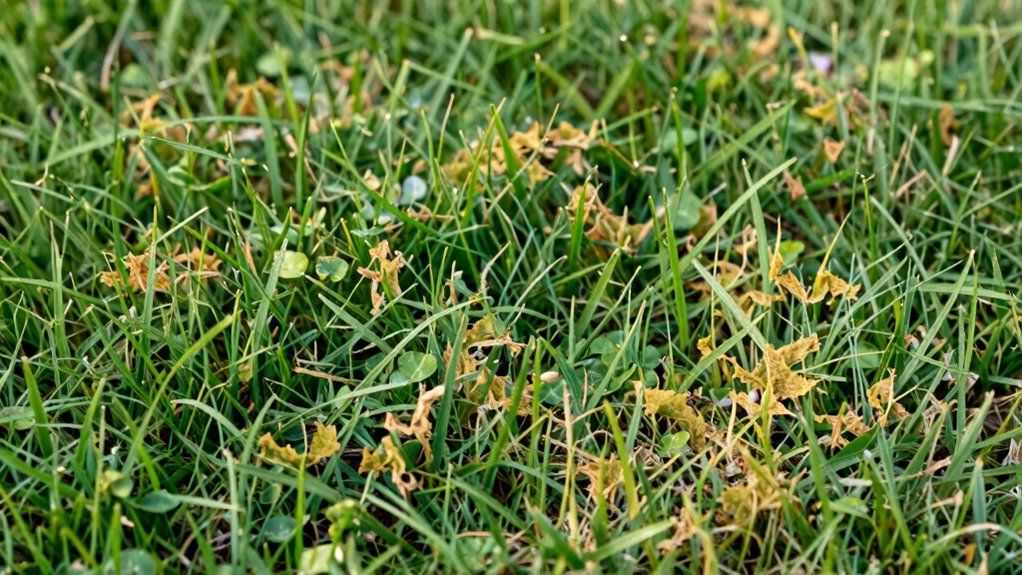

If you notice sudden, uniform discoloration, leaf distortion, or dieback on nearby plants, it could be herbicide drift. The damage often appears close to the application site and affects only certain plants, with clear boundaries between healthy and affected areas. Symptoms don’t match pests or diseases and usually happen right after spraying. To better spot these clues and understand how to prevent them, keep exploring these key signs and patterns.

Get garden gear delivered free with Prime
- Fast, free delivery on millions of items
- Prime Video, Amazon Music and more included
- Member-only deals all year
Key Takeaways
- Off-target herbicide damage often shows as uniform discoloration or bleaching of leaves on nearby plants.
- Symptoms are typically localized near the application site with a clear boundary between healthy and affected areas.
- Damage may include distorted growth, yellowing, stunted development, or dieback, differing from pest or disease signs.
- The pattern of damage usually corresponds to the direction and extent of herbicide drift, not pest or disease distribution.
- Healthy plants outside the treated zone generally remain unaffected, indicating herbicide-specific injury.
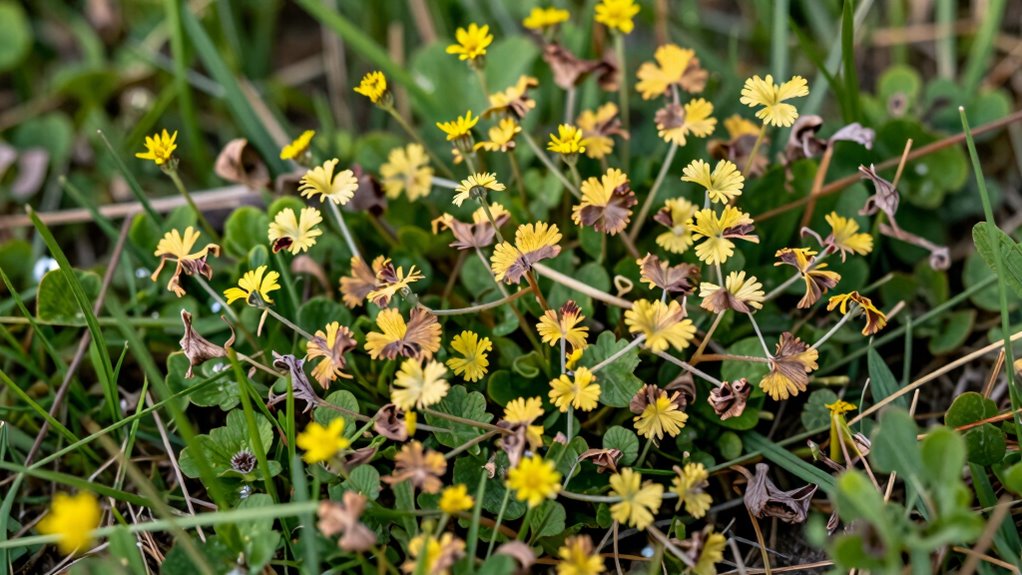
Have you ever noticed unexpected damage or discoloration on plants nearby after applying herbicides? If so, you’re likely observing herbicide drift, a common issue in agriculture and gardening. Drift occurs when herbicide particles move beyond the target area, affecting unintended plants. Recognizing the signs can help you determine whether herbicide drift is the cause of plant damage. Typically, the damage appears as distorted growth, yellowing, or bleaching of leaves, often on plants close to the application site. The affected plants might show stunted development or dieback, especially if the herbicide was potent or improperly applied.
One key clue is the pattern of damage. If only certain plants or areas show symptoms, and these are adjacent to the treated zone, drift is a probable cause. The damage may look like a sudden, uniform discoloration that doesn’t match common pest or disease symptoms. Unlike pests, which usually target specific parts or stages of a plant, herbicide drift causes more generalized or localized damage, often with a clear boundary between healthy and affected vegetation. You might notice that plants with certain traits, like less robust or more sensitive varieties, suffer more than others, indicating the herbicide’s unintended reach. Additionally, understanding how to identify herbicide drift can help in implementing effective prevention measures. Being aware of herbicide application techniques can also reduce the likelihood of drift occurring in the first place. Proper spraying methods are essential for minimizing the risk of off-target damage and protecting nearby plants and landscapes. Awareness of environmental conditions, such as wind speed and direction, is also crucial in preventing drift during herbicide application. Moreover, considering weather forecasts can help in timing applications to minimize drift risks.
As an affiliate, we earn on qualifying purchases.
Frequently Asked Questions
Can Herbicide Drift Affect Aquatic Plants Nearby?
Yes, herbicide drift can affect aquatic plants nearby. When herbicides reach an aquatic ecosystem, they can cause plant toxicity, harming or killing sensitive aquatic plants. This disruption impacts the balance of the ecosystem, affecting fish and other wildlife that depend on healthy aquatic vegetation. To protect these environments, it’s essential to minimize drift through careful application and buffer zones.
What Weather Conditions Increase Drift Risk?
When the weather’s unpredictable, you’re playing with fire. Windy conditions greatly increase drift risk, making drift mitigation tough. Calm, stable weather with low wind speeds reduces the chance of herbicide moving off target. Overcast or humid conditions can also prolong spray droplets in the air, heightening drift potential. Always check weather patterns before spraying, and plan accordingly to keep herbicide where it belongs—on your weeds, not your neighbor’s garden.
How Quickly Can Herbicide Drift Damage Appear?
Herbicide drift damage can appear within hours or a few days, depending on herbicide potency and application timing. If you apply herbicide during windy or humid conditions, the risk increases, and damage may show quickly. You might notice leaf curling, discoloration, or stunted growth soon after, especially with highly potent formulations. Promptly identify symptoms to assess whether drift caused the damage, and always consider application timing to minimize risks.
Are Certain Herbicides More Prone to Drift?
Yes, certain herbicides are more prone to drift due to their chemical properties and application techniques. Herbicides with volatile chemicals or those applied during windy conditions are more likely to drift. You should pay attention to application techniques like using proper nozzle types, avoiding spraying in high wind, and following label instructions. These practices help minimize drift risk, especially with herbicides known for their volatile nature or high mobility in the environment.
How Can I Prevent Herbicide Drift From Happening?
Think of herbicide drift prevention like a careful dance—application techniques and buffer zones are your partners. You can prevent drift by applying herbicides during calm weather, using low-pressure sprayers, and avoiding windy days. Establish buffer zones around sensitive areas to act as shields. These steps help guarantee the herbicide stays where it’s supposed to, protecting nearby plants and reducing off-target damage effectively.
plant damage identification guide
As an affiliate, we earn on qualifying purchases.
As an affiliate, we earn on qualifying purchases.
Conclusion
Recognizing herbicide drift clues helps you protect your plants, but it’s also a reminder of nature’s delicate balance. While the damage may seem straightforward—discolored leaves or stunted growth—it hints at a deeper disruption, like a whisper of chaos in an orderly garden. This contrast between visible harm and unseen consequences underscores the importance of careful application. By staying vigilant, you preserve not just your crops, but the harmony that keeps your garden thriving.
herbicide application spray tools
As an affiliate, we earn on qualifying purchases.
As an affiliate, we earn on qualifying purchases.
buffer zone for herbicide spraying
As an affiliate, we earn on qualifying purchases.
As an affiliate, we earn on qualifying purchases.
Halloween Picks
halloween
As an affiliate, we earn on qualifying purchases.