TL;DR
Jumping worms have been reported in several gardens on Montreal Island, where observations include unusually fast leaf-litter breakdown and granular, coffee-ground-like material on the soil. Their presence has been documented in Quebec, but the extent of their spread in Montreal and the damage they may cause in local gardens and natural areas are not yet known.
Jumping worms have been observed in several gardens on Montreal Island, alongside leaf litter that breaks down unusually quickly and soil surface material described as resembling coffee grounds, according to a source account from a local landscaping contact. The worms’ presence has been documented in Quebec, but their distribution across Montreal and the scale of any local ecological effects remain unknown.

Get garden gear delivered free with Prime
- Fast, free delivery on millions of items
- Prime Video, Amazon Music and more included
- Member-only deals all year
The reported signs came from gardens maintained by a former landscaping colleague of the source’s writer, as described in this guide to jumping worms and how to stop them. She described rapidly decomposing leaf litter, a coarse, granular layer on the soil and small worms that thrash vigorously when disturbed. These observations are consistent with signs associated with jumping worms, but the account does not provide a formal survey or laboratory identification of the Montreal specimens.
Jumping worms is a common name for several Asian earthworm species considered invasive in North America. The source says Amynthas tokioensis has been confirmed in Quebec; it also names Amynthas agrestis and Metaphire hilgendorfi as species in the group. Identification can be difficult: adults generally have a smooth, light-coloured band, called a clitellum, that encircles the body near the head, but appearance alone may not confirm a species.
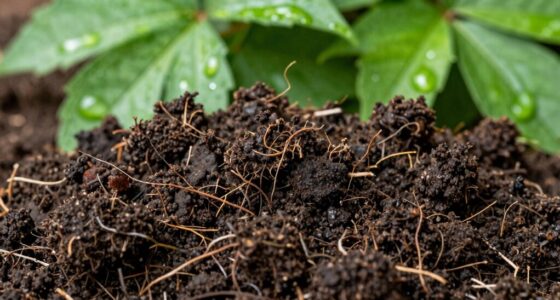
The worms feed near the soil surface on fallen leaves and other plant debris. Their castings can build up into a rough, granular layer often compared with coffee grounds. The source describes jumping worms as completing most of their life cycle in one season: adults die when freezing weather arrives, while small cocoons can survive winter and hatch in spring. Some species can reproduce without mating, which may allow a single worm to help start a population.
Why jumping worms are appearing in Montreal gardens
Worms and altered soil have been reported in several gardens on Montreal Island. Their spread and local effects remain unclear.
What gardeners have noticed
These clues merit attention, but do not confirm the worms’ identity.
Coffee-ground castings
A coarse, granular layer has been described on the soil surface.
Rapid breakdown
Leaves were reported to decompose unusually quickly.
Vigorous thrashing
Small worms reportedly thrash when disturbed; appearance alone may not identify a species.
What is known—and unknown
The reports are observations, not a formal survey.
- Jumping worms have been documented in Quebec.
- Amynthas tokioensis is named as confirmed in Quebec.
- How widely they have spread across Montreal.
- Whether the reported worms were formally identified.
- The scale of any local ecological effects.
Why the forest floor matters
Heavy infestations elsewhere may offer clues, but their effects have not been established in Montreal.
Rapid feeding may reduce ground cover that protects soil and supports small organisms.
Potential changes to nutrients, soil structure and water retention could affect plants and habitat.
No Montreal measurements of soil, plants or biodiversity are provided.
Effects on Soil and Forests
The concern is not simply that mulch may disappear faster in a garden. A layer of leaves and other debris helps protect soil from drying and temperature changes, and provides food and shelter for small organisms. If a worm population consumes that layer rapidly, soil conditions and habitat near the ground can change.
The source says fast decomposition may also alter how nutrients move through soil. Nutrients released more quickly than plants can take them up may be carried away by rainwater, while changes to soil structure could affect water retention and, in some conditions, erosion. These are potential consequences described for infestations; the source does not establish that they are occurring in Montreal gardens.
In forests, changes to leaf litter and soil can affect seed germination, young plants and the organisms living in the soil. Such effects could matter for forest understory and biodiversity if populations become established at high levels. The extent of harm in Quebec, especially in recently colonized places, has not been determined.
Products Worth Considering

Orbit B-hyve XR 8-Zone Indoor/Outdoor Smart Sprinkler Controller

Husqvarna 542i XP 16-Inch Battery-Powered Chainsaw

Greenworks 24V Cordless Brushless Leaf Blower, 515 CFM, 130 MPH, with 5.0Ah Battery and Charger
As an affiliate, we earn on qualifying purchases.
From North America to Quebec
The Montreal observations fit into a broader North American spread. A 2021 article by Larry Hodgson warned that jumping worms were spreading in parts of the United States and could expand into Canada. The source material, written about five years later, says the worms had by then been documented in several Canadian provinces, including Quebec.
Earthworms are often viewed as beneficial in gardens because they break down organic matter, aerate soil and recycle nutrients. But northern forests developed for thousands of years with few earthworms after the last glaciation. The source notes that introduced European earthworms have already altered some forest ecosystems, and says Asian jumping worms may pose additional risks because of their rapid growth and feeding activity.
The distinction between established impacts in heavily infested areas and possible effects in newly colonized regions is important. Evidence from one location does not establish how widely jumping worms have spread around Montreal or what they will do in local ecosystems.
Montreal Spread Still Unmapped
The source account does not say when the Montreal worms were observed, how many gardens were affected, or whether specimens were formally identified. It also provides no citywide or provincial survey results showing the worms’ current distribution or population size. The reported garden signs are clues, not confirmation that every worm or patch of granular soil described is caused by a jumping worm.
It remains unclear what effects established populations may have in Quebec’s gardens and natural areas. The source distinguishes potential risks and impacts observed in heavily infested regions from what is known in newly colonized parts of Canada. No local measurements of changes to soil, plants or biodiversity are provided.
What Local Monitoring Could Establish
The next step needed to clarify the Montreal reports is reliable identification and monitoring: confirming specimens, recording where they are found and tracking whether reports increase. The source material does not announce a specific municipal survey, public reporting program or government response, so no such initiative can be confirmed from the available information.
For now, gardeners can treat unusual, fast-disappearing leaf litter and granular castings as signs that warrant closer attention rather than proof on their own. Any broader assessment will need to establish where the worms are present and whether the ecological effects described elsewhere are also occurring in Quebec.
Key Questions
Have jumping worms been found in Montreal?
The source account describes observations in several gardens on Montreal Island. It does not provide formal identification records or a survey establishing how widely they are present across the city.
How can gardeners recognize jumping worms?
Reported clues include worms that thrash strongly when disturbed, a smooth light-coloured band encircling an adult near its head, rapidly disappearing leaf litter and granular castings resembling coffee grounds. These signs are not definitive identification on their own.
Why are jumping worms considered a concern?
They can consume leaf litter rapidly. In large populations, that may reduce ground cover and change soil structure and nutrient movement, with potential effects on plants and organisms that depend on the forest floor. The scale of these effects in Quebec remains unknown.
Can one jumping worm start a population?
The source says some species can reproduce without mating, so a single individual may sometimes be enough to start a population. It does not say that this applies to every jumping-worm species.
Source: laidbackgardener.blog